The Night a Flooring Shortage Sent Our Montgomery County Team to Dallas
Late in one Montgomery County remodel, the flooring ran short. We needed three more boxes, seven planks each, and the new lot from the manufacturer did not match what was already down on the floor. That is the kind of problem that either derails a project or gets solved the same night, honey, and we know which one we choose. Our team got on the phones and called every store that carried the line until we tracked the last three boxes to a store outside Dallas. We drove out that evening, bought them at open the next morning, and brought them straight back to the job site. The crew never lost a day. That is what should happen when something goes wrong on your remodel. The client should not have to know.
The Night a Flooring Batch Ran Out Mid-Remodel

Every remodel runs on rhythm, sugar. Crews show up, materials arrive on schedule, and the next trade steps in right behind the last one. That rhythm broke on one Montgomery County project when the flooring simply ran short before the room was finished.
The trouble was the batch, not the store. Flooring ships in production lots, and a new lot from the same manufacturer does not always match the lot already nailed or glued to the floor. Wood grain shifts. Stain color shifts. Even the sheen can read differently under the same light.
So our team got on the phones. Every store that carried the line got a call, one after another, until we tracked the last three boxes anyone had in stock to a single store outside Dallas. We drove out that evening, bought them at open the next morning, then brought them straight back to the job site.
The crew never lost a day. The client never got a call explaining a hold while we reordered and waited on a matching dye lot. That is not luck. That is what design and build under one roof is supposed to do when something goes sideways.
Why Two “Same” Boxes of Flooring Do Not Always Match

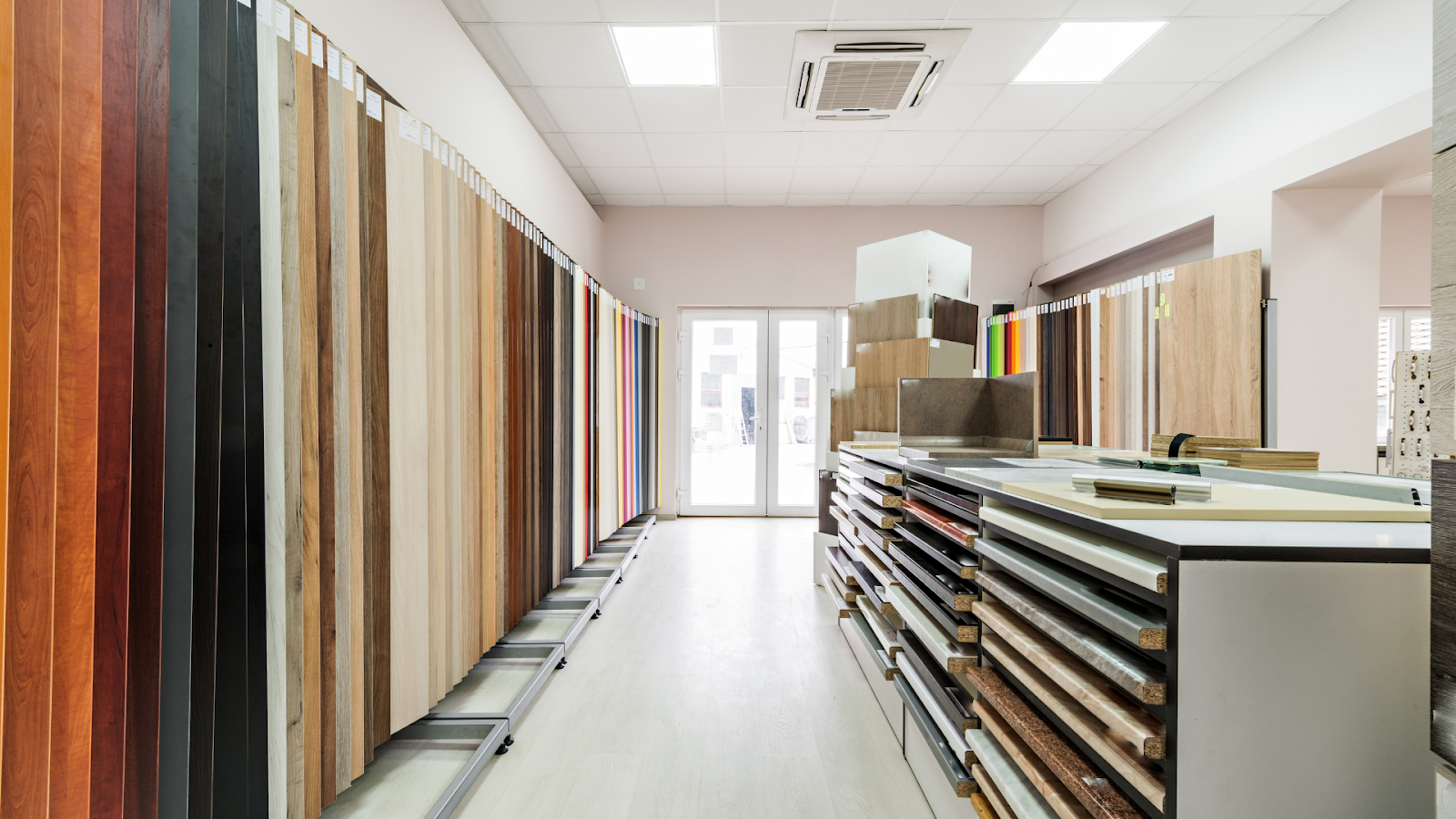
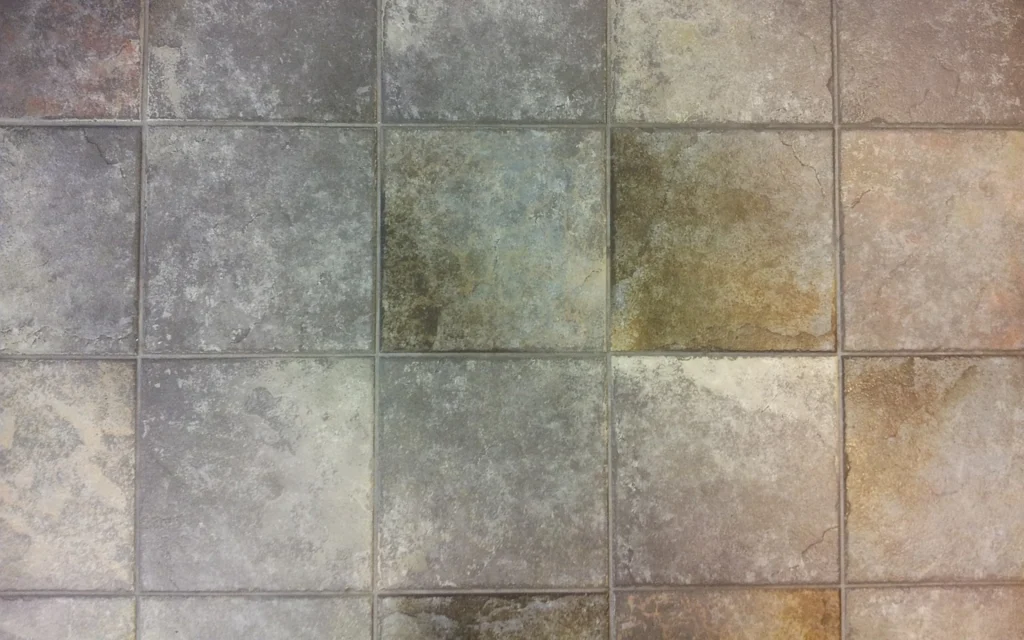
Flooring is manufactured in batches, and no two batches are guaranteed to look identical, even when the box says the exact same product name. The technical term is a dye lot, or a run, and it shows up across hardwood, laminate, and tile alike.
The wood or the finish reacts slightly differently to the stain or the kiln from one production run to the next. A shade that reads warm in one season can read a touch cooler by the next, even off the same manufacturer’s line. The National Wood Flooring Association flags exactly this kind of lot-to-lot variation as one of the more common causes of a flooring installation looking mismatched months after it goes down.
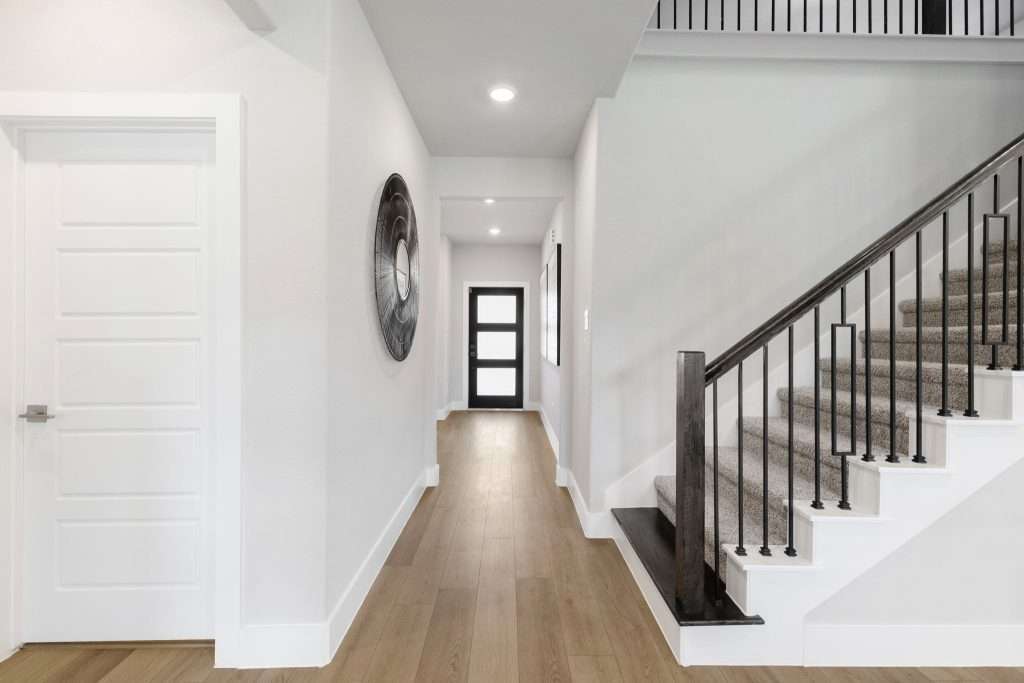
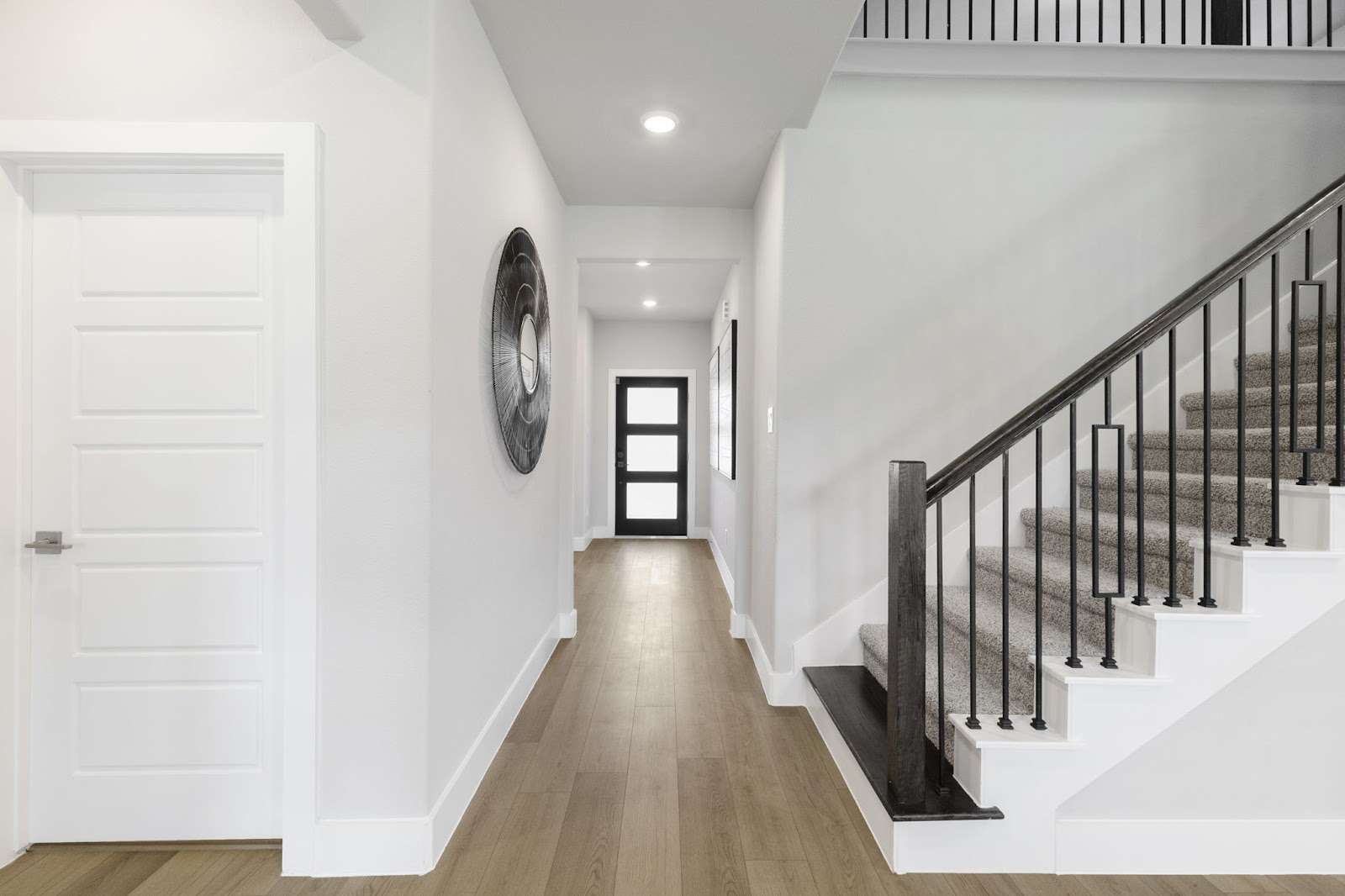
That is why we do not treat “same product, different box” as a safe assumption. Whenever a project needs a late-stage top-off, whether that is one plank or three full boxes, we physically compare the new material against what is already installed before it goes anywhere near the floor. It either passes next to the existing planks in real light, or it does not go in.
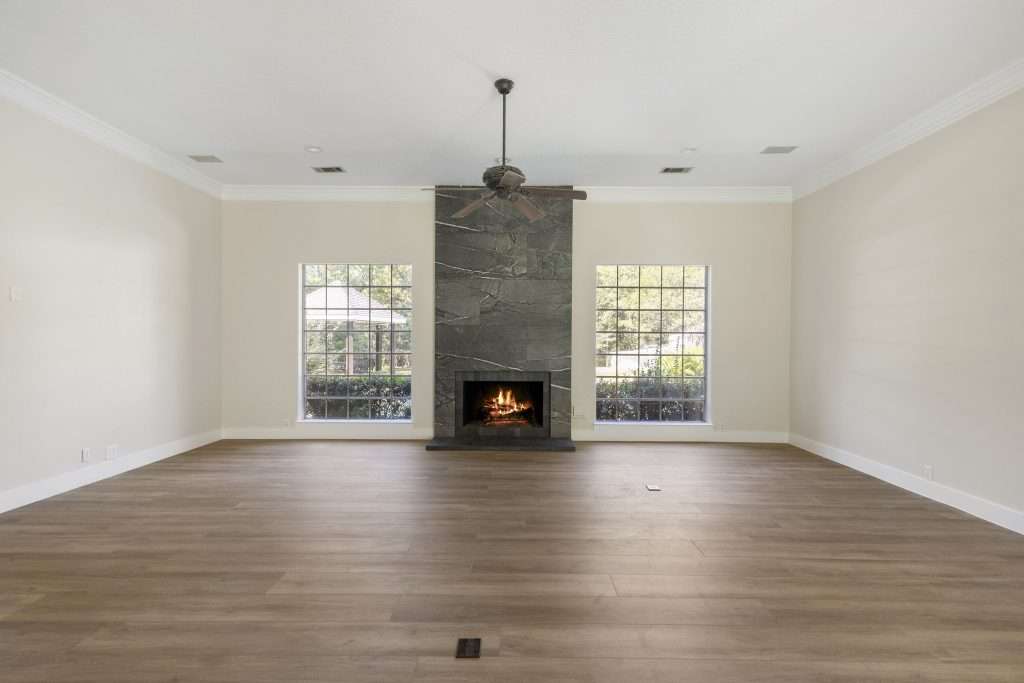
That standard matters because what flooring actually changes about how a room lives day to day has as much to do with consistency underfoot as it does with the finish itself. That discipline is part of why our flooring work in Conroe starts with real samples held against real light, not a swatch card and a guess.
What Design and Build Under One Roof Actually Buys You

Design and build under one roof means the same company that specs your flooring is also the one standing in a store aisle in Dallas at closing time, darling. That is the actual difference, not a marketing phrase.
Our flooring lead, Ralph, has worked with our crews for eight years. He is not a subcontractor found through a bidding app for one project. He knows what we have installed before, which supplier lines run consistent, and which ones need a second look before anything ships to a job site.
When a sourcing problem shows up mid-project, that history is what turns a phone call into a solved problem instead of an email chain. April, who runs our client communication, did not have to call anyone that week to explain a delay, because there was nothing to explain.
The National Association of the Remodeling Industry points to single-point accountability, one company responsible for the full scope, as one of the clearest differences between a remodel that stays on track and one that stalls in the gap between a designer and a separate general contractor.
It is the same reason we demo performance fabric in person before a client ever commits to it. A company willing to prove its own claims tends to be the one that catches a problem before you ever see it.
If your project touches more than one trade at once, whether that is flooring and cabinets or flooring and paint, our remodeling team in Montgomery County is built to catch a problem like this before it ever reaches you.
The Houston Factor: Why Flooring Carries More Risk Here

Houston’s climate changes what flooring choices are actually safe here, not just what looks good in a photo. Heat, humidity, and flooding all push homeowners toward different materials than a house further north would ever need to consider.
LVT, luxury vinyl tile, has become close to the default for Houston-area homes because it tolerates water in a way hardwood simply cannot. Tile stays common for the same reason it always has: it keeps rooms cooler through a Houston August. The National Weather Service’s Houston/Galveston office tracks a summer heat index that regularly climbs well past what many flooring products are rated for without adapted installation.
That is also why a sourcing snag like the one that sent our team to Dallas matters more here than it would somewhere drier. A flooring choice that is right for a lake house is not automatically right for a slab-foundation home thirty minutes inland, and if you are weighing vinyl against other flooring types for a Houston home, the climate math above is usually what settles it.
You can see this play out across our finished flooring and remodel projects throughout Montgomery County and the surrounding towns.
It is part of why we spec flooring differently for a Willis home near the lake than we would for a home further inland.
What “The Client Should Not Have to Know” Actually Means

That line is not a slogan we put on a brochure, baby. It is the operating standard behind every project we take on, and it only means something on the days a project does not go according to plan.
Anyone can look organized when nothing goes wrong. The real test of a remodeling company is what happens the week something does, whether that is a flooring lot that will not match, a plumbing surprise behind a wall, or a delivery that does not show. We have written before about what actually separates a genuinely accountable Houston contractor from a risky one, and a sourcing problem like this one is exactly the kind of moment that reveals the difference in practice, not just on paper.
The Dallas drive was not heroic. It was Tuesday. It is also not something every remodeling company would choose to do, because driving to Dallas and back for three boxes of flooring costs more in time than simply calling the client and pushing the schedule.
If a hiccup like this ever comes up on your project, our flooring team serving The Woodlands and the surrounding area already has the playbook for solving it quietly.
How to Tell If Your Contractor Would Do the Same Thing

A remodeling team that specs flooring correctly for Houston humidity follows real installation standards, not guesswork. The Resilient Floor Covering Institute publishes moisture and subfloor guidance that any legitimate installer should already know by heart, which is a fair thing to ask about before you sign anything.
You can ask a few direct questions before you hire anyone, and the answers will tell you more than any portfolio photo. A company that has actually solved a sourcing problem before will answer these without hesitating.
- Who sources your materials, and how long have they worked with your team? A one-off sub found through a bidding app has no track record with your specific project. A flooring lead who has been with the company for years has already solved this exact problem more than once.
- What happens if a material runs short mid-project? Listen for a real answer, not a shrug. “We reorder and wait” is a different company than “we track it down and keep the crew moving.”
- Does one company own the whole scope, or are you the one coordinating between a designer and a separate contractor? Gaps between trades are where delays and miscommunication live. A single accountable team closes that gap before it opens.
- Will you actually hear about a problem, or find out about it after the fact? The right answer is that you will not need to ask, because there will not be anything left hanging for you to find out.
Frequently Asked Questions
Flooring manufacturers produce material in batches called dye lots or runs, and color, grain, and sheen can shift slightly from one production run to the next. It happens across hardwood, laminate, and tile alike, which is why comparing new material against what is already installed matters more than matching a product name on a box.
Yes. Luxury vinyl tile tolerates moisture and humidity far better than hardwood, which makes it a strong fit for the Greater Houston climate, especially in homes prone to flooding or high indoor humidity. Tile remains a strong option too, particularly in rooms where keeping the space cooler matters most.
A design and build company holds accountability for the entire project under one roof, from the original plan through every trade that touches the space. When something goes off script mid-project, one team is responsible for solving it, rather than a designer and a contractor each pointing to the other’s scope.
Ask direct questions about material sourcing, how long the company’s trade leads have worked together, and what actually happens when something runs short. A company with real experience will answer specifically, not vaguely, because they have already solved the problem before.
Not necessarily. A delay becomes a schedule problem only when the company sourcing the material does not have the relationships or the willingness to solve it quickly. The material issue itself is common; what varies is how fast and how quietly a team resolves it.
The Part of the Job You Were Never Supposed to Notice
Here’s the thing about that Dallas drive, hun. You were never supposed to know about it. Not because we were hiding anything, but because the whole point of solving a problem well is that it disappears before it ever reaches you.
That is the standard behind flooring, cabinets, tile, paint, every trade that touches your home. A remodel is a living project, and living projects surprise you. What matters is who is standing between that surprise and your Tuesday.
We have been doing this across Montgomery County and Greater Houston long enough to know the difference between a company that manages a project and one that just watches it happen. Sugar, we would rather drive to Dallas the same evening than call you with an excuse.
If your next flooring project, or any part of your home, deserves a team that treats a sourcing snag as their problem to solve and not yours to worry about, reach out to our team and let’s talk about what that actually looks like in your home.