
Why Buying Furniture Through a Designer Beats the Showroom, for Conroe and Montgomery County Homes
Buying furniture through a designer starts making sense the moment you’ve priced the same piece twice. Once on your own, once through us. Then you watch the number move.
You found the sofa. Right arm style, right depth, the color that actually worked with your rug. Then your designer pulled the same vendor through a trade account, or steered you toward something built to survive your house better. A performance fabric that beads spills instead of soaking them in. Honey, that’s not a sales trick.
We’ve sourced pieces for close to 500 homes across Montgomery County this way. The couch that photographs well in a showroom isn’t always the one built for a family that actually lives in the room. That’s the piece worth chasing before you swipe your card at retail.
What “Trade Pricing” Really Means (and Why You Can’t Walk In and Get It)
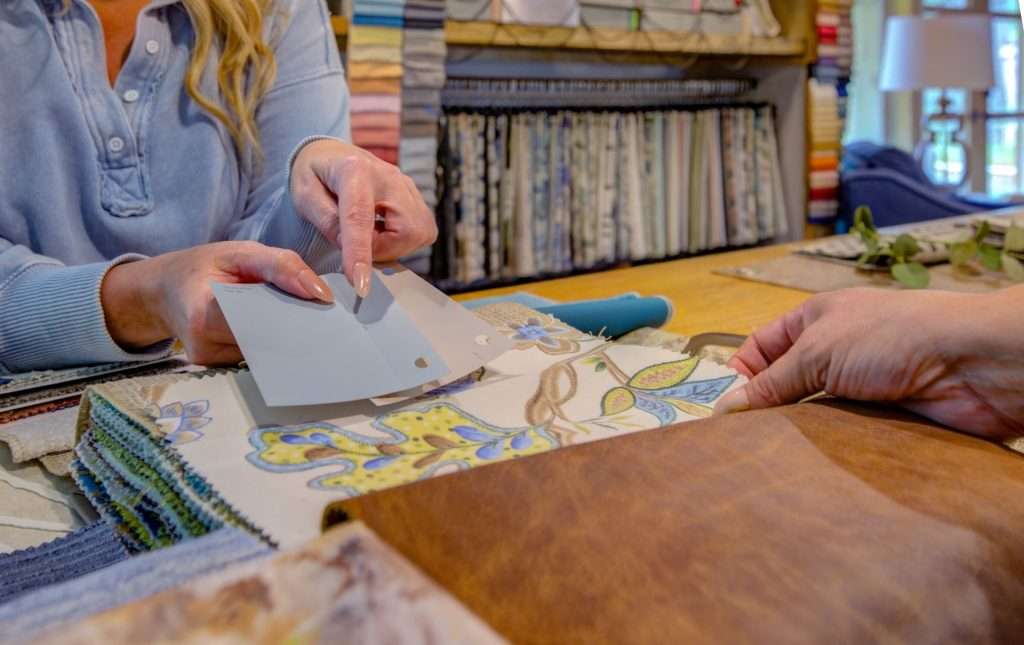
Trade pricing is the wholesale rate furniture manufacturers reserve for design-industry accounts, not the general public. Vendors sell in two channels. Retail, where anyone can walk in, and trade, where the buyer has to be a working designer with an active account already on file.
That account isn’t a formality. Manufacturers vet it. Some require proof of licensure or membership with a recognized body like the American Society of Interior Designers. Others require an order history before they’ll open the account at all. The vendor is protecting a pricing tier, not handing out a coupon code.
Here’s what that means while you’re sitting at your kitchen table with three retail sites open in different tabs. You can compare prices all day. You cannot get the trade tier by asking nicely. You cannot get it by finding the manufacturer’s website and emailing them directly. The account has to already exist, with history behind it, before the discount applies.
Why retail can’t just match it
Retail pricing carries a built-in markup. It covers showroom floor space, sales staff, and the marketing that got you to walk in the door. Trade pricing skips most of that structure, because the designer is doing the sourcing work the showroom would otherwise pay someone else to do.
Why “can you do any better on this” doesn’t work
A retail associate can knock a little off the sticker sometimes. A trade account changes the base price you’re negotiating from in the first place. Those are two different math problems, darling, and only one of them is available to you directly.
That relationship runs both directions once it’s real. We’re close to 500 projects into Montgomery County now, and the sales staff in our regular showrooms know our team on sight. They send new customers our way about as often as we’re sourcing from them.
This is the layer most people never see until they’ve worked with a designer once. After that, browsing retail alone on a Saturday feels like leaving money on the table for no reason.
The Materials Retail Can’t Put on Its Floor
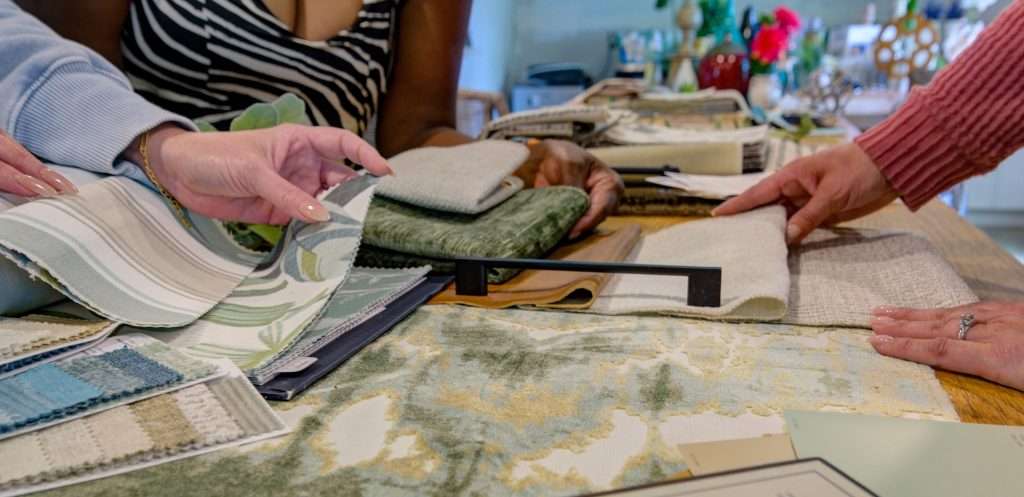
The materials retail carries are built for showroom traffic, not your living room. Trade vendors carry a different tier of fabric and construction that never makes it to a store floor at all.
Performance fabric is the clearest example. We spec it on nearly every project, regardless of who lives in the house. The stain protection is woven into the fabric at the manufacturing stage instead of sprayed on afterward, the way older scotchgard treatments work. Sprayed protection wears off with cleaning and foot traffic. Woven-in protection doesn’t, because it isn’t a coating sitting on top of the fiber. It’s part of the fiber itself. We’ve written more about what that fabric actually does under real family conditions if you want the full breakdown.
You won’t find that distinction on most retail tags. A tag might say “stain resistant.” It won’t tell you whether that resistance was built into the yarn or applied as a finish that fades within a year. The American Home Furnishings Alliance publishes construction and durability standards the trade side pays close attention to. A designer sourcing through a vendor account has that documentation before the piece ever ships. A retail floor associate usually doesn’t, honey. Same brand name sometimes. Completely different piece.
The same gap shows up in frame construction and cushion fill density, tier by tier, brand by brand.
If you’re furnishing a room where the furniture actually has to work, not just photograph well, take a look at how we approach living room furniture planning before you buy anything else.
Why the Bargain-Store Route Costs More Down the Road

The bargain-store route costs more in the long run, because you end up buying the same piece twice. A frame built to a low cost point sags. The cushions flatten, and the fabric pills long before the piece has earned out its price.
Trade-sourced furniture is built to a different standard. The manufacturer is selling to designers whose clients call them back if a piece fails early. A retail line doesn’t carry that same accountability. Once it’s sold, it’s sold, and nobody’s checking back in a year.
This is buy-once math. A frame with a hardwood or engineered-hardwood core, built to spec, holds its shape through years of real use in a way a softwood frame doesn’t. Houston humidity is hard on both fabric and frames, hun. That’s one more reason the construction gap between trade and retail lines matters more here than it might somewhere drier.
The Sustainable Furnishings Council has tracked how much of what ends up in landfills is furniture that failed structurally within a few years. Not furniture anyone actually got tired of. That’s not a style problem. That’s a construction problem, and it’s the one trade sourcing is built to solve.
If you’ve ever picked the wrong chair or sofa and regretted it inside a year, you already know the frame and fill decisions matter more than the fabric color you fell for.
We’d rather help families across Montgomery County buy the right piece once. Three wrong ones over five years costs more, every time.
It’s Not Just the Discount, It’s the Curation

The savings on buying furniture through a designer are real. The bigger value is knowing which piece actually belongs in your room in the first place. Trade pricing gets you a better number. Curation gets you the right item, and that’s worth more than the discount most of the time.
Whether you’re furnishing a home in a master-planned community or a lake house that fights more humidity than any air conditioner can fully win against, scale and durability decisions look different room to room. Retail tags rarely go past a marketing phrase, even though federal rules require more. The FTC’s furniture and textile labeling requirements mandate fiber content and care instructions on every piece sold in the U.S. That’s baseline information, not the deeper construction data a trade account actually hands a designer.
Scale nobody checks at the store
A sectional that looks right in a 4,000-square-foot showroom can swallow a room a third that size. We measure your space before we ever open a catalog, not after the piece shows up on the truck.
Durability tied to how you actually live
A house with retrievers and weekend guests needs a different fill and frame than a formal sitting room nobody sits in. Retail staff can’t ask you that in the fifteen minutes you’re in the store, sugar. We already know the answer before we start sourcing.
Cohesion across a room built in stages
Most homes aren’t furnished all at once. A designer tracks the undertones, finishes, and proportions across everything you’ve bought over the years. That way, the next purchase doesn’t fight with the last one.
That’s the part that never shows up on a price tag. We wrote more about the luxury details that separate curated rooms from catalog ones. It’s worth a read before your next purchase.
For homeowners weighing a full room refresh, our interior design process in Conroe starts with exactly this kind of curation, not a shopping list.
Reuse What Works, Source the Rest Right
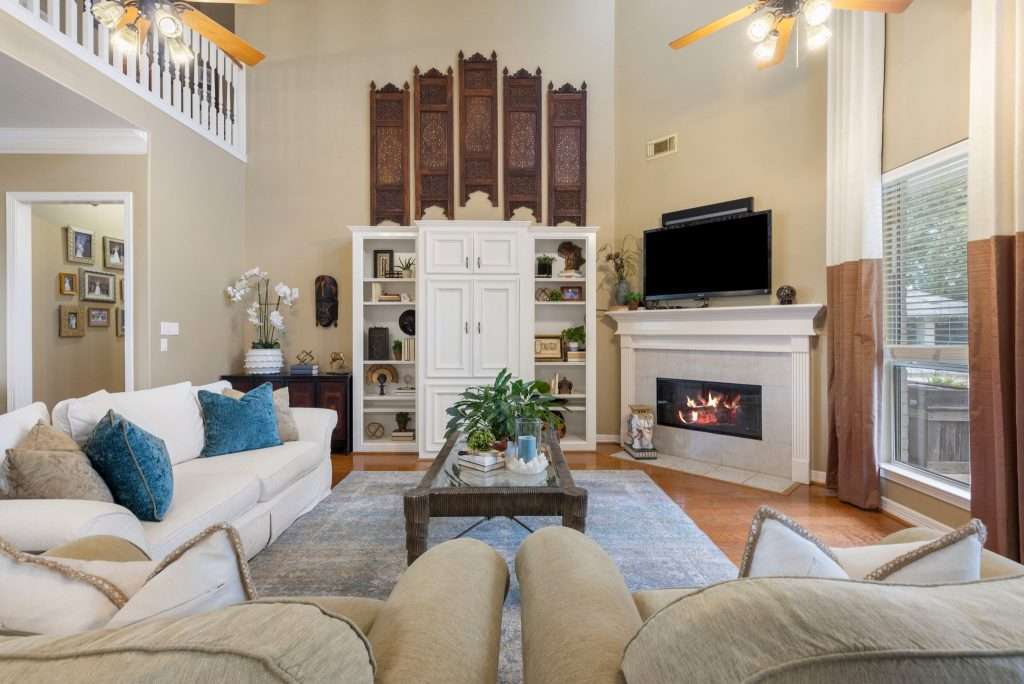
Most Houston-area designers want you to start completely over, replacing everything in the room whether it needs it or not. We don’t work that way. The better question is which pieces you already own are worth keeping, and which ones need to go.
A grandmother’s dresser with good bones doesn’t need to be replaced. It needs a finish update and a new role in the room. A frame that’s held up for fifteen years doesn’t need a landfill trip. It needs new upholstery and maybe a cushion rebuild. We’ve reimagined pieces that were structurally sound but visually stuck. We marry them with new pieces sourced at trade pricing instead of ringing up a whole new invoice.
Why this matters more with older furniture
Furniture safety and flammability standards have changed over the decades. Pieces built before certain standards were adopted sometimes need an honest evaluation before they’re reupholstered and put back into daily use. The U.S. Consumer Product Safety Commission tracks those standards. Checking against them is part of what happens before we recommend keeping a piece versus retiring it.
Reuse isn’t the sentimental choice instead of the smart one, baby. It’s often both. The pieces worth sourcing new at trade pricing are the ones that actually need to be new. Think the sofa your family sits on every night, or the dining chairs that see three meals a day. We wrote about the layer that pulls a mixed room together once the big pieces are settled, if you’re already at that stage.
If you’re weighing what to keep against what to source new, our custom cabinet and built-in work in The Woodlands often ends up part of that same conversation. Storage pieces get reimagined right alongside the furniture.
Questions Homeowners Ask About Sourcing Furniture Through a Designer
No. A good designer evaluates what you already own before recommending anything new. Pieces with solid construction often stay in the room with a new finish, new upholstery, or a new placement. Only the pieces that have actually failed or never worked get replaced.
Often, yes. Trade lines and retail lines from the same manufacturer sometimes use different frame materials, fill densities, and fabric treatments. The trade line is sold to designers whose clients call them back if something fails early, and that accountability shapes what the manufacturer is willing to put into the piece.
Yes, and it’s often where sourcing help matters most. Knowing you want a certain style is different from knowing which vendor builds that style well. It’s also different from knowing the price and the materials suited to a Greater Houston household. A designer narrows a broad style down to the specific pieces worth buying.
It usually expands them. Trade accounts open up vendor lines and custom options that never appear on a retail floor or a retail website. The retail floor turns out to be the narrower set, not the wider one.
The Furniture You Buy Once, Not Twice
Buying furniture through a designer isn’t about the discount, even though the discount is real. It’s about not furnishing the same room twice.
You can spend a Saturday scrolling four different retail sites. Or you can let someone who already has the trade accounts, the vendor relationships, and the material knowledge do that scrolling for you. They’ll come back with better answers than you’d have found alone.
Sugar, the sofa that’s still holding up in five years is worth more than the one that looked perfect in the listing photo. That’s the whole case for sourcing it right the first time.
If you’re furnishing a room anywhere across Montgomery County or Greater Houston, let’s talk. We’ll figure out what’s worth keeping, what’s worth sourcing new, and where trade pricing actually applies. Reach out and let’s get started.