
Rug Sizing That Makes Rooms Look Bigger: The Simple Secrets to Spacious Style
Rug sizing that makes rooms look bigger isn’t magic, honey. It’s all about proportion, placement, and a good eye for balance.
The right rug can pull a room together, stretch those sightlines, and make even a snug space feel airy and intentional.
Think of it as framing your furniture in comfort and confidence, not clutter.
Whether you are styling a cozy bedroom or an open-concept living area, the right size rug sets the tone for flow and harmony.
Want to master your rug game?
Well, stick around, hun, and I’ll show you how to get that “just right” look that makes your home feel bigger, brighter, and beautifully grounded.
Rug Size Principles That Make a Room Feel More Spacious
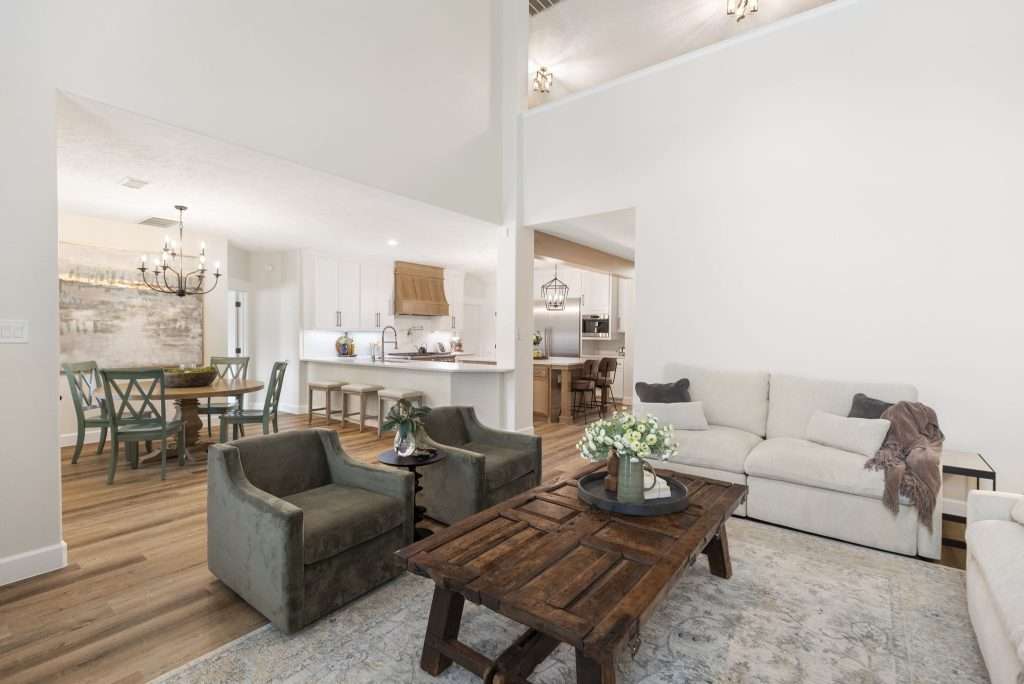
Here’s the truth, sugar:
When it comes to rug sizing, bigger almost always feels better.
You see, a well-sized rug can pull your furniture together, give the room breathing space, and make things look intentional instead of pieced together.
My advice?
Start by measuring your main furniture, including the sofa, chairs, and dining set, and choose a rug that stretches past those edges. You wanna give it room to frame the scene, hun.
In most spaces, leaving an even border of about 8 to 12 inches around the rug keeps the layout balanced; in larger rooms, you can stretch that to 12 to 18 inches.
Let at least the front legs of your chairs or sofa rest on the rug so the seating area feels grounded, not like a collection of floaters. For dining areas, make sure pulled-out chairs stay on the rug; no wobbly edges or toe-catching moments.
The goal?
Smooth flow and a sense of togetherness.
Small rugs tend to chop a room into pieces. Larger ones, on the other hand, draw the eye across the floor and create that easy, open feeling every home deserves.
And yes, colors and patterns matter, too. Lighter tones and subtle designs can help open up the space, while high-contrast or busy prints could actually make it feel smaller.
Living Rooms: Rug Sizes That Anchor and Open Up Your Space
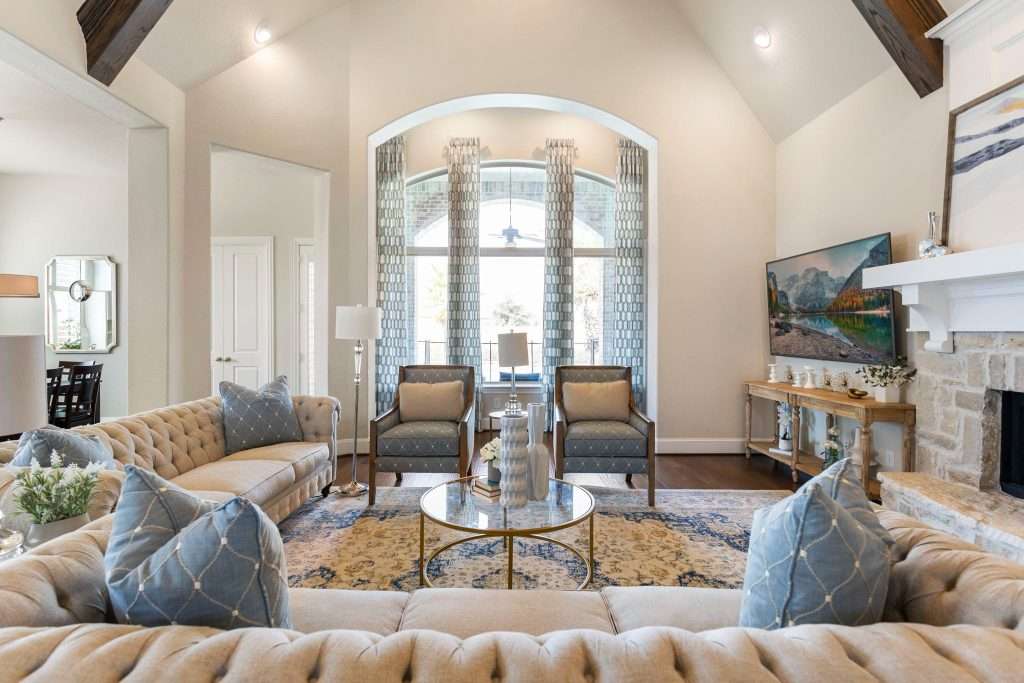
Your living room rug does more than warm the floors. It defines the space, connects your seating, and can make the whole room look more generous.
The trick?
Choosing the right size for your layout and letting the rug set the rhythm of the room.
8×10 Rugs for Compact Layouts
[image]
If your living room runs around 11×13 to 12×15 feet, an 8×10 rug usually hits the sweet spot.
It keeps things proportional and leaves a nice 12- to 18-inch border that frames the floor and stretches the room visually. Skip small rugs that leave furniture floating; a well-sized 8×10 grounds everything and helps a compact living room feel bigger and better balanced.
Again, remember to let the front legs of your sofa and chairs rest on the rug, with the coffee table centered in the middle. That connection between pieces keeps the space feeling unified and deliberate.
If you’d like to see how the right rug grounds a space and still leaves room for conversation, take a peek at our Jennifer Heights Project. The living room is a masterclass in proportions; seating, color, and pattern all working in harmony to make the room feel open and welcoming.
Here’s a piece of advice:
Before buying, tape the rug outline on the floor to test the proportions. You’ll want about 18–36 inches of walkway space for smooth traffic flow and a little breathing room.
9×12 Rugs for Larger Seating Areas
In living rooms around 16×20 feet, or with a larger seating group, a 9×12 rug adds calm and cohesion. It’s big enough to anchor the entire arrangement, so every chair leg feels invited into the conversation.
As a general guideline, you should aim for about 18 to 24 inches of bare floor around the rug to keep the layout balanced and the walls visible.
This size fits 7–8 foot sofas plus side tables at both ends, without cramping the vibe.
Got a sectional? Most 94 to 100-inch L-shapes (and even 100×100 ones) sit comfortably, with room for an extra chair or ottoman. And compared to an 8×10, you get more landing zone, visually expanding the room and banishing floating furniture.
Oversized Rugs for Open or Flowing Spaces
When your living and dining zones share an open floor plan, an oversized rug can pull everything together with grace.
Go big so every front leg lands on the rug, turning floaters into a single, intentional seating group. Oh, and leave a clean 12- to 18-inch border all the way around.
That uninterrupted ground line guides the eye, adds harmony, and can even make a long or narrow space appear wider.
A single large rug is often better than juggling several smaller ones. It simplifies cleaning, reduces noise, and keeps movement fluid between zones. After all, the goal is to make your living room look curated, not crowded.
When every detail feels connected and intentional, the living room turns from ordinary to effortless. That’s exactly the kind of harmony Design on a Dime brings to every redesign, blending comfort, proportion, and Texas charm in just the right measure.
Dining Rooms: Rug Sizes That Keep Every Chair Grounded
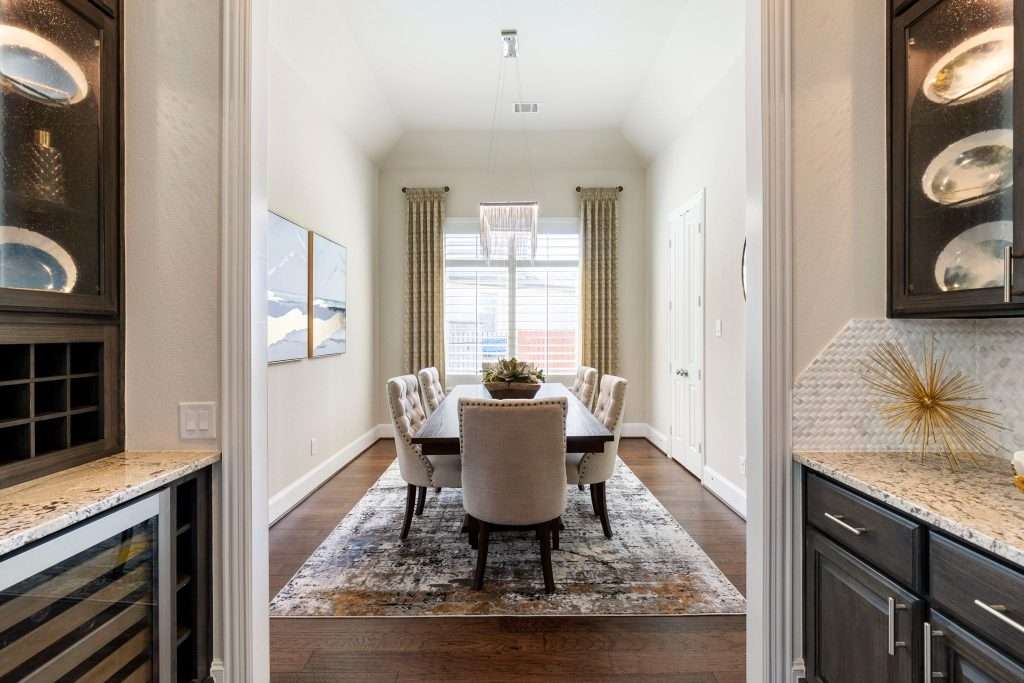
A dining room always looks more inviting when the rug fits the table and the people around it.
The key?
Give your chairs room to move without catching edges or wobbling off the rug.
Now, to do that, measure the table and add about 24 to 30 inches on every side. That way, even when someone slides their chair back, all four legs stay steady and the layout feels polished.
Here’s a quick guide:
- For rectangular tables, add 48 to 60 inches to both the length and width of the table.
- For round tables, add that same amount to the diameter.
- Leave 18 to 24 inches (12 to 16 inches for a smaller dining room) of visible floor between the rug and the walls so the room feels framed, not crowded.
In an average 14×16-foot dining room, a 9×12 rug should fit beautifully. If you’ve got a 36×96-inch table that seats six, an 8×10 will do just fine.
Now, for open floor plans, I suggest sizing up.
A slightly larger rug will define your dining area, connect it visually to the living area, and make the whole space read bigger and more intentional. Choose a flatweave or performance rug that can handle spills and traffic gracefully, and you’ll have a dining setup that’s both practical and picture-perfect.
A well-sized rug can steady the dining space, but true flow comes from the whole picture: lighting, texture, color, and layout all working together. Design on a Dime specializes in creating rooms that invite people to linger a little longer.
Bedrooms: Rug Sizes That Bring Balance and Breathing Room
Honey, let me tell you something:
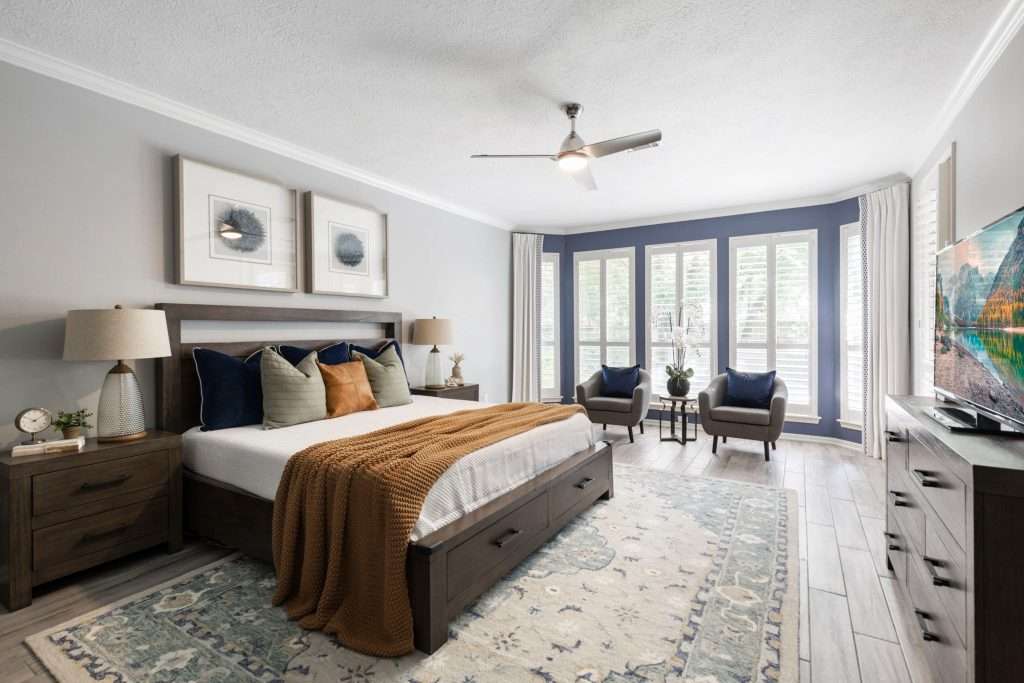
A good bedroom rug can do more than keep your toes cozy. It balances the room, anchors your furniture, and gives the space that soft, finished look.
And whether you’re styling around a queen or a king, the secret is pretty much the same.
Think even margins, generous proportions, and rugs that extend beyond the bed so the entire layout feels settled and serene.
Rug Sizing for Queen Beds
For a queen bed frame, aim to show about 18 to 24 inches of rug on each side and at the foot of the bed.
Let’s do the math on this one:
Since a queen measures 60 by 80 inches, that means an 8×10 rug usually fits just right. In smaller rooms, though, a 6×9 works beautifully without feeling cramped, while larger rooms can handle a 9×12 for a more luxurious spread.
When it comes to placement, keep 18 to 36 inches of bare floor around the rug so the space breathes and looks intentional. Oh, and center the rug, so the nightstands either sit partially on it or just off the top edge, depending on the look you prefer.
Either way, I recommend a plush, low-pile rug. It softens sound, warms the floor, and brings a cozy calm to mornings and evenings alike.
Rug Sizing for King Beds
Now, darlin’, when your bed takes center stage, that rug becomes the foundation that makes everything shine.
For a standard king (76×80 inches, that is), a 9×12 rug is your best friend. It’s big enough to hold the bed, the nightstands, and even a bench at the foot. The extra coverage gives balance to the room and helps it read larger and more grounded.
In a medium room that measures around 11×13 feet, an 8×10 rug will cover the lower two-thirds of the bed while maintaining those proportions. If you’ve got the square footage, go for a full 9×12, so the nightstands sit comfortably on top.
Rocking a California king? Don’t hesitate to size up to a 12×15, darlin’. “Skimpy” isn’t the look you’re going for here.
Runner Placement and Balanced Margins
If a full rug doesn’t fit your setup or you prefer a lighter look, don’t worry. You can use runners to frame the bed instead.
Now, I’ve got three quick rules for bedroom runner bliss:
Match the bed’s length, mirror the margins, and mind the clearance.
So, choose a pair that runs the length of the bed, each about 2.5×7 or 3×8 feet. Keep them slim enough to fit beside your nightstands, with roughly 18 to 24 inches (12 in tighter rooms) of space between the runner and the bed frame.
Let the runners extend 6 to 12 inches past the foot of the bed if you like a longer visual line. Stop short of the headboard by a few feet for a breezy, modern look.
Last but not least, I suggest going with low-pile or flatweave rugs to prevent tripping hazards and choosing lighter tones to keep the room airy and open.
Balance in a bedroom is about more than rug dimensions. It’s about how the whole space feels when you walk in. With thoughtful layering and custom designs, Design on a Dime helps create that calm, grounded beauty every restful room deserves.
Hallways & Open Concepts: Shape, Pattern, and Placement for Flow
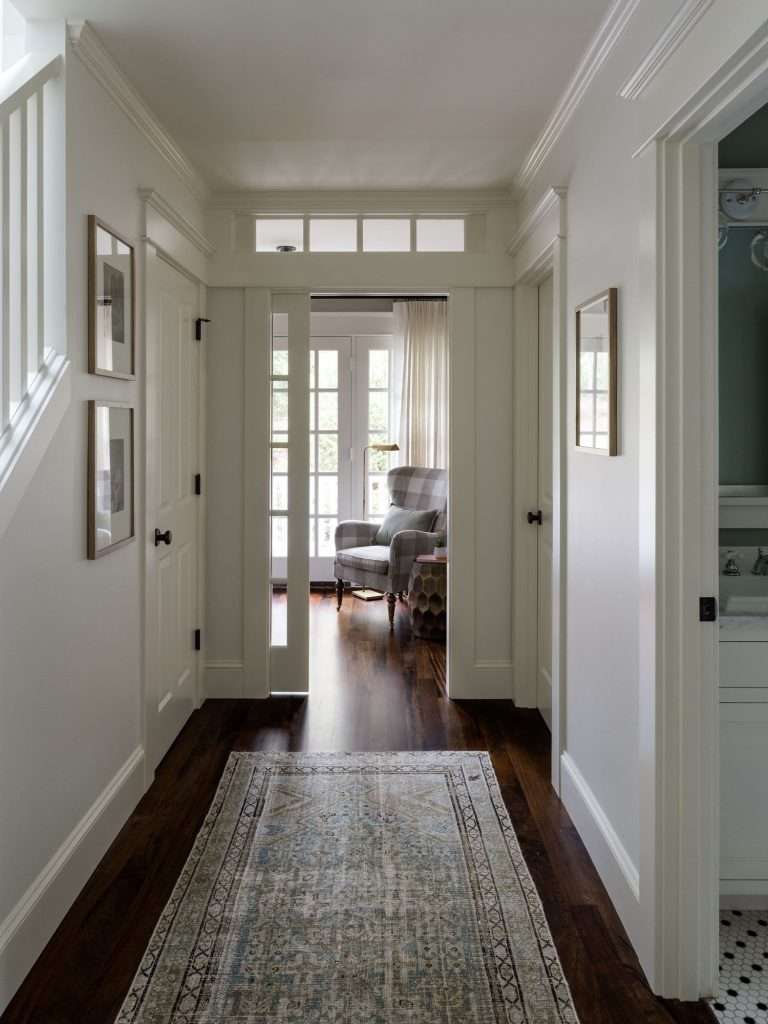
Even if your space stretches on like a runway, hun, the right rug can make it feel connected and grounded instead of endless.
You see, in long hallways, a well-fitted runner leads the eye, softens echoes, and sets a natural rhythm for movement. Of course, you want to leave even borders, about 3 to 6 inches on each side, so it looks neat, not crammed in.
You want to keep furniture off runners and make sure doors can swing freely.
If your hallway feels narrow, flip the orientation. A short rug laid crosswise visually widens the space, while a round rug in a square foyer softens edges and adds a welcoming feel.
You can even play with pattern direction, darlin’:
Stripes lengthen, while geometric motifs pull the eye toward a focal point.
Oh, and try pairing your rug with two-tone walls; it’ll add visual depth and style to narrow spaces.
In open-concept homes, rugs are your secret to gentle zoning. Instead of chopping the space with multiple small rugs, go bigger to unite the furniture groupings. A single 9×12 or 10×14 can tie a living and dining area together while still giving each zone definition.
Be sure to align rugs with sightlines and keep 18–36 inches of bare floor between rug edges and walls for visual breathing room.
Want a pro touch?
Try layering rugs with subtle variations in pattern or texture to signal transitions between different spaces, and keep walkways clear (I’m talkin’ about 30 inches wide) for an easy, natural flow.
A thoughtfully placed rug doesn’t just decorate the floor; it guides how you experience the whole space.
Of course, there are floors no rug can save. And that is where the Design on a Dime team comes in. From rich hardwoods to smooth tiles, our team knows how to lay the perfect foundation for the look you love and the flow your home needs.
Frequently Asked Questions
How do rug pads affect both comfort and safety?
Rug pads prevent slipping, keep corners from curling, and add extra cushioning underfoot. They can also protect your floors and help rugs keep their shape, which makes the whole space look more polished and steady.
Which rug materials hold up best in high-traffic areas?
For high-traffic areas, you should go with wool, nylon, and quality synthetics like polypropylene, since they are durable and easy to clean. Flatweaves or low-pile rugs stay neat in entryways and dining rooms, while plush options work better in bedrooms and cozy lounges.
How do I choose a rug shape for open floor plans?
When choosing a rug for an open floor plan, match the rug’s shape to your furniture layout, not the room’s walls. On that note, rectangular rugs work for most seating areas, while round and oval rugs can soften an angular layout or help you highlight a central dining space.
Can layered rugs still look intentional in modern spaces?
Yes, they can, as long as you vary the scale and texture. Use a larger neutral rug as your base and layer a smaller patterned or textured one on top to define zones or add depth without clutter.
What’s the right way to align rugs in connected spaces?
When it comes to aligning rugs, aim to keep edges parallel to major walls or furniture lines, and maintain a few inches of consistent spacing between rugs in adjoining zones. That alignment will keep the whole area visually calm and cohesive, which is exactly what you want in connected spaces.
Bringing It All Together, One Rug at a Time
The right rug doesn’t just cover the floor, sugar. It changes how a whole room feels. When the proportions are right, everything breathes easier, and your space feels calm, connected, and confident.
That’s the power of design that understands both beauty and function.
At Design on a Dime, we help homeowners all across Texas get that balance just right, turning every room into something that feels a little bigger, a little brighter, and perfectly personal.
If your home could use a little of that magic, let’s start designing your space together.