
Designing for Togetherness: How to Make Your Living Spaces Feel More Connected
If you’re wondering how to make your living spaces feel more connected, I’ve got three words for you, sugar:
Designing for togetherness.
And it all starts with the kind of space that gently pulls people in and makes them want to actually hang out instead of hiding in their rooms. Think rooms that feel open, warm, and easy to navigate.
And no, you don’t need a huge home to create that kind of energy, just thoughtful choices that support real conversations and shared moments.
Think of it like setting the stage for connection, where every single light, texture, and detail quietly lifts your mood. Once you feel how a room can invite people closer, it’s hard to imagine living any other way.
Mapping Movement to Bring People Together
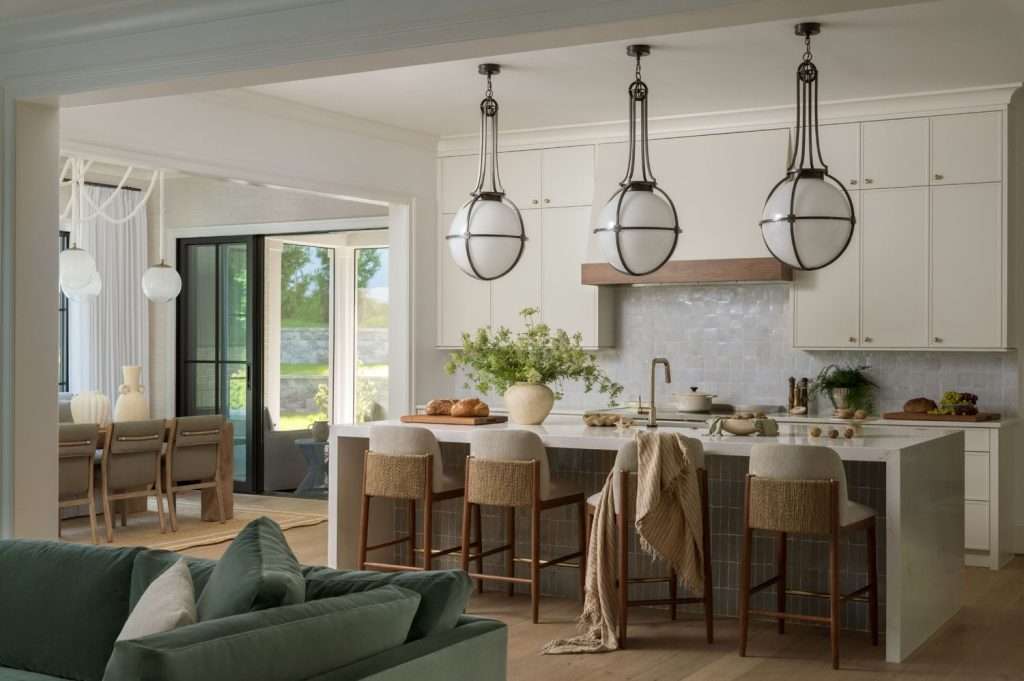
When you hear the phrase “mapping movement,” it might sound a little like something a city planner would say, but at home, it is simply about guiding people so they move comfortably through a space.
The goal?
Help folks drift toward each other instead of weaving around furniture like they’re dodging traffic.
See, in a truly connected home, those fast lanes get narrower, the strolling zones get wider, and everyone feels welcome to slow down and enjoy the company.
You know how great streets have small places to pause, chat, or linger? Well, your home benefits from the same idea. Think seating near a window, a landing spot for keys and mail, and a reading chair tucked near the living room; these can all serve as gentle invitations to gather.
These quiet destinations help the space feel alive and naturally social.
- Sightlines That Pull People In
Open sightlines are what give a house its sense of ease. When you can see from the living area to the kitchen, everyone feels more oriented and less rushed. Plus, these sightlines help keep people connected, even when they’re doing different things. A parent cooking dinner, for example, can still chat with a teen at the table, and guests instantly understand where to settle in.
- Pathways That Feel Calm Instead of Crowded
Just like narrow car lanes help drivers slow down, clear and simple pathways encourage people to relax as they move. Trimming back clutter along major walkways has a calming effect. Think wider routes through the living room, hallways without pinch points, and smooth loops around the kitchen island; they make movement intuitive and encourage people to linger, strengthening togetherness.
- Anchor Points That Encourage Gathering
Every good floor plan has anchor points. Fireplaces, kitchen islands, and big windows with a pretty view all act as natural magnets when furniture is angled toward them. Arrange your space so these anchors are easy to approach from different directions, and folks will gravitate toward them without thinking.
When you take a little time to map your movement, every pathway becomes an opportunity to connect. It’s a subtle change, sure, but it turns daily routines into shared moments without anyone feeling “steered” and managed.
If your rooms still feel a little “stop-and-go,” Design on a Dime can help you shape smoother flow lines that guide people exactly where you want them to gather.
Furniture Layouts That Encourage Real Connection
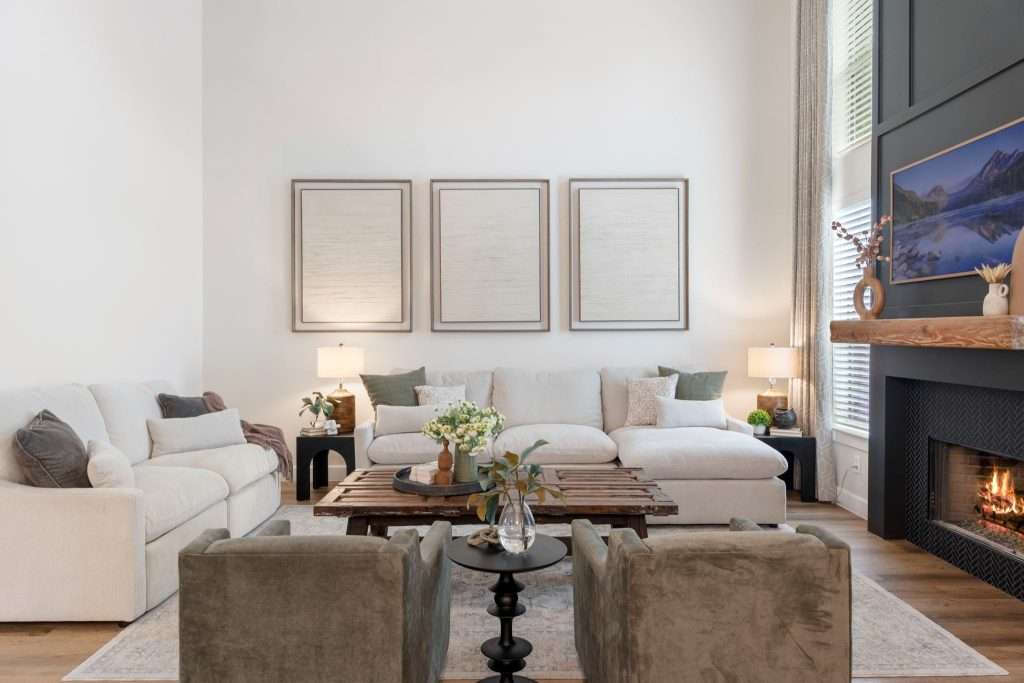
When you put conversations first, your furniture stops lining the walls like it is there waiting for the bus and starts acting like a warm invitation to gather. I’m talkin’ movie nights, play dates, and family drop-ins.
The right layout brings people closer, keeps voices soft, and helps even the quietest guests feel welcomed in.
- Seating Angles That Bring People In
Your sofa and chairs should feel like a team working toward the same goal. Turning them toward each other encourages eye contact, and eye contact is one of the strongest social cues we have. Even a subtle angle, where seats are turned inward, shifts the mood of the room from passive to inviting, keeping everyone close enough to talk comfortably.
- Groupings That Feel Natural Instead of Forced
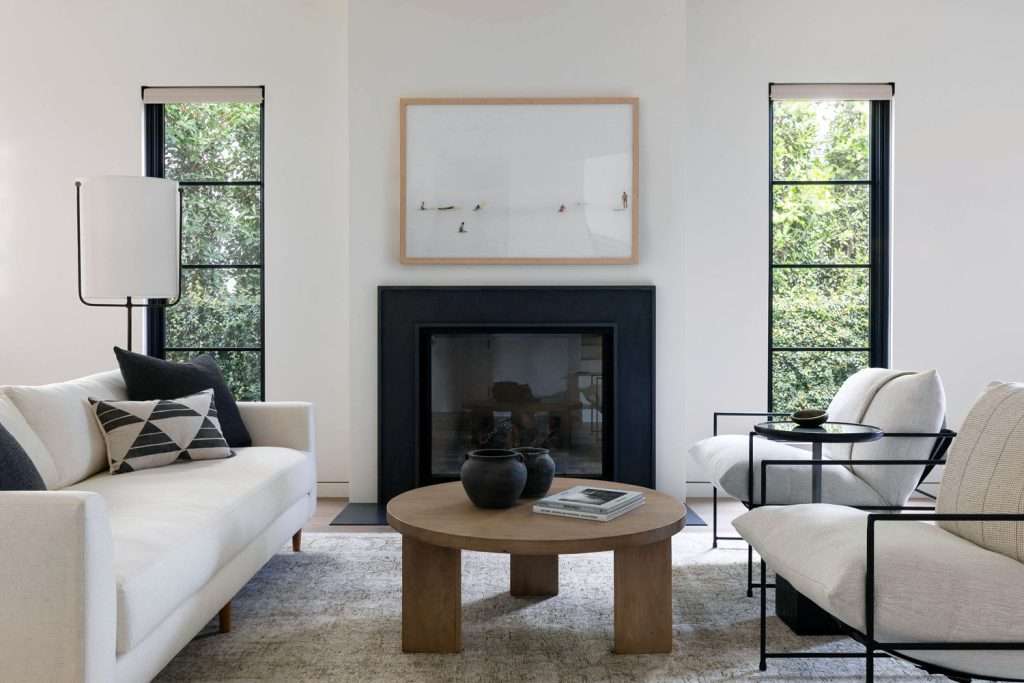
A good conversation zone works like your own circle of trust. Circular and gentle U-shaped layouts give everyone an equal seat at the table, making them more likely to engage. An area rug can help you define the zone so that people instantly understand where to gather, while adding warmth and visual structure. Place your coffee table so it anchors your group setup, but avoid oversized pieces that block movement or interrupt the flow.
- Comfortable Distances That Support Easy Conversation
Most people feel at ease when their seats fall within an 8-foot range of each other. Any farther and conversations start to feel strained. Any closer and people begin to shift and fidget. That mid-range distance mimics how families often gather around kitchen islands or outdoor fire pits; close enough to connect but not crowded.
Good seating does more than support conversation. It reinforces the emotional ties that make a home feel strong, too.
That is to say, your furniture choices really do support well-being in more ways than one.
With the right angles, the right groupings, and the right distances, the living room shifts from a place where people pass through to a place where they want to settle in and stay awhile. Check out our Painters Ridge Project for a real-life example of that.
If your layout needs more heart than guesswork, Design on a Dime can reimagine your furniture plan and make conversations the natural center of the room.
How Layered Lighting Builds Warm, Social Spaces
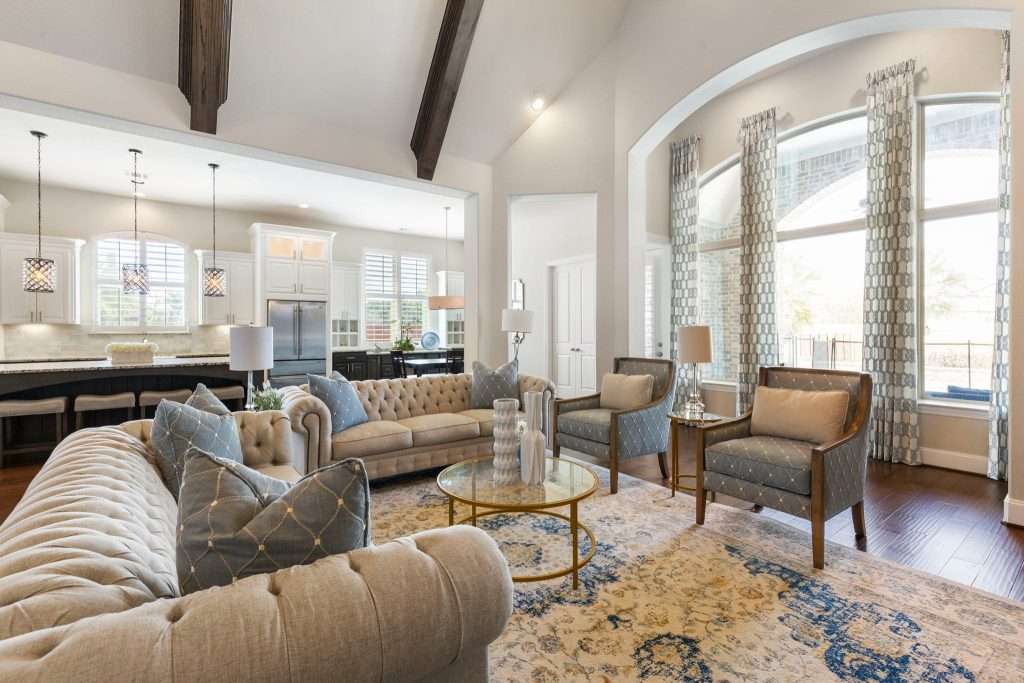
Lighting is one of the quietest helpers in a home. Think about it, sugar; it shapes the mood without anyone noticing, guiding people toward the spots that feel calm, friendly, and worth settling into.
When the lighting in a room is balanced and gentle, faces look softer, colors feel richer, and conversations flow without effort.
Here’s how to do it right:
- Building Layers That Support Connection
A living room feels warm and welcoming when ambient, task, and accent lighting all work together instead of fighting for attention. Ambient light adds that soft overall glow, task lighting brightens the places where people read or play, and accent lights highlight art or architectural features. Layer all three, and the space moves from flat to warm in the simplest way. When certain corners glow more than others, people instinctively follow the light and explore those areas.
- Choosing Temperatures That Feel Natural
Lighting temperature affects the entire atmosphere. Warm light between 2700K and 3000K is great for living areas because it feels relaxed and people-friendly. Cooler tones may work for tasks, sure, but they often feel “clinical” in family rooms. Dimmers give you all the flexibility you need; one room becomes ready for anything, from game night to quiet morning coffee.
- Filling the Dark Pockets
Every room has corners that tend to fall into shadow unless you intentionally brighten them. These dark pockets can make a space feel smaller and less inviting, and people instinctively avoid sitting there. A small floor lamp, a wall sconce, or a rechargeable table lamp could shift those spots back into the social zone. When the whole room is evenly lit, guests feel welcome, no matter where they land.
Layered lighting does more than illuminate. It sets the tone for togetherness, gently encouraging people to settle in, slow down, and share the moment.
Worried that your lighting still feels flat or fussy? Design on a Dime can help you build layers that will flatter your home and bring out that warm, welcoming glow you’re craving.
Integrating Smart Tech Without Losing Warmth
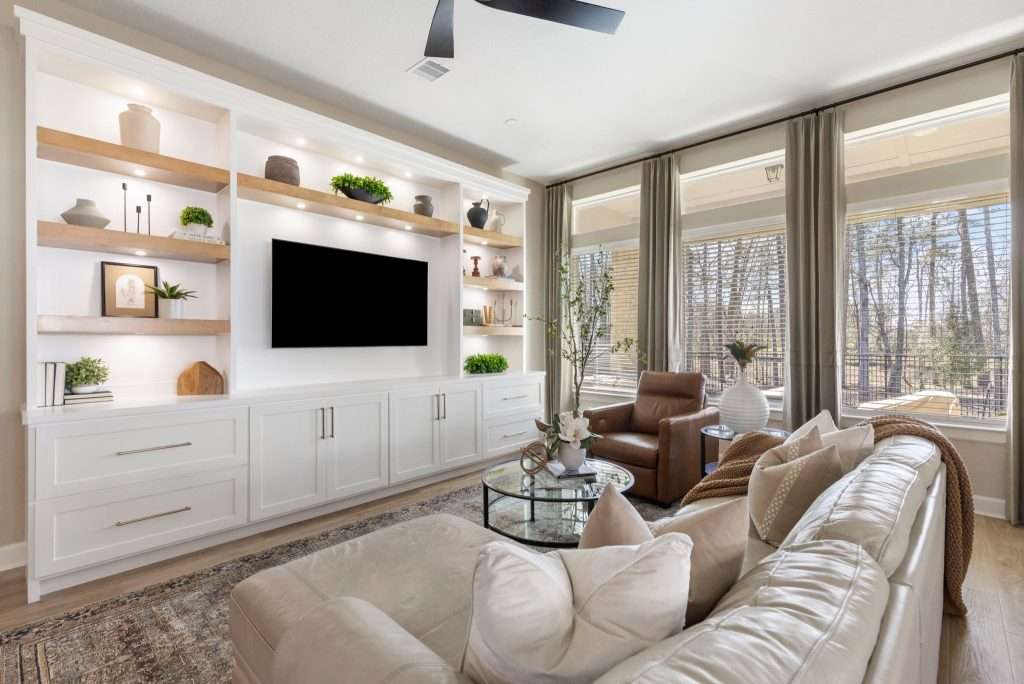
I know what you’re thinking, but trust me, hun, there can be room for technology, even in a traditional living space. It should never overpower the heart of the home, though.
The key is to let the devices support the way you gather and add that modern, comfortable touch, not steal the spotlight.
With nearly half of households owning at least one smart device, you can blend tech into even the coziest space without losing that touch of warmth.
Here’s how:
- Choosing Tech That Fits How You Live
Focus on what you use every day, like streaming, music, or simple lighting controls. Keep the look soft by combining your smart TV with warm textures and artwork, and choose one main ecosystem so everything works together. If glare is an issue, use window coverings that’ll protect your screens while keeping the space cozy.
- Smart Displays Without the Clutter
Blend displays and gadgets into the existing decor instead of letting them float on their own. Tuck a smart display onto a shelf with books or plants, or use a frame-style screen that becomes art when idle. Hidden storage, cable routes, and baskets are your friends here; they keep small accessories from cluttering up your surfaces, so the room still feels calm and intentional.
- Tech Touches That Support Connection
A shared smart hub, easy casting, and simple music controls can bring everyone back to a shared experience, instead of drifting off to separate devices. Solid Wi-Fi is the quiet backbone here since it keeps everything running without frustration. Thoughtful tech integration can add comfort without dimming the warmth that makes a living room feel like home.
Designing for Every Generation, From Kids and Teens to Adults
When you are juggling kids, teens, and adults under one roof, you need rooms that juggle right along with you. And that, darlin’, means thoughtful zoning for shared hangouts and quiet recharge corners instead of the old everyone-in-the-living-room arrangement.
You see, hun, 8.1% of the US population now lives in multigenerational households. So, families need to rethink their current layouts so that the connection feels natural, but privacy still has a place.
Here are a few ways to create age-friendly layouts that’ll flex as your crew grows and changes:
- Age-Friendly Tech That Feels Natural
Modern tech is at its best when it makes life easier for everybody, not just the gadget lovers among you. Think simple voice controls even Grandma can use and energy-saving systems that can keep your eco-minded teens happy. Smart HVAC can calm those daily thermostat battles (yes, everyone has them) and even cut energy costs.
- Flexible Furniture That Grows With Your Family
Furniture that shifts, stacks, rolls, or folds lets one room serve three generations without skipping a beat. Modular sofas move from play fort to study lounge to family movie night just by rearranging a few pieces. Don’t forget storage tables that eat toys for breakfast and vertical shelves that keep the clutter down so life feels less chaotic. Durable woods and hardworking multifunctional designs help your space stay stylish while adjusting to whatever season of life your family is in.
- Layouts That Support Connection and Privacy
Zoning shared and private spaces is mostly a matter of supporting the way your household actually lives. When everyone has a place to plug in and a place to retreat, family life simply feels and runs smoother. You can create gentle zoning through circulation; think quiet bedrooms, active play near family spaces, sound control for youth zones, a screens-off retreat, and a shared outdoor hub. That keeps the household connected while still respecting privacy.
Combine strong storage, good circulation paths, and furniture that evolves with your crew, honey, and your home will start workin’ harder than you ever thought it could.
When your household spans different ages and energy levels, getting the design right can be a little tricky. Design on a Dime can shape a layout that will keep everyone connected while giving each person room to breathe.
Frequently Asked Questions
What color schemes best support a warm, connected atmosphere at home?
For a warm, connected atmosphere, choose a warm palette that is full of earthy mocha browns, terracotta, olive, soft yellow, and greige. These colors will help you create a cozy vibe that encourages relaxation and interactions.
How do I keep speakers or sound systems from overwhelming a small room?
You should go with low-profile speakers, raise them slightly off surfaces, and place soft materials, such as rugs, curtains, and upholstery, around the room to prevent the sound from feeling too sharp.
How do I make small apartments feel social without feeling cramped?
You can make a small apartment social by floating furniture instead of pushing it against walls, using rugs and furniture to define zones, and keeping pathways clear. Add layers of lighting, mirrors to bounce light, and a few inviting seating spots to encourage lingering. Smart storage and vertical elements help reduce clutter, keeping the space open yet cozy for conversation.
Which décor choices unintentionally make a living room feel less welcoming?
You might unintentionally make your living room less welcoming when you rely on harsh overhead lighting, matchy furniture sets, rugs that are too small, sofas that are too big, cluttered surfaces, little to no textiles, and fragile showpieces that tend to discourage people from relaxing and lingering around.
Can a living room still feel cozy if most of the lighting is smart or automated?
Yes, it can. “Smart and automated” does not necessarily mean “cold and unwelcoming.” Layer warm lamp lights with your automated settings and keep a few analog controls, too, so the room still feels human and flexible.
Ready to Turn Your Home Into a Magnet?
A connected living space is really about how you want people to feel the moment they step inside. When a space reflects warmth, intention, and just a touch of personality, it becomes the kind of room folks naturally gravitate toward.
That’s the blueprint for turning your home into a magnet for movie nights, deep talks, and all those random kitchen dance-offs.
You’re basically whispering, “Hey, come hang out.”
And if you ever want a designer’s eye to help bring that feeling to life, Design on a Dime is here to create a home that feels as good as it looks. When you are ready to explore what your space can become, you can reach out to our team and let the transformation begin.