
What Your Entryway Says Before You Do: First Impressions That Speak Volumes
What your entryway says before you do is often louder than the words you offer once the door opens, babe. Before the hug, before anyone sits down, your home has already made its introduction.
That first stretch of space sets expectations. It hints at how you live, how you unwind, and how welcome people really are. Sometimes, it feels warm and confident. Other times, it feels rushed, unfinished, and a little overwhelmed, even when the rest of the house is lovely.
The good news?
This isn’t about perfection or expensive upgrades. It’s about awareness.
So, stick around, hun. You’re about to see exactly what your entry is sayin’ about you.
What Your Front Door Reveals at First Glance
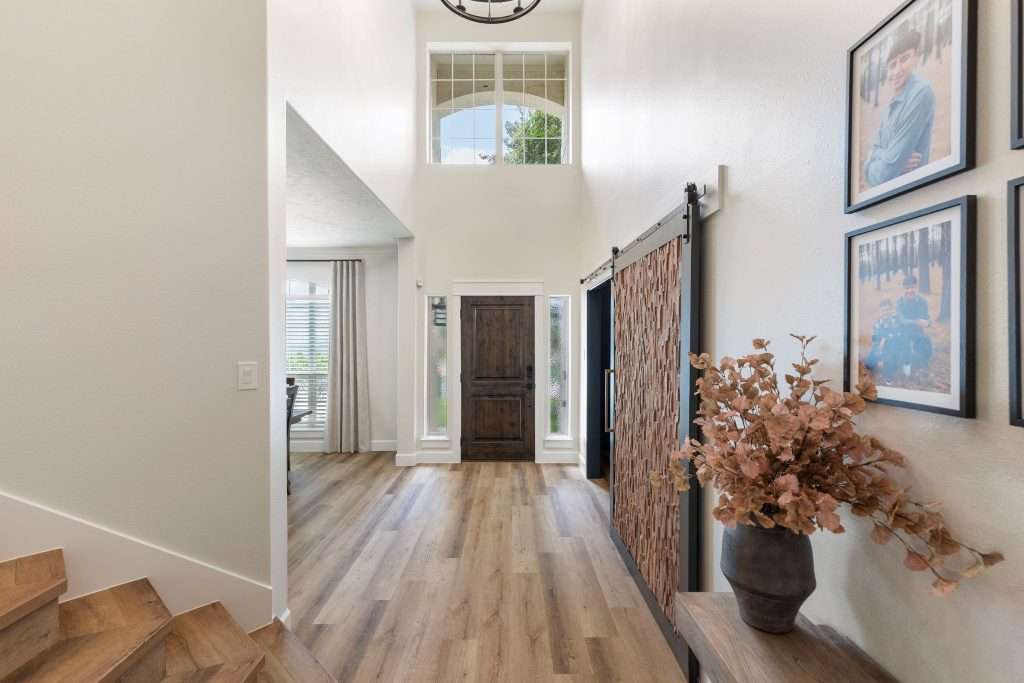
Before guests notice your furniture, your art, or your family photos, they clock your front door color. It sets expectations instantly.
Color shapes emotion faster than words ever could:
A bold hue can spark excitement, while a cooler one can slow the room down before someone even steps inside.
Since your door is already talkin’ long before anyone knocks, let’s make sure it’s saying something you’re proud of, okay?
Red Doors, Bold Welcomes
If you’ve ever pulled up to a home with a bright red front door and went, “Oh, these folks have personality,” you’re absolutely right.
A red front door doesn’t whisper. It smiles wide and waves from the porch.
It tells people you’re bold, friendly, and ready for company.
This color signals warmth and energy, which is why it’s been used across cultures to represent prosperity, protection, and hospitality. From those historic Southern homes to ancient traditions abroad, red has long marked a place of refuge and abundance.
Psychologically, red raises energy levels and grabs attention first. It makes a home feel lively and inviting before a single word is exchanged.
Of course, different shades of red can fine-tune the message even more:
- Cherry red reads as playful.
- Brick red gives off cozy vibes.
- Burgundy feels polished and lux.
A red door tells guests they are stepping into a home where energy lives and connection matters.
Black Doors, Timeless Poise
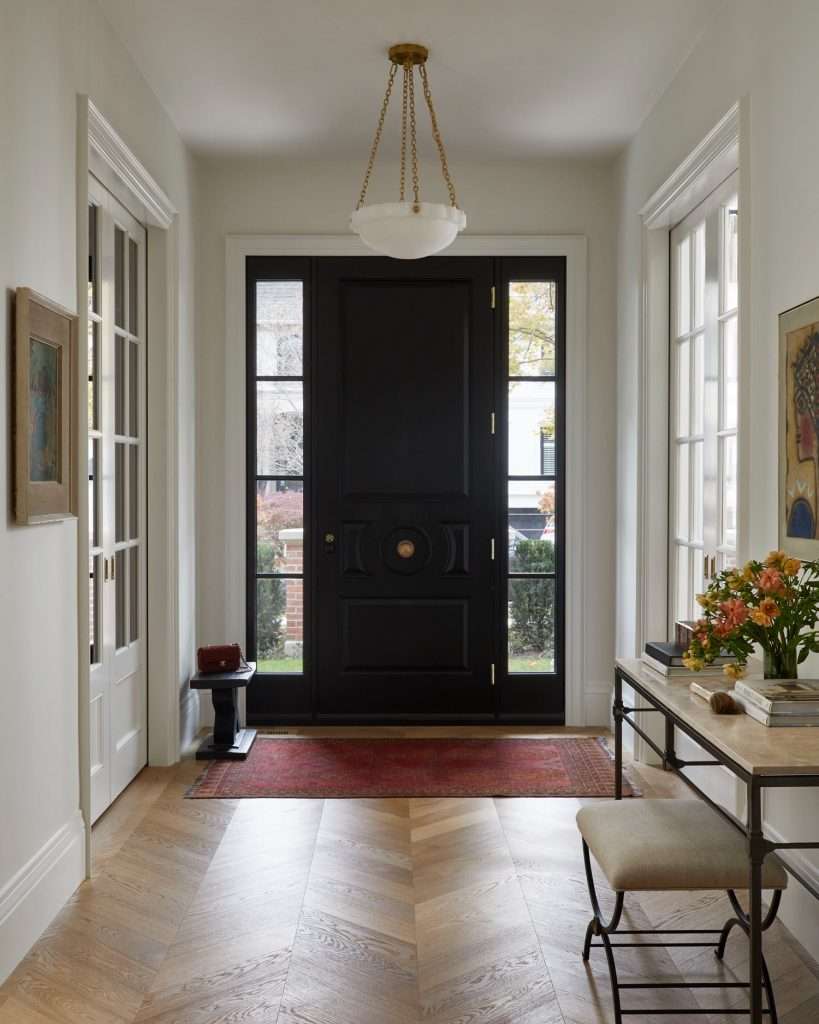
A black front door doesn’t need to announce itself. It already knows its worth.
Choose black, and you instantly give your entry that calm, confident, “CEO-of-the-street” kind of vibe, like your house knows exactly who it is and doesn’t need to shout. A black door tells people you are polished, intentional, and just a tiny bit mysterious, in the best way.
It frames your home with clarity, grounding the architecture and making surrounding materials feel richer and more refined.
Brick looks deeper. Stone feels stronger. Trim appears sharper.
Emotionally, black communicates boundaries and calm authority. Guests often view these homes as organized, composed, and thoughtfully maintained.
There’s a quiet assurance in a black door that says, “This space is cared for and purposeful.”
Market data supports that perception, too.
A black door creates a strong first impression without asking for attention. It allows the rest of your home to speak confidently once the door opens.
Blue Doors, Calm Stability
Where red energizes and black anchors, blue keeps everyone calm, grounded, and glad to be home.
A blue front door signals emotional steadiness and approachability. It quietly tells guests that this home is a safe place to land, a space where stress doesn’t get to run the show.
You’re basically hanging a sign that says, “This house is a stress-free zone, enter and exhale.”
Blue has long been associated with trust, loyalty, and reliability, making it a particularly powerful choice for an entry point.
Color psychology shows that blue lowers mental noise and encourages relaxation. People often feel more at ease without realizing why. That feeling starts before they even cross the threshold.
Different blues shape the message in subtle ways:
- Light blue suggests relaxed weekends and hopeful new chapters.
- Medium blue reads as dependable and grounded.
- Deep navy communicates responsibility and quiet confidence.
A blue door tells visitors they can exhale here. Whatever the day has been, this home offers calm, baby.
Texture, Materials, and the Unspoken Sense of Welcome
You can feel an entryway before you really see it. The moment you step through the door, your body takes note.
Is it warm or stiff? Inviting or a little cold?
That reaction has everything to do with the texture and materials working behind the scenes. They’re what turns your “just a hallway” moment into a rich, welcoming experience that works for real life. Check out our Painters Ridge Project to see how intentional design choices can truly change the emotional language of a space.
Textiles and Soft Layers That Invite You In
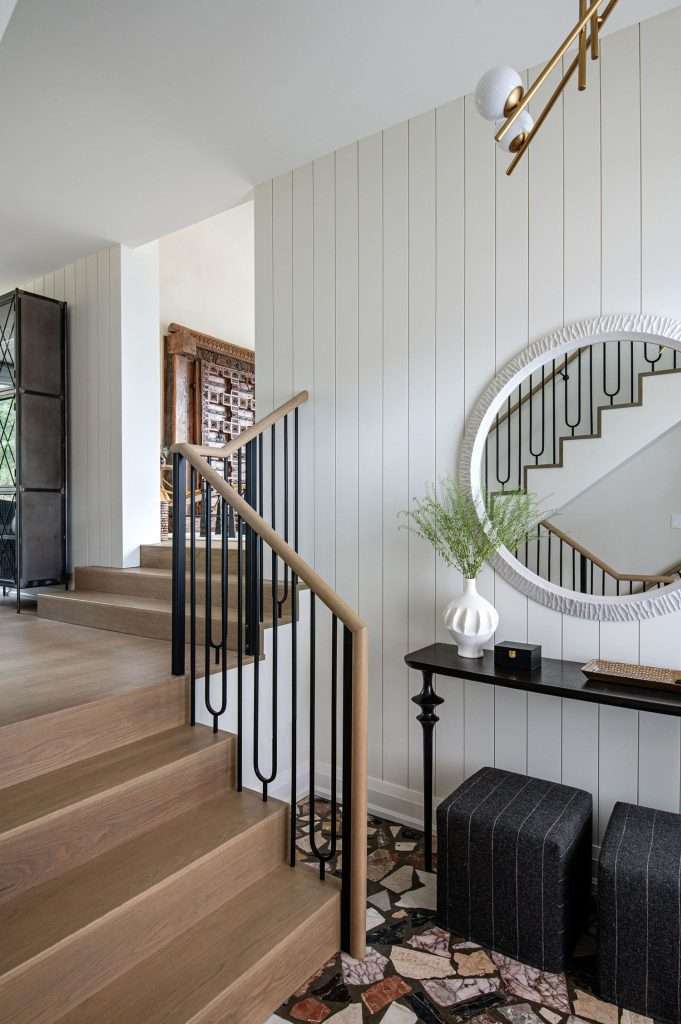
Textiles that beg to be touched are your secret weapon here. They soften hard floors, lower visual tension, and signal that this is a space meant to be used, not tiptoed through.
That’s exactly what you want an entryway to feel like, hun.
A natural fiber rug or runner immediately grounds the room and absorbs sound, making your space feel calmer. Plus, materials like sisal and jute stand up to daily traffic while still adding texture that feels organic and lived-in.
Velvet pillows and bench cushions practically grab hands. Throw in a linen pillow or two for that relaxed, slightly crinkly texture that whispers, “Yes, you can sit here.” Wool can bring warmth without looking heavy, which is especially helpful when you want the entry to feel cozy but still polished.
Earth-toned textiles help in another subtle way:
They soften light and reduce visual sharpness, making guests feel more comfortable without knowing why.
And that, sugar, is how you get an entry that feels intentional, not styled for show.
Hard Surfaces, Natural Materials, and the Right Balance
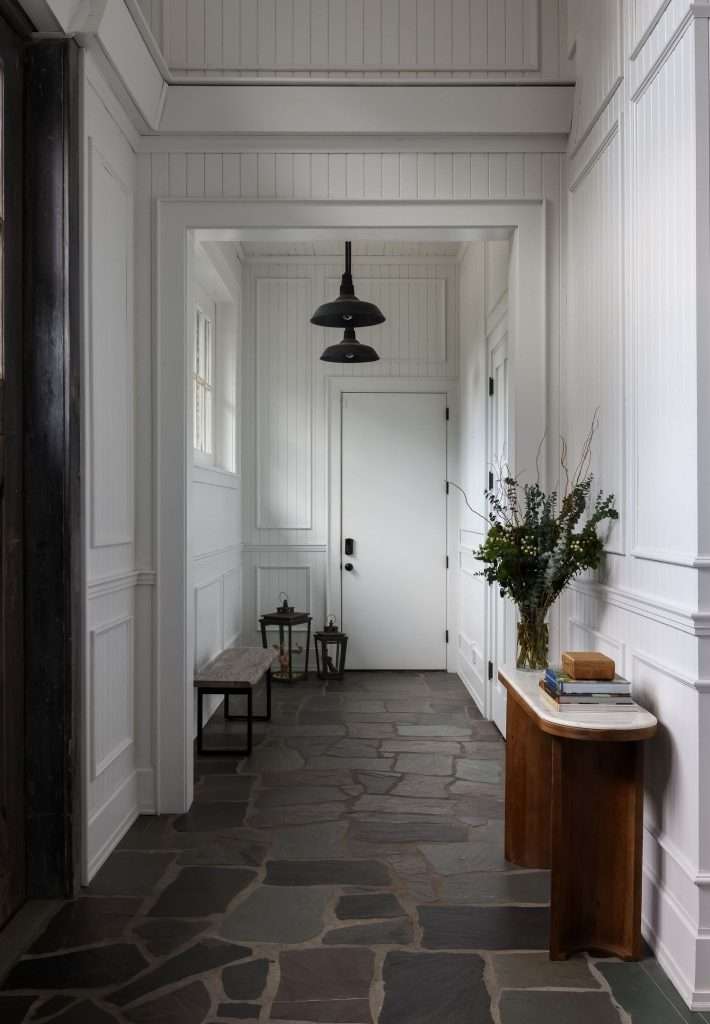
Warmth at the front door isn’t just about softness. It’s about balance.
Think of your entry like a handshake you feel, not see, and let those surfaces do the talking.
Hard surfaces give an entryway structure and durability. Wood adds warmth and familiarity. Stone and tile provide strength and longevity. Metal details bring contrast and definition. And when all these materials are layered thoughtfully?
You get a space that feels solid and welcoming at the same time.
Layering also plays a practical role:
A scraper mat outside, combined with a softer rug inside, helps protect the floors and keeps the rest of the home cleaner.
Layered rugs quietly handle real life while keeping your entry comfortable. A win-win, if you ask me.
Good looks aren’t the only benefit of natural materials, by the way. They help reduce stress and make your space feel calmer and more grounded. Even small touches of biophilic design, such as woven baskets, a wooden console, or curved furniture edges, can soften the experience of entering the home.
When the entryway feels good, it’s rarely an accident. It is the result of thoughtful material choices layered with real life in mind. That’s the kind of detail-driven approach Design on a Dime brings to every space we work on, making sure comfort, durability, and personality all get equal say.
Lighting the Welcomes and Sets the Mood
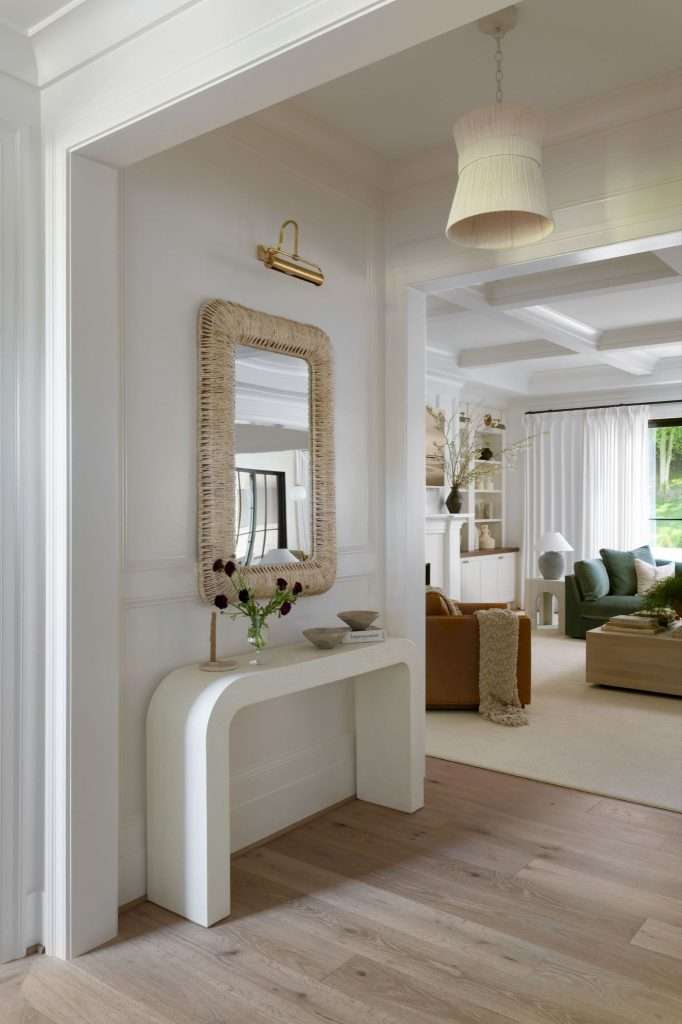
Although most folks might blame clutter or paint color for a bad first impression, lighting is usually the real mood-setter. It works fast, too.
Within seconds of walking inside, your brain decides whether the space feels good or… well, not.
Brightness literally turns emotional volume up or down. Too much light can feel harsh and overstimulating, especially at night, while too little can feel gloomy and unwelcoming. Believe me, if your foyer feels like an interrogation room, guests can feel it, too.
The sweet spot?
Light that feels intentional and human, not clinical.
Natural light carries the strongest emotional signal during the day. An entry that lets daylight spill in feels open and optimistic, even when your space is small.
Now, as evening settles in, artificial light takes over, and color temperature matters more than most folks realize:
Warm light that mirrors sunset cues can encourage relaxation and social connections. It tells your nervous system that it’s safe to slow down and settle in. Cool, bluish light at night, on the other hand, may increase tension and make a space feel “sharper” than it needs to be.
The goal is not brightness for brightness’s sake. It is about creating a gentle transition from outside energy to inside calm. So, hun, use dimmers and layered fixtures, and let natural light in to keep the vibe soft and flattering.
They might not comment on it, but your guests will feel it immediately.
Lighting is one of those things you don’t notice when it’s right, but you feel it immediately when it’s wrong. Designing that balance between warmth, function, and atmosphere takes more than a few fixture swaps. It’s something Design on a Dime considers from the very beginning, making sure your home always feels calm and intentional at every hour.
Clutter, Calm, and What Organization Says About You
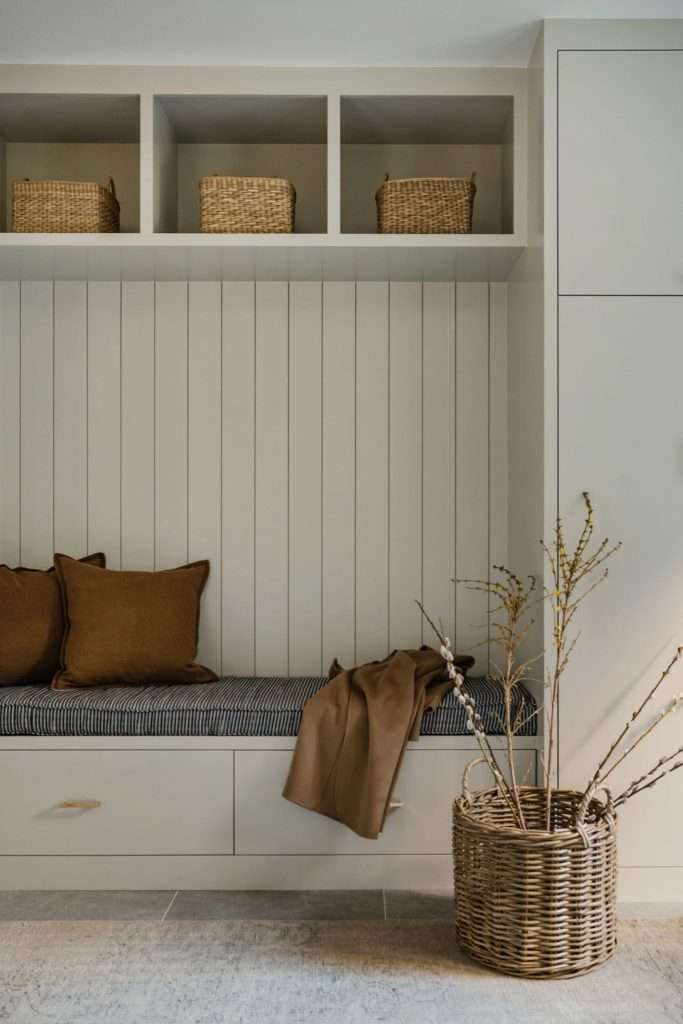
When you walk through the front door and feel your shoulders tense up, that’s not in your head, baby. That entryway of yours sends emotional signals. And it’s a well-known fact that disorganized spaces can have a negative impact on your stress levels and mental health in general.
Here’s the thing:
Those first few feet of your home tell your nervous system whether it gets to relax or needs to stay on high alert.
When that space feels chaotic, your body reads it as unfinished business waiting to happen. When it feels clear and intentional, you exhale without even realizing it.
Your entryway is a mirror, reflecting your habits, rhythms, and the kind of support your home provides you day to day.
What Clutter Signals Emotionally
Clutter at the door does more than look messy. It sends your brain straight into fight-or-flight mode. Here’s what happens, hun:
You step into your entryway, and your stress level walks in beside you.
It’s not just about higher cortisol levels, though. Disorganized environments can drag down your focus, too. People in cluttered homes carry that tension around with them longer than they realize, not just in the moment they walk in.
And the entryway is especially powerful because it’s where transitions happen.
Work to home. Outside noise to inside quiet.
When clutter blocks that transition, your body stays stuck in go mode.
That pile of shoes, bags, and mail isn’t just inconvenient, hun. It quietly trains your nervous system to stay on edge. And over time, even small messes at the door can turn “Welcome home, dear” into “What should I deal with first?”
Systems That Soothe Without Trying Too Hard
An organized entryway doesn’t need to feel rigid or overdesigned. It just needs a bit of clarity, that’s all.
Simple systems help your brain relax because they remove decision-making. Think one spot for keys. One spot for shoes. One surface for what truly belongs there.
Hooks, baskets, benches, and consoles work best when each one has a clear purpose and nothing extra is competing for attention.
I can’t recommend closed storage enough, darlin’. It allows life to happen without advertising every single detail.
And when visual noise is reduced, the space immediately feels calmer and more generous.
Folks pick up on these cues instantly. They may not name them, but trust me, they feel them.
Lights and mirrors quietly support these systems; I’ll get to that in a moment. For now, just remember that when everything works together, the entryway stops demanding energy and starts giving it back.
Minimalism, Scale, and Statement Pieces That Set the Tone
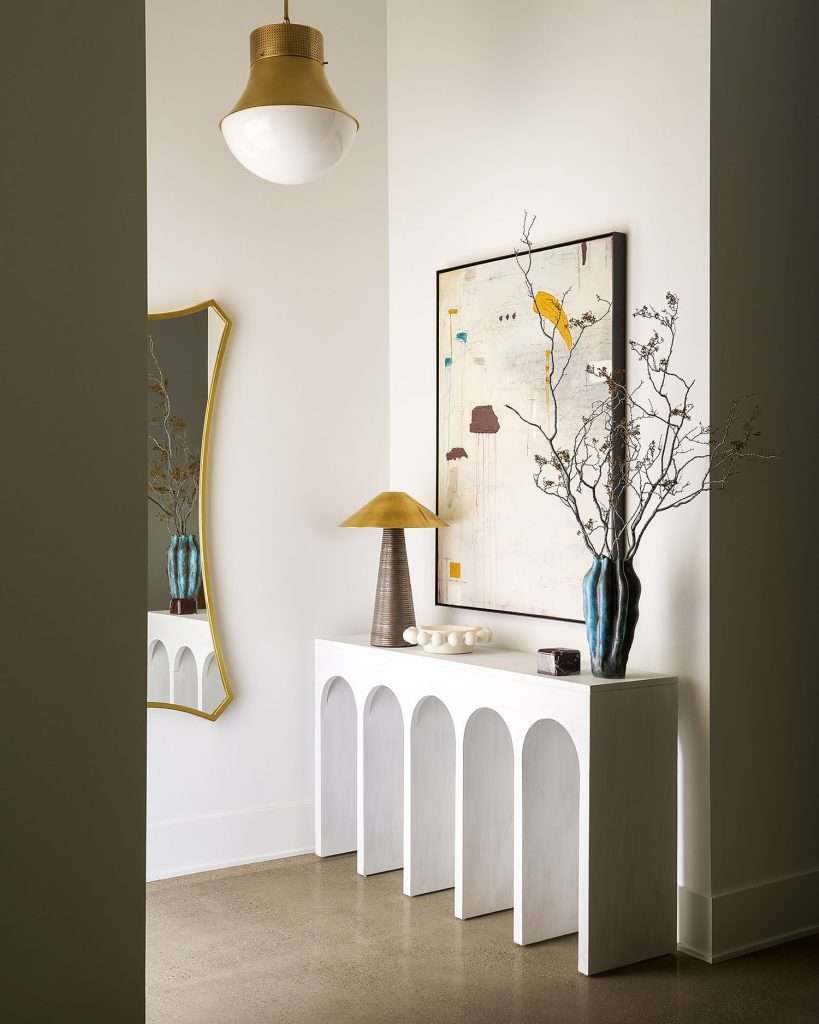
At the front door, simplicity speaks loudly.
A well-edited entryway can feel calmer, larger, and more refined within seconds, not because it is empty, but because everything in it earns its place.
Minimalism That Feels Intentional, Not Empty
Good minimalism never feels bare. It feels considered.
An entryway that leans simple works best when it supports daily life without advertising it. It’s easy to see why many homeowners gravitate toward uncluttered entry designs:
Clear walking paths help your guests move comfortably instead of dodging bags and shoes. Neutral tones reflect light and keep the space feeling open. Hidden storage, like benches, consoles, and cabinets, tucks things away and allows the space to stay visually calm while still handling real routines.
Again, the goal isn’t to remove personality. It’s to remove friction.
Intentional negative space matters, too. When there’s room to breathe, the things you do keep often feel more important. And that restraint reads as confidence and care.
Statement Pieces That Anchor the Space
Minimal doesn’t mean forgettable.
A single strong piece can ground an entryway and tell a clear story the moment someone walks in.
A bold rug defines the zone and brings in pattern and warmth. A sculptural console or rounded table turns everyday things into part of the experience. Art at the entry creates an immediate emotional hook, helping guests feel oriented and welcomed.
Plus, it all signals your creativity and openness.
And remember, hun:
Scale does more work than quantity ever will.
Oversized mirrors and focused gallery moments work especially well here. People form first impressions quickly, and these visual anchors give the eye somewhere to land right away. When chosen thoughtfully, they elevate the entire space without adding clutter.
Statement pieces also communicate confidence. They say this home knows what it is doing and doesn’t need to overexplain itself.
An entry that feels confident instead of cluttered comes down to “editing” and scale, not just empty space. With Design on a Dime, the goal is never “less for the sake of less,” but clarity that lets your house speak clearly.
Curb-to-Console Flow and Small Entryway Impact
A small entryway can still make a big impression, sugar. What matters most is not square footage, though. It’s how well the space carries you from outside energy to inside calm.
When an entry feels awkward or cramped, it’s usually a design issue, not a size issue.
Clear paths, storage, and good light can make even the most compact of spaces feel intentional, and folks pick up on it fast:
An entry that flows well just feels valuable, regardless of its dimensions.
Now, one thing you need to keep in mind is that the experience of your entryway begins before your doors ever open.
From the curb to the console, guests are picking up cues.
Landscaping, the front path, the door color, and the first interior view work together to tell one story. When those elements feel connected, your home immediately reads as thoughtful and cohesive.
You choreograph that expedition with curves, light, and color that whisper one story from sidewalk to table:
Repeating colors and materials guide the eye naturally from outside to inside. Curves soften the transition. Plants add life and reassurance. Warm lighting creates a gentle glow that feels inviting.
Think of this as a quiet rhythm:
Green at the curb, light at the door, texture at the console. Each step prepares the next.
When the story flows from sidewalk to front door to console table, the whole home feels more valuable, no matter the square footage. That kind of visual continuity doesn’t happen by chance. It’s the result of seeing the full picture. That’s how Design on a Dime approaches entryway design:
As part of a bigger, beautifully connected whole.
Frequently Asked Questions
Does my entryway matter if guests rarely use the front door?
Yes. Even if the front door doesn’t get used daily, it still shapes first impressions for anyone who visits your home and has a direct impact on how your home presents itself from the street.
What is the biggest mistake people make with entryway design?
The biggest mistake people make with entryway design is trying to do too much. Overfilling a small space or mixing too many ideas often creates stress and clutter instead of a welcoming vibe.
Can renters improve their entryway without permanent changes?
Yes, they absolutely can. Rugs, lights, mirrors, storage furniture, and wall hooks can all make a noticeable difference without calling for permanent changes, making them perfect for renters.
How do I know if my entryway feels intentional or just unfinished?
If the space has a clear purpose, defined drop zones, and room to move comfortably, it probably reads as intentional. However, if your things are just there without a plan, it usually feels unfinished.
Is it better to match my entryway style to the rest of the house or let it stand out?
The entryway should feel connected to the rest of your home, but it doesn’t have to match it exactly. It can still have its own moment. Think harmony, not duplication.
Your Home’s Opening Line
Your entryway isn’t trying to impress everyone, hun. It is simply telling the truth about how your home lives and how it welcomes people in. When that story feels aligned, folks relax faster, and you feel more at ease the moment you walk through that door.
Sometimes, all it takes is a fresh set of eyes to see what your space is already saying and how to guide it in a direction that feels more supportive, more polished, or, simply, more you. Every knob, color, and lamp is a little symbol whispering, “This is who lives here.”
That’s where thoughtful design can make a quiet but powerful difference.
If you’re ready to refine the first impression your home is making, Design on a Dime Interiors would love to help. You can reach out today and we’ll translate your lifestyle into an entryway that truly fits.