
The “Finishes Trio” That Makes Kitchens Look Updated (Without Replacing Cabinets)
Honey, the “finishes trio” that makes kitchens look updated is one of those quiet design tricks that can completely shift how your space feels without touching your cabinets.
If your kitchen looks a little tired, but still works just fine, chances are the issue isn’t your cabinets, anyway. It’s how the details come together… or don’t.
The good news is you don’t need to gut your entire kitchen to fix that.
With the right combination of finishes, your kitchen can feel more current, more cohesive, and a whole lot more intentional. There’s a whole strategy to it, so let me show you how to spot what’s missing and bring it all into balance.
What the Kitchen Finishes Trio Is and Why It Works
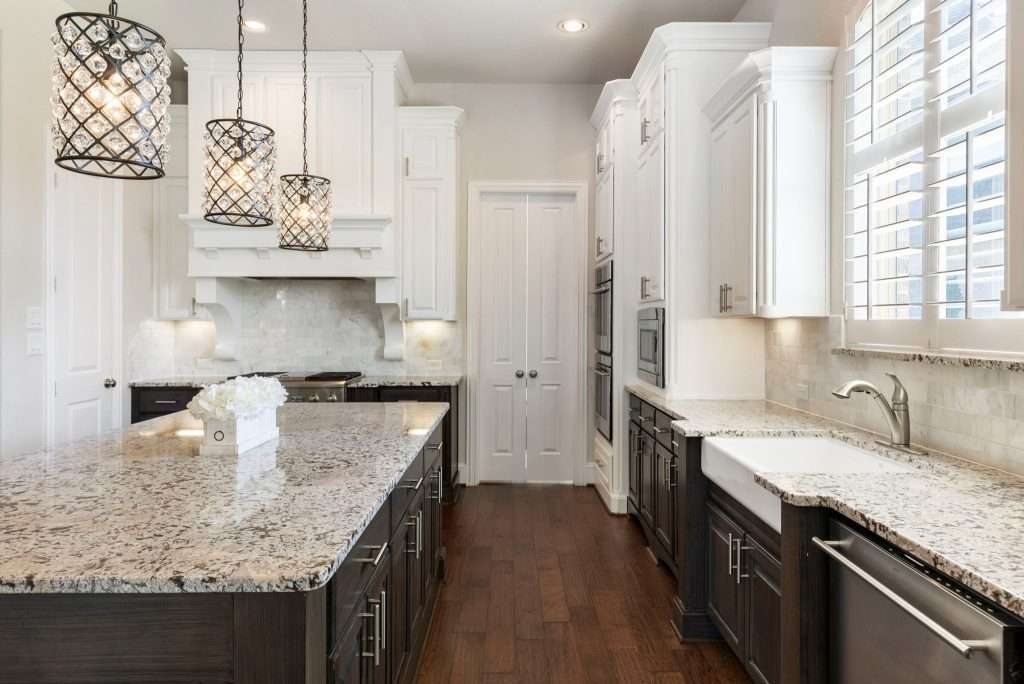
If your kitchen feels tired but the cabinets are still in good shape, you don’t need to start from scratch, hun, especially when your wallet is giving you side-eye about a full renovation. Besides, most likely, the issue is the lack of cohesion in the details.
And that’s where the kitchen finishes trio comes in.
This approach focuses on three high-impact elements you interact with every day:
- Cabinets
- Fixtures
- Accents
I’m talking knobs, pulls, faucets, sink finishes, backsplashes, and countertops. When all these finishes are chosen with intention, they start to “talk” to each other. The result?
A kitchen that feels pulled together instead of… well, pieced together.
You’re not aiming for everything to match perfectly. In fact, that can make a space feel flat. What you want, instead, is harmony. Think of it like getting dressed, hun:
Your shoes, jewelry, and handbag don’t have to be identical, but they should belong in the same story.
Trust me, when the finishes work together, something shifts. Your eye moves smoothly across the space, the cabinets look more modern, even if they haven’t changed, and your whole kitchen feels calmer, more polished, more considered.
And here’s the real win:
This kind of update gives you a visible transformation without the cost or disruption of a full renovation. It’s a smart, layered way to refresh what you already have and make it feel new again.
Sometimes, the hardest part isn’t the update itself, it’s knowing which changes will make a real difference. Design on a Dime can help you focus on the details that move the needle.
The Main Elements Every Finishes Trio Needs
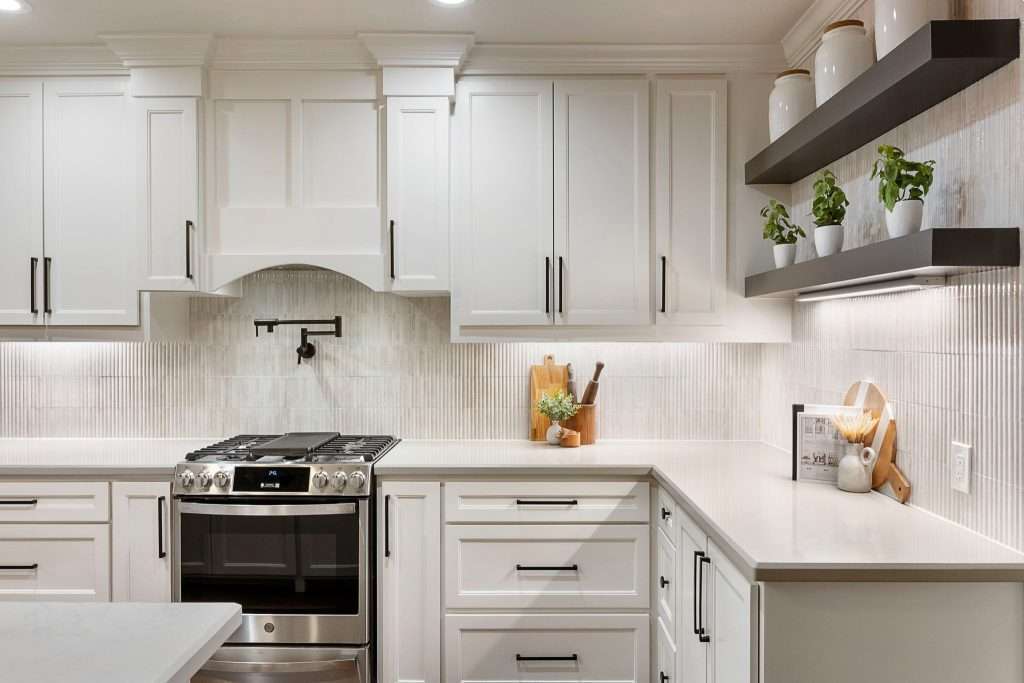
Once you understand the idea behind a “finishes trio,” your next step is knowing what pieces are doing the heavy lifting. That’s the thing, honey:
Not every surface in your kitchen needs attention. Just a few well-chosen elements can shift the entire feel of the space.
Think of it like assembling your kitchen’s A-list squad. You’ll need three stars that complement each other while bringing their own flair to the party.
Cabinets and Hardware
[image]
I like to think of hardware as the jewelry of your kitchen, with cabinets as the foundation.
Knobs and pulls sit right at eye and hand level, which means they get noticed more than you might realize. Swap these out, and suddenly, those cabinets feel different, even if the paint color hasn’t changed one bit.
That’s where you get to introduce your primary finish. Think brushed brass, matte black, or polished nickel. Whatever direction you choose, let the color of your cabinetry and hardware help set the tone.
Of course, you need to keep scale and shape in mind, as well. Longer pulls can feel more modern; smaller knobs lean more classic. The finish matters, but the form plays its part here, too.
Fixtures
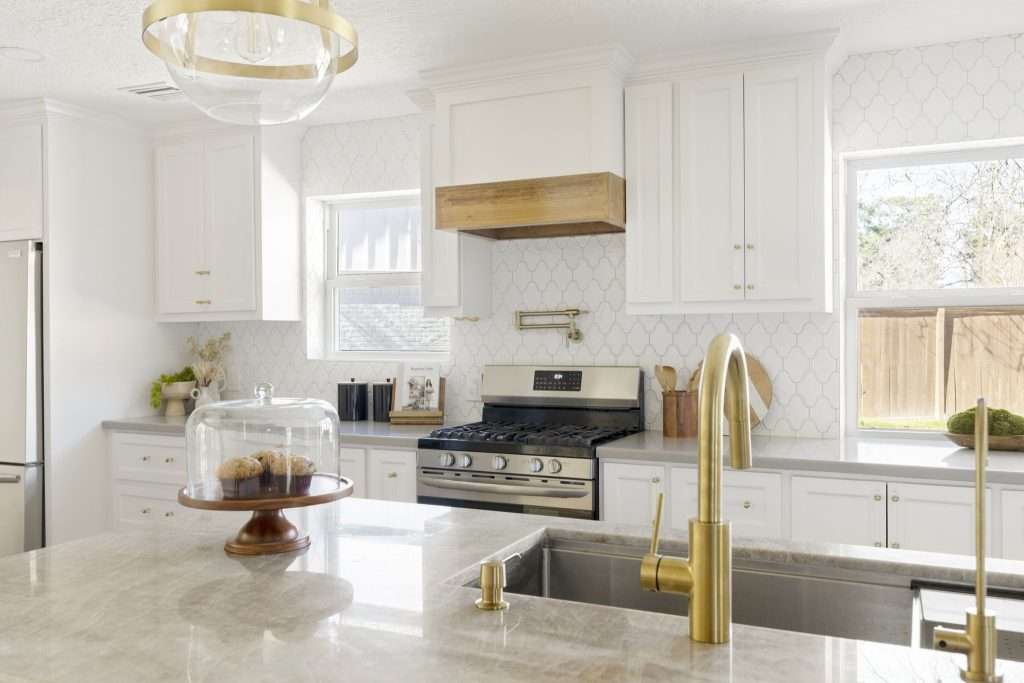
Now, sugar, this is where function meets style in a big way.
Your faucet is the most used feature in that kitchen, so it’s naturally gonna draw attention. Now, remember what I said earlier about your hardware being the jewelry?
Well, your faucet is the statement piece that anchors the look.
Lighting falls into this category, too, by the way, especially if it’s over your kitchen island or sink. Pendants and sconces help carry your finish upward, so the room feels balanced from top to bottom.
The goal here is connection:
Your fixtures should relate to your hardware, not compete with it. They don’t have to match perfectly, but they should feel like they belong in the same family.
Accents, Backsplash, and Countertops
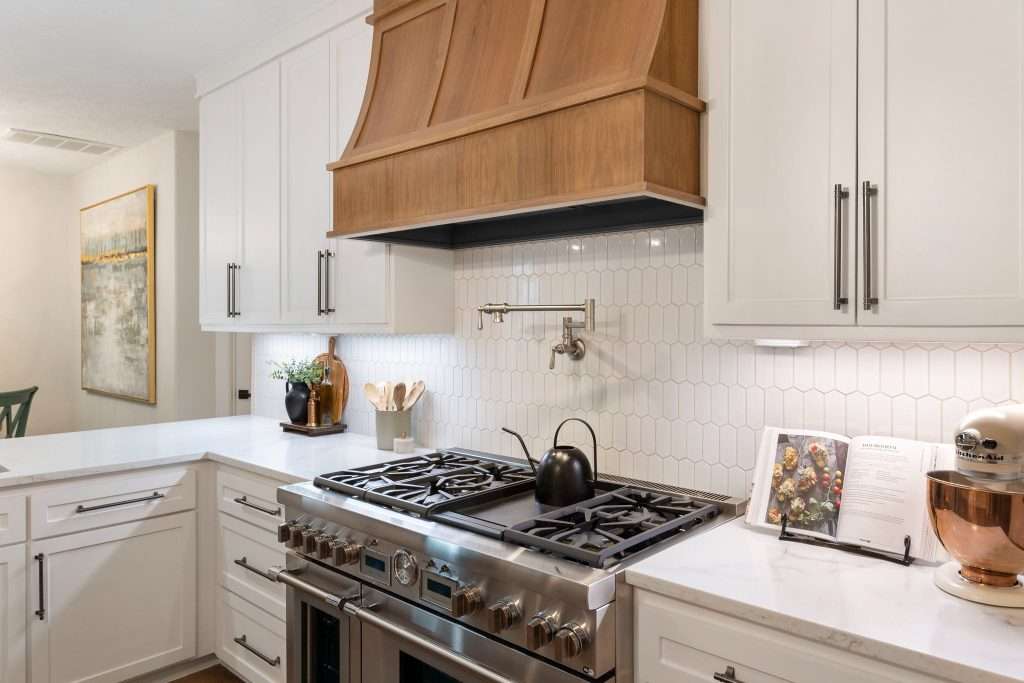
This third layer is what softens everything and makes the space feel complete.
Your backsplash, countertop edge, or even small accent details can help bridge the gap between finishes. They can introduce a little texture, tone, and a bit of contrast, so your kitchen doesn’t feel too flat or overly coordinated.
For example, a warm-toned backsplash can make brass hardware feel richer, while a subtle veining in the countertop can tie together cooler metals, like chrome or stainless steel. You get the idea.
And that’s where the real magic happens:
These materials help blend the harder finishes into something that feels natural and lived-in.
When these three elements are chosen with intention, your kitchen starts to feel cohesive without looking overly styled. Again, it’s not about matching everything, darling. It’s about creating a rhythm your eye can follow from one surface to the next.
Getting these three elements to work together calls for an understanding of balance, scale, and tone. That is exactly where our team steps in, helping you pick finishes that feel cohesive from any angle and tailored to the way you use the space.
Tri-Color Combinations That Just Work in Real Kitchens

Sometimes, it helps to see how this all comes together in a real, livable way. Sugar, I know that better than anyone.
So, allow me to introduce you to the kinds of combinations that’ll feel natural the moment you walk into the room. Nothing is forced, and nothing is trying too hard.
Warm Transitional Trio
[image]
This one feels inviting right off the bat. I’m talking:
- Brushed brass hardware
- Aged brass faucet
- Soft white or linen pendants with subtle brass details
Everything leans warm, but there’s still a bit of variation in tone. Your hardware and faucet relate closely, while the lights soften the look and keep things from feeling too shiny. If you’ve got creamy cabinets, wood accents, or anything with a bit of warmth already built in, you’re gonna love this.
Modern Contrast Trio
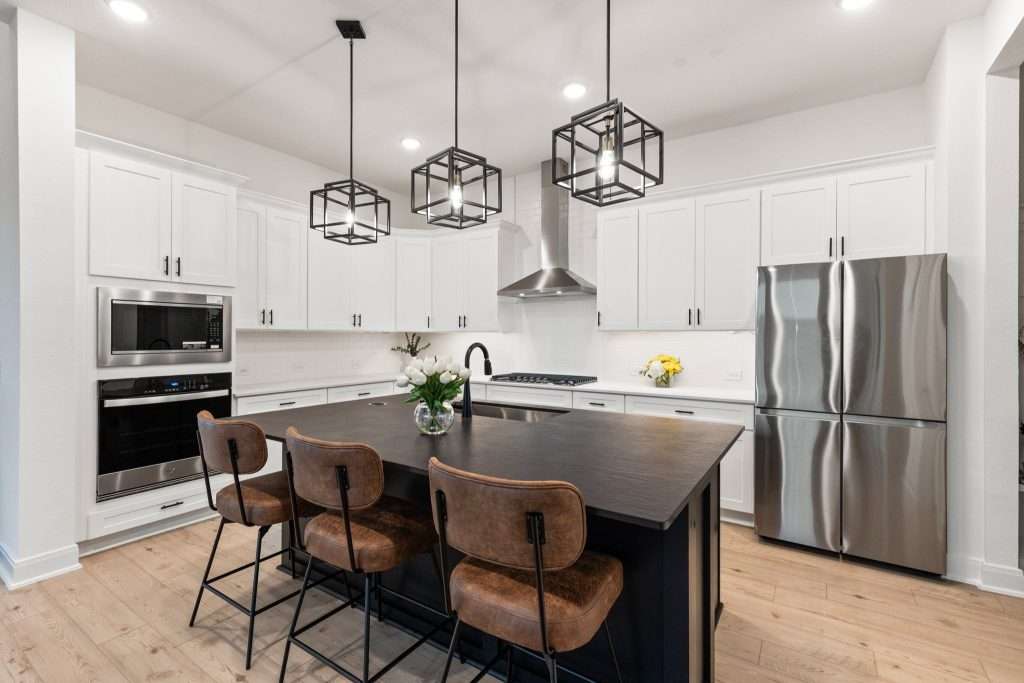
If you’re going for a cleaner, sharper look, this combination brings that edge without feeling cold:
- Matte black hardware
- Stainless steel faucet
- Black and glass pendant lighting
Here, contrast does the heavy lifting. The black hardware grounds the space, while the stainless faucet adds a bit of brightness. The lighting can tie it all together by echoing the black and letting a little light pass through the glass.
You can really see that black hardware working its magic in our Ellerden Forest Project.
Soft Neutral Trio
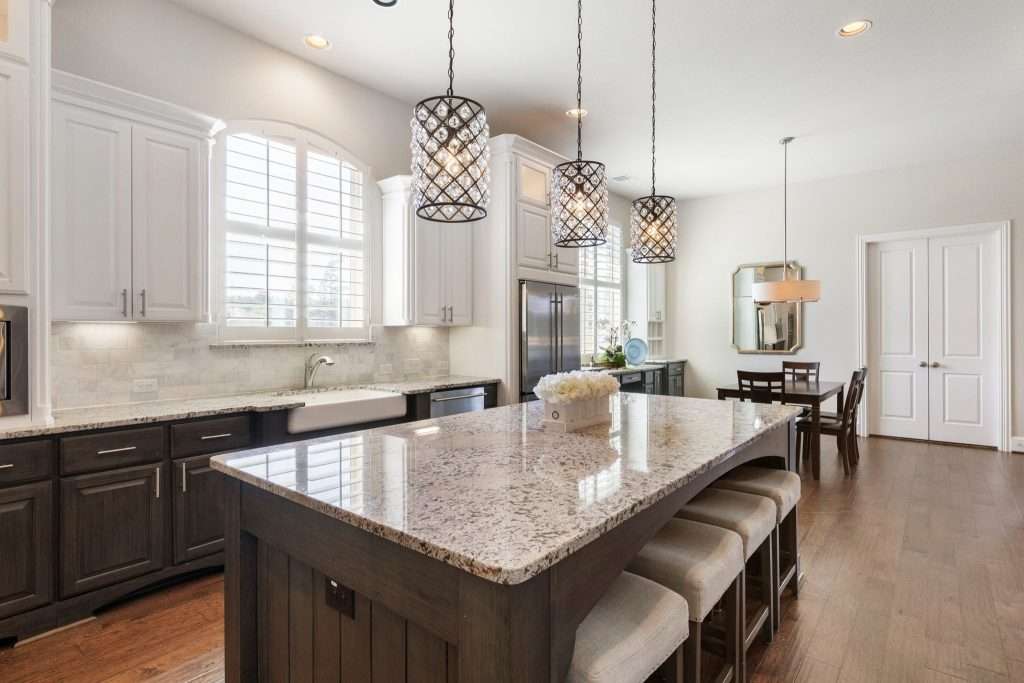
Now, hun, this one is all about ease and quiet polish. You can go with:
- Champagne bronze hardware
- Polished nickel faucet
- Linen or fabric-shade lighting
Nothing here is loud, and that’s exactly the point. These finishes blend in instead of competing. The slight warmth of the champagne bronze goes so well with the cooler shine of polished nickel, while the soft lights keep everything feeling relaxed.
If your kitchen is light and airy, this combination is gonna fit right in. It adds dimension without taking over the space.
Each of these trios follows the same idea:
A clear direction, a little variation, and just enough repetition to make everything feel connected.
Seeing combinations is one thing. Making them work in your kitchen is another. We guide that process by translating ideas into options that fit your cabinets, lighting, and overall home style, so the end result feels natural and complete.
Where Most “Finishes Trios” Go off Track

Sure, this “finishes trio” can do a whole lot of good, but here’s a little truth for you, sugar:
Even the most gorgeous kitchen trio can fall apart faster than a poorly staked cake when you make one of these classic mistakes.
Here are a few that tend to trip people up the most:
- Treating one element like it doesn’t matter
Every piece in your trio has a job to do. When one gets rushed or overlooked, the kitchen may feel a little off. A beautiful faucet can’t carry the look on its own, and great hardware won’t fix lights that feel out of place. Each element needs to get the same level of intention if you want the room to feel complete.
- Letting one finish dominate everything
It’s easy to fall in love with a finish and use it everywhere; I get it. The problem is, when everything matches too closely, the kitchen can feel flat and one-note. You lose the sense of depth that makes it feel designed instead of assembled. A little variation keeps things interesting and gives your eyes somewhere to move.
- Choosing pieces that don’t relate in style
Finish is only part of the story, darling. Shape and style matter just as much. If your hardware feels traditional but your lighting is ultra-modern, there’s gonna be some tension in the room. Even if the finishes are technically compatible, the mix can feel unsettled. You want your selections to feel like they belong in the same conversation.
- Ignoring how finishes show up in real life
Some finishes look one way in a showroom and another once they’re installed. Lights, surrounding colors, and even the size of your space can change how the finish reads. If you don’t take that into account, you can end up with something that feels stronger or duller than you might’ve expected. A quick sample test in your own kitchen can save you from that surprise.
- Forgetting the bigger picture
Your kitchen doesn’t exist on its own. If the finishes don’t connect with nearby rooms, the transition can feel abrupt. So, keep an eye on the flow into adjoining spaces; it can help everything feel more natural.
As long as you avoid these pitfalls, your finishes have room to do what they’re meant to do:
Bring the whole kitchen together in a way that feels steady, thoughtful, and easy to live with.
How to Update Your Kitchen Using the Finishes Trio (Step-by-Step)
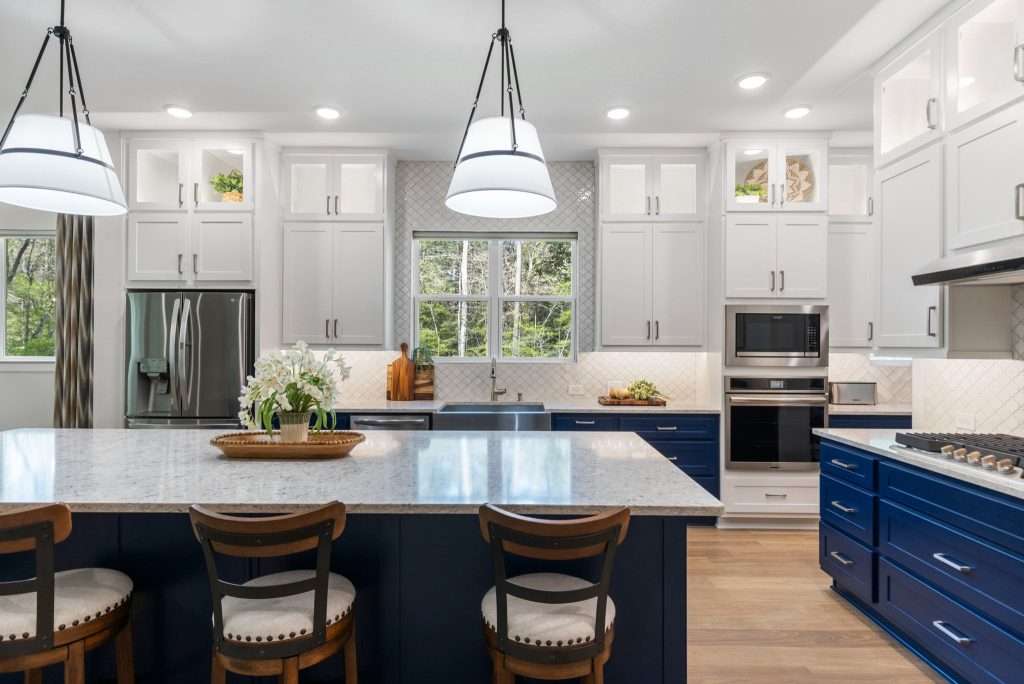
Look, darling, I get it. You’ve picked your three finishes, and now you’re staring at your kitchen, wondering where the heck to start.
The good news is, you don’t need to tear anything out or start from scratch.
Here’s the game plan, sugar:
- Step 1: Take stock of what is staying
Start by looking at your fixed elements. I’m talking cabinets, countertops, and floors; they’re setting the tone, baby, whether you realize it or not. So, pay attention to their undertones and overall style, ‘cause that’ll guide every decision you make next.
- Step 2: Choose your dominant finish
Pick the finish that’ll lead the whole look, usually your hardware or your faucet. Go with something that feels right next to your cabinets and doesn’t fight them. Once you lock this in, everything else gets easier.
- Step 3: Select a supporting finish
Then, bring in a second finish that complements the first. It could be a little lighter, a little darker, or even a different metal altogether. The goal is to add some dimension without creating tension. That is gonna keep your kitchen from feeling flat.
- Step 4: Update your hardware first
If you want a quick win, start here, sugar. Switching out cabinet hardware is simple, affordable, and instantly noticeable. It sets the tone for the rest of the upgrades and gives you some momentum to keep on going.
- Step 5: Layer in your fixtures and lighting
Next, move to your faucet and lighting. These pieces can help carry your finishes across the space from top to bottom. Make sure they relate back to what you chose for the hardware, though, so that the whole room actually feels connected.
- Step 6: Step back and fine-tune
Before you call it a day, take a moment to look at everything together. Check how the finishes feel in your lighting throughout the day. Make small adjustments if something feels too strong or out of place, ‘cause sometimes, it’s the little tweaks that bring everything into balance.
Follow this order, and I promise things won’t get overwhelming. You’re building your kitchen layer by layer, which means each step brings it closer to that pulled-together, updated look.
Even a simple update can feel a little overwhelming once you start making decisions. Design on a Dime’s process brings clarity to each step, making sure every finish is chosen with intention.
Frequently Asked Questions
How long does a “finishes trio” update usually take?
Most updates can be done in a few days to a couple of weeks. Hardware swaps are quick, while lights and plumbing updates typically take a little more coordination. But either way, it’s still gonna be a lot faster than a full renovation, I can promise you that.
Is this approach renter-friendly?
In many cases, yes, it is renter-friendly. Swapping the hardware and even some lighting fixtures can all be done without any permanent changes. Be sure to save those original pieces, though, so everything can be returned later if needed.
What finish is most timeless for kitchens?
If you want something timeless, hun, you can’t go wrong with polished nickel, stainless steel, or soft brass tones. These finishes have staying power ‘cause they’re comfortable around both warm and cool palettes.
Do “finishes trio” trends change as often as paint colors?
No, “finishes trio” trends tend to change less frequently than paint colors. While paint trends shift annually, finishes such as honed stone and natural woods prioritize timeless durability over seasonal cycles.
Which finish should I choose first when building my trio?
You should start with the element that feels most fixed in your space. For many kitchens, that is the faucet or the hardware. Once that decision is made, the rest can be built around it with much more confidence.
Fall Back in Love With Your Kitchen
Sometimes, the smartest update isn’t the biggest one, hun. It’s the one that makes everything you already have feel more considered, more connected, and honestly, a whole lot more beautiful.
That’s what the finishes trio does so well:
It gives your kitchen a sense of intention without turning your life upside down in the process.
A few small changes can shift the entire feel of a space. And once it clicks into place, honey, you’ll wonder why you ever thought you needed a full remodel in the first place. Who knew, right?
If you’re looking at your space, not quite sure how to pull it all together, don’t worry. Design on a Dime can help you shape your kitchen so that every choice works together from the start. Just reach out to our team when you’re ready!