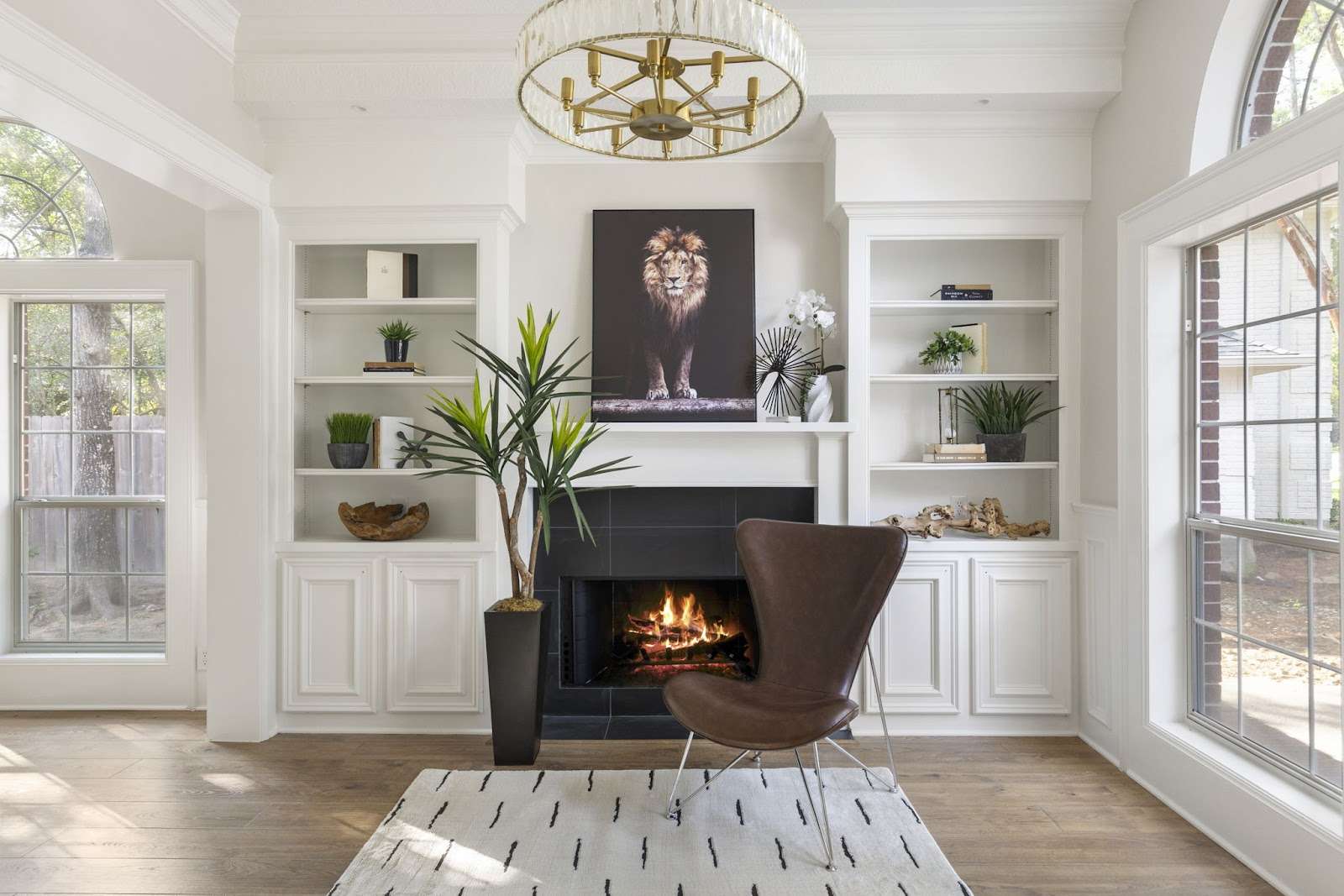
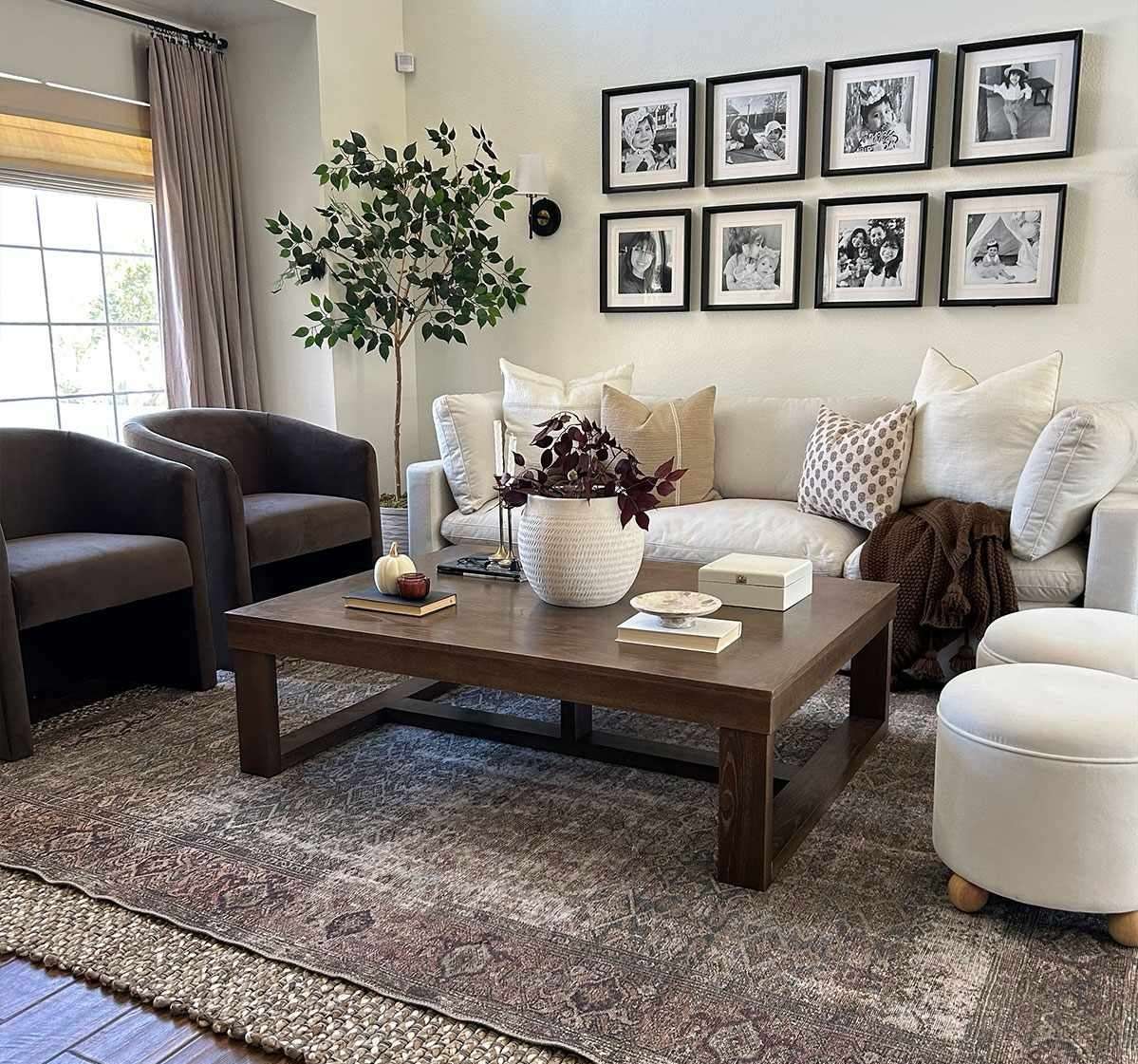
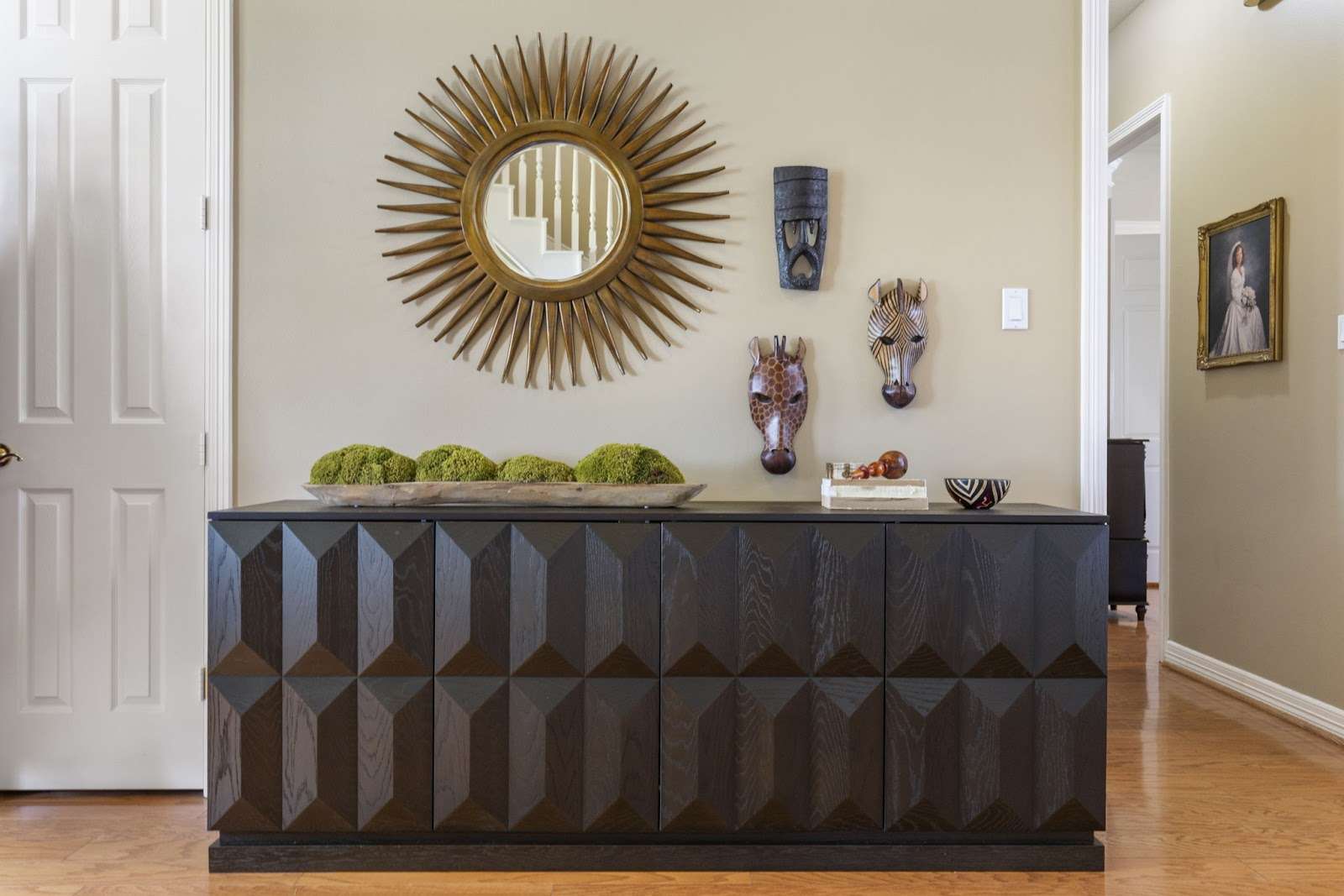
Mudroom-Laundry Combos: Layouts That Tame Texas Dirt, Pollen & Pool Days

Mudroom-laundry combos are having a moment, hun, and it’s easy to see why, especially here in Texas. 

Between dusty drives, spring pollen, and splashy pool days, our houses need spaces that work as hard as we do. These dual-purpose rooms aren’t just about keeping things clean; they’re about keeping life flowing smoothly. 

Picture walking in from the garage, kicking off muddy boots, and starting a load of towels without missing a beat. 

You see, darlin’, when every inch of space is thoughtfully planned, the once-chaotic entryway becomes the calm, hardworking heart of your home. 

Ready to learn how the right layout can make all that Texas mess feel manageable and even a bit stylish?

Let’s get to it!

Why Combine Your Mudroom and Laundry Room
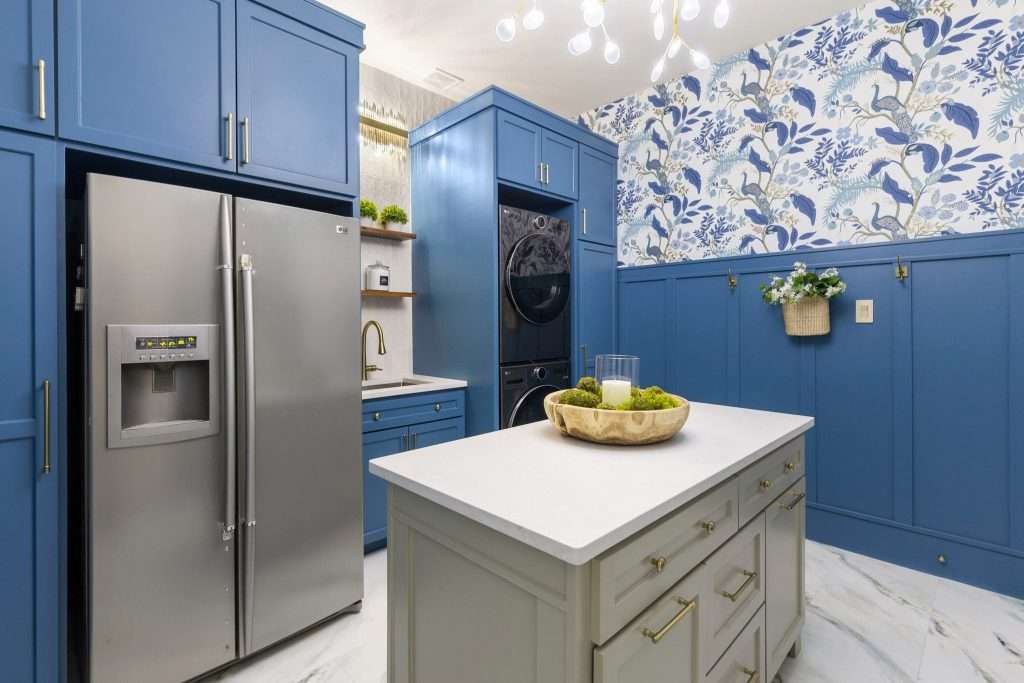
Mudroom and Laundry Room

Combining your mudroom and laundry room is one of those design choices that just makes everyday life a little smoother. I mean, think about it: 

You’ve got one hardworking area that catches the dirt before it travels through your house and handles the cleanup all in one go. 

I’m talkin’ no more tracking grass, pollen, or pool water across your beautiful floors.

This kind of layout keeps all that “messy business” in one spot. You can toss wet towels straight into the washer, drop muddy shoes in their cubbies, and hang damp clothes to dry, all within a few steps. 

It’s efficient, tidy, and a real time-saver for busy households.

Of course, there are trade-offs. You’ll want good ventilation and storage, so laundry doesn’t take over the entryway. 

But with thoughtful design, this combo area becomes a true workhorse, one that welcomes you home and keeps the rest of the house feeling fresh and organized.

Smart Layouts That Keep Your Flow Running
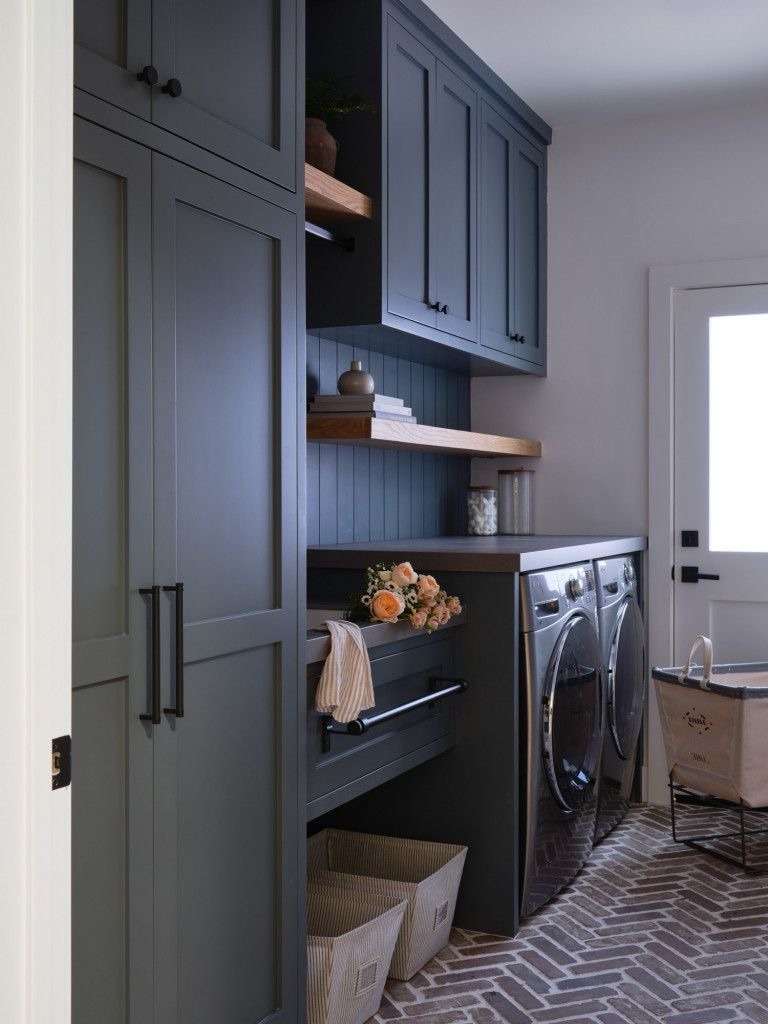
laundry and mudroom design
Source: Gather House

A well-planned mudroom and laundry can help keep the flow easy and natural

Start by placing the mudroom right where you need it most, usually at the garage entry, so dirt, grass, and wet towels stop there instead of making tracks through the house.

Remember to keep that walkway wide and clear, at least 36 inches, so kids, pets, and grocery bags can all move through without bumping into each other. 

A straight line from the garage to the drop zone to the laundry works great for busy families. But if you’ve got space, an L-shaped layout can help you divide “dirty” and “clean” zones, giving each a little breathing room. 

A U-shaped setup, on the other hand, can wrap storage, a washer, and a sink around you, keeping things within easy reach.

If your combo doubles as a pass-through to the rest of the house, make sure that traffic runs smoothly. 

Through-traffic layouts are perfect when you are coming in from the garage and heading straight to the kitchen or hallway. And if you’ve got a dead-end design, keep the essentials (washer, sink, and storage) along one wall so it feels open and easy to use.

When every step from the garage to your home feels well-planned, that’s when a mudroom-laundry combo really earns its keep.

Need some help with making that garage-to-home flow work just right? Our team loves turning tricky floor plans into spaces that move with your family, not against it.

Texas-Ready Storage: Cubbies, Lockers, and Hidden Bench Solutions
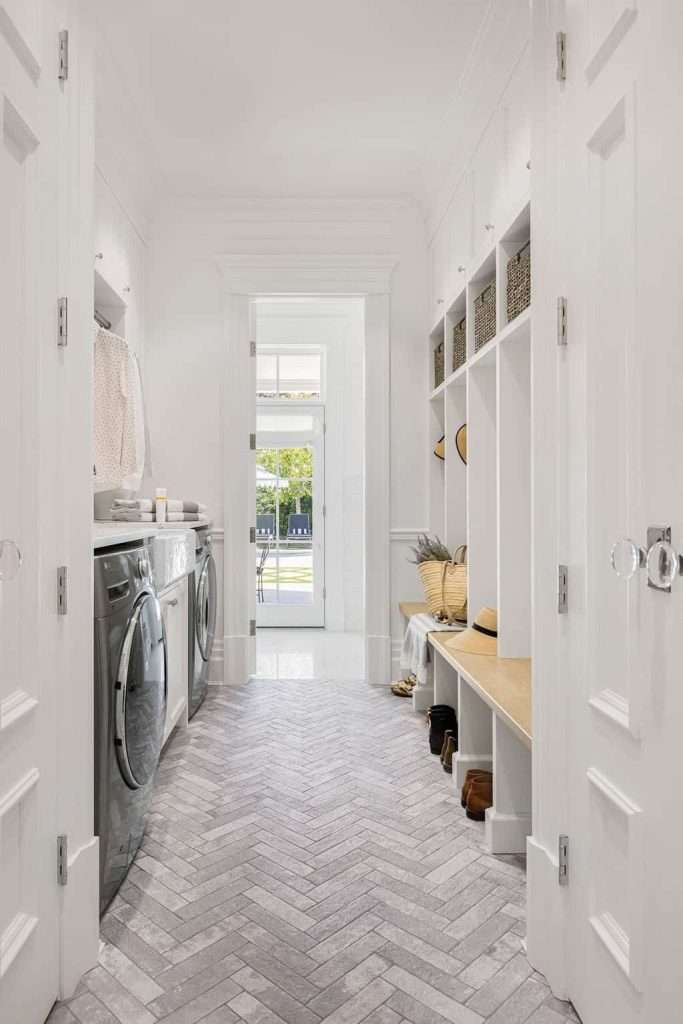
laundry storage
Source: Jenny Martin Design

Now, this is where good design really starts to shine. 

A true Texas mudroom-laundry combo needs storage that works hard, handles heat and humidity, and still looks good doing it. Between those muddy boots, wet swimsuits, and all that sports gear, it’s not just about space, sugar. It’s about strategy.

Start with cubbies that can breathe. Aim for compartments around 12 to 15 inches wide with open fronts or ventilated dividers, so damp shoes and flip-flops can dry fast instead of turning musty. 

You can keep the lower cubbies about 18 to 24 inches high for the little ones. That way, they can grab and go without dragging the mess through the house.

Next, add lockers that fit your family’s rhythm. Full-height designs, roughly 72 inches tall, make room for long coats, towels, and backpacks. Perforated or slatted doors help with airflow, which is a lifesaver during the spring pollen season. 

If space is tight, you can go with double-tier lockers so everyone still has their own spot.

And don’t forget the hidden bench. It’s the unsung hero of a good mudroom, darlin’. 

A lift-top seat with quick-dry cushions hides away balls, pool toys, and pet gear, while offering a comfy perch for tugging on boots. Bonus points if you get one with hydraulic hinges; they’re easy to lift even with one hand full of groceries.

When storage is built with real Texas living in mind (I’m talkin’ dust, pollen, and pool days), it doesn’t just keep your space tidy. It makes every busy day a little smoother and a lot more joyful.

From built-in benches to cubbies, storage is our love language. Let Design on a Dime bring a little order (and a whole lot of style) to your everyday routines.

Hardworking Floors and Finishes for Dirt, Pollen, and Pool Splash
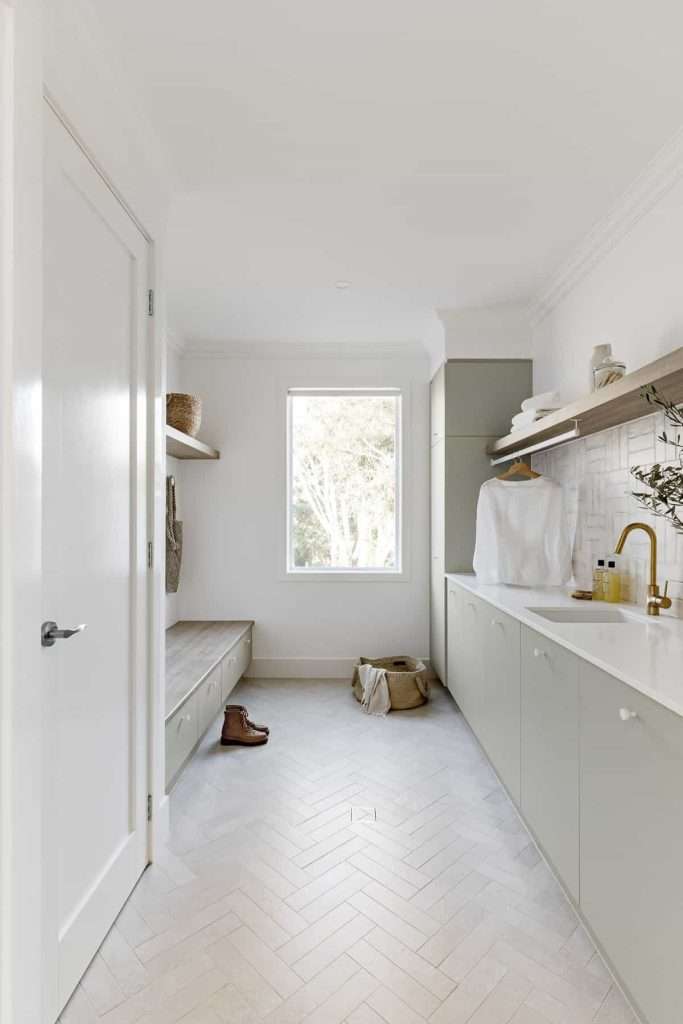
Hardworking Floors and Finishes for Dirt, Pollen, and Pool Splash
Source: Oak&Orange

Mud, pollen, and pool splash; that right there, darlin’, is the Texas trifecta. 

So, if you want your mudroom-laundry combo to hold up to it all, your floors and finishes have to be tough, easy to clean, and ready for action.

Start from the ground up with waterproof flooring that doesn’t mind a little mess. 

Luxury vinyl plank keeps puddles sitting on the surface rather than seeping through, and porcelain tile is about as durable as it gets. If you’ve got a busy household full of swimmers and pets, rubber flooring can be another great pick since it resists mold, mildew, and all the chaos of a pool day. 

Prefer something with a timeless, natural look? Sealed stone offers grit and grace, but make sure to wipe any spills quickly.

Texture matters, too. A subtle grip underfoot helps prevent slips when the floor is wet, especially right by the door or sink. As for walls and work surfaces, go for easy-wipe finishes like semi-gloss paint or sealed beadboard. They’ll handle splashes from both laundry and rain boots.

It’s also smart to transition between your “dirty zone” and “clean zone.” 

Use a small change in flooring material, pattern, or even grout color to signal the shift from entry to laundry space. That simple detail helps contain the mess and gives your combo a polished, intentional look.

Choose materials that stand strong against scratches, humidity, and grit, and those floors will look great long after the next big Texas storm rolls through

And if you’re not sure where to start, Design on a Dime’s team would be happy to help!

Laundry Efficiency: Sinks, Folding Zones, and Smart Hanging Space
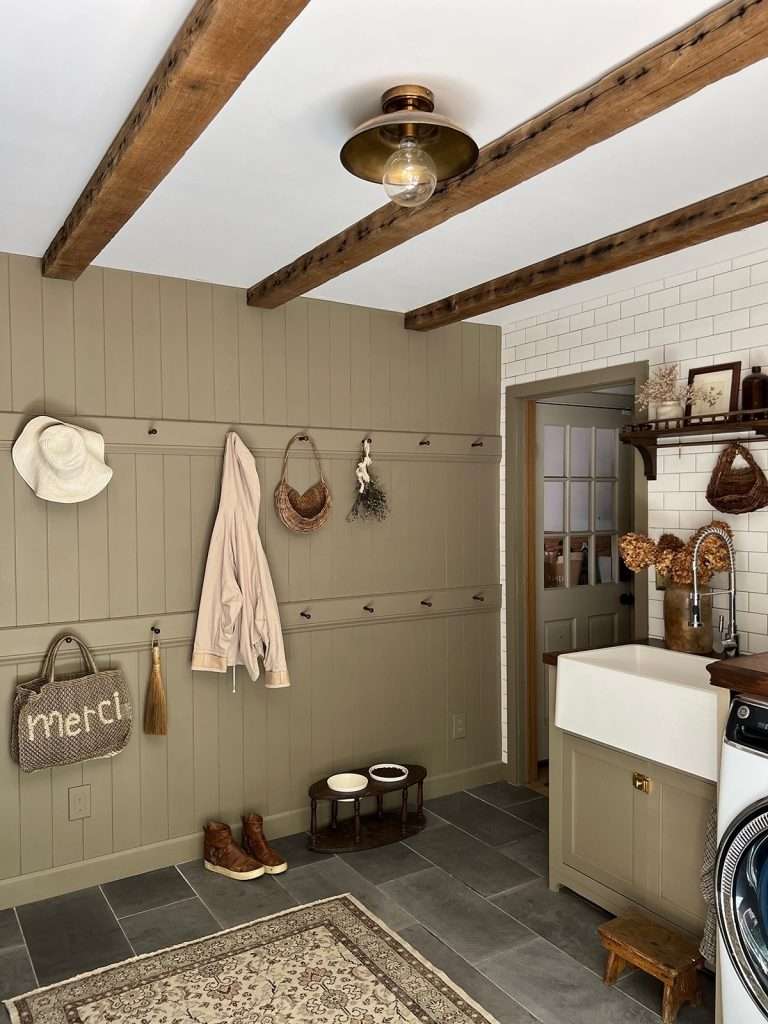
Laundry Efficiency: Sinks, Folding Zones, and Smart Hanging Space
Source: Brepurposed Design

Because life doesn’t slow down for muddy socks and pool towels, your mudroom-laundry combo needs a setup that works fast and keeps everything moving. The goal is simple: 

Rinse, wash, fold, and hang without stepping over clutter or dripping across the floor.

That means you’ll need a deep utility sink and a pull-down faucet. It’s a small upgrade that makes a big difference. You can rinse off grass-stained uniforms, swish muddy paws, and soak swimwear, without ever leaving the room. 

If you have the space, add a small counter beside the sink for sorting and pre-treating clothes before they hit the washer.

Next comes the folding zone. A counter-height surface with a water-resistant top will turn laundry from a juggling act into a quick-and-easy routine. If you can, tuck baskets or hampers below for sorting loads and stash detergents and supplies in upper cabinets to keep the area looking clean and tidy.

Now, protect your drying and hanging areas. A recessed rod over the counter gives delicates a safe spot to air dry, while a flip-down rack or ceiling-mounted line works wonders for towels and swimwear. 

For extra convenience, you can add wall hooks by the door for damp jackets or sports gear.

Oh, and let’s not forget about ventilation. Proper airflow will keep humidity levels in check, prevent musty smells, and protect your cabinetry and finishes from wear.

When each piece of the laundry zone works in rhythm, the whole room feels effortless and ready for every muddy practice, pool day, and family load that comes its way.

Pet- and Kid-Friendly Zones: Wash, Drop, and Go
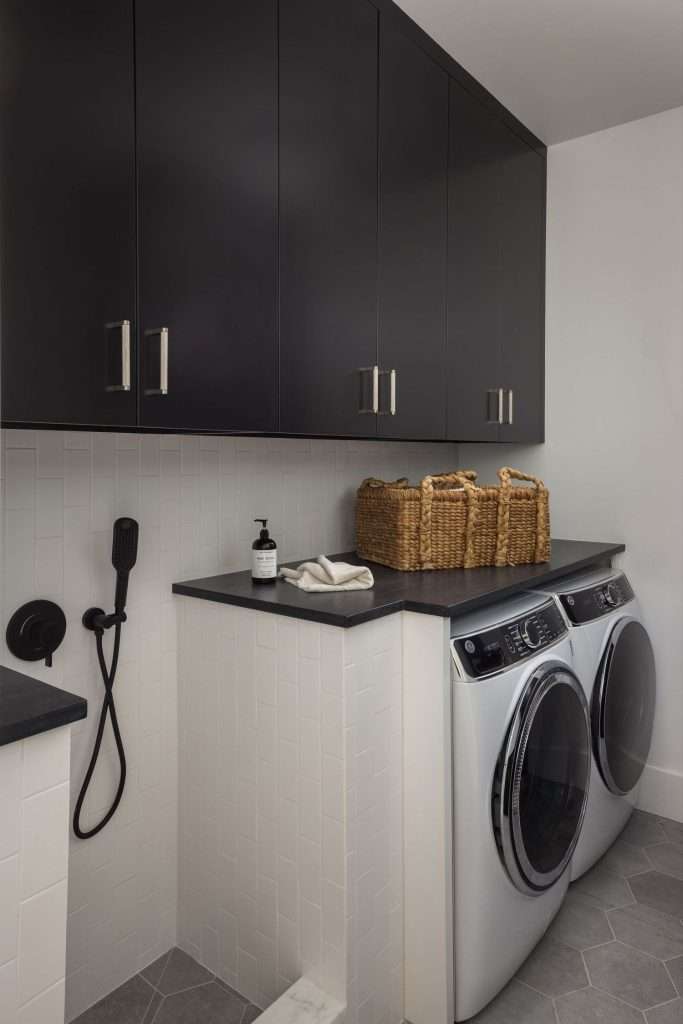
Pet- and Kid-Friendly Zones for nudroom
Source: Lorla Studio

Let’s make peace between muddy paws, little sneakers, and that clean floor you worked so hard for.

For starters, how about a pet wash station that feels practical and pretty? 

A 40×30-inch tub with a lower curb makes rinsing paws and boots easier on your back, while a handheld sprayer gives you control over the splash zone. Throw in a built-in ledge for shampoos and towels, with a non-slip mat to keep everyone steady during scrub time.

If space allows it, add a drying corner close by. Open cubbies for towels and a sturdy bench near the door make it easy to towel off pets or corral gear before it reaches the rest of the house.

Next, think about storage and convenience. Custom kennel cabinets give furry friends a safe little retreat, while tall cabinets can hold leashes, treats, and pet care items neatly out of sight. A small pot filler or utility sink nearby works wonders for quick rinses, whether it’s a dog dish, paintbrushes, or muddy boots.

Now, what about your kids? 

Install low hooks and drop baskets near the entry so they can hang their coats, backpacks, and sports gear all by themselves. Add a bench right at their level for shoe changes, and watch how much smoother your mornings get.

Finally, tie it all together with durable, easy-to-wipe finishes that blend style and function without feeling sterile. When every single family member, two-legged or four, has an area that’s made just for them, your mudroom-laundry combo becomes a calm, organized landing zone for real life.

Styling, Lighting & Aesthetic Touches that Bring It All Together
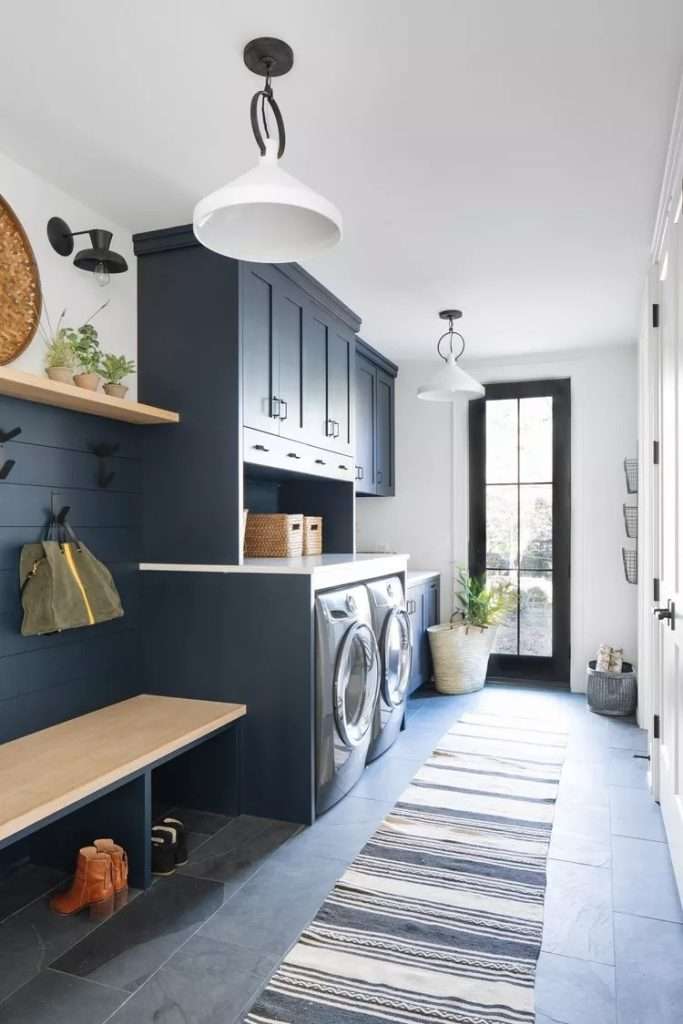
laundry-mudroom combo
Source: Kate Marker Interiors

Now that the bones are strong and the function is spot-on, let’s make this space shine, baby. 

A mudroom-laundry combo doesn’t have to look like a back hallway. With the right mix of colors, light, and texture, it can be just as charming as your kitchen or living room.

Here’s how to pull it off: 

  • Start with color transitions. If your mudroom connects directly to the kitchen or family space, pull in a shared tone so the rooms flow together. Try creamy whites with soft sage cabinets, or a warm gray paired with bronze hardware. These gentle color shifts keep the look cohesive without feeling too matchy.
  • Play with lighting zones. You need bright, practical light for sorting your laundry, but softer accent lighting for evenings and quick trips out the door. Recessed ceiling lighting handles the tasks, while a smaller pendant over the sink or a sconce by the door adds warmth and personality
  • Bring a little design drama. Paint an accent wall in a saturated tone (our Golden Sunset Project is proof that it can completely transform the mood of a room), or go with patterned tile behind your sink or folding counter. Add woven baskets or even a piece of art that makes you smile every time you walk in.
  • Finish with hardware and textures that feel intentional. Matte black handles add crisp contrast, while aged brass adds a lovely hint of that Southern hospitality. Textured wallpaper, beadboard, or shiplap behind open shelves can all instantly elevate a plain wall into something special.

When style meets function like this, the entire space feels lighter and more loved. And, honey, isn’t that the best way to start and end your day, surrounded by something beautiful, right where life happens most?

Even the hardest-working spaces deserve a little beauty. Design on a Dime Interiors can help you find that perfect balance between function and charm, right down to the last cabinet pull.

Frequently Asked Questions

How much space do I need to combine a mudroom and laundry area?

You can comfortably fit both your mudroom and a laundry area in as little as 6×10 feet, but 8×12 gives you more breathing room for benches, appliances, and storage. And you can never have “too much storage” in a busy household.

What’s the cost range for a mudroom-laundry combo compared to having separate rooms?

Combining your mudroom and laundry space typically costs less than building two separate rooms. You’re looking at a range of $5,000 to $15,000 for the combined areas, depending on the size and features, while a separate mudroom and laundry room may easily double that. You get more function for less construction hassle with a well-planned combo.

What are some affordable upgrades if I can’t remodel yet?

If there’s currently no room in the budget for a full-on remodel, consider using peel-and-stick tile, a floating shelf for detergent, and wall hooks for everyday gear. A few simple changes can still make your space feel thoughtful and organized.

How do I balance aesthetics and practicality if my space is very small?

If you’re working with limited square footage, focus on vertical storage, fold-down counters, sliding doors, and multifunctional furniture; anything that can maximize usability without overwhelming the room.

How do I prevent clutter from creeping back in after organizing the space?

Once you’ve organized the space, you can establish daily routines for dropping items in their place, quick weekly purges, and storage zones that clearly signal where everything belongs. Stick to the plan and you might just prevent clutter from creeping back in.

Make Your Mudroom-Laundry Combo Work for You

A thoughtfully designed mudroom-laundry combo does more than keep your floors clean, sugar. It creates a space that supports your busy Texas lifestyle. 

From storing muddy boots and pool towels to providing a calm spot for folding laundry or rinsing paws, this space can truly simplify your daily routine.

If you’re ready to turn your entryway into a functional, beautiful, and Texas-tough hub, Design on a Dime is here to help. Reach out to us today, and we’ll help you craft a mudroom-laundry combo that works as hard as you do. 

Your home (and your future self) will thank you for it.

Color Transitions: How to Flow Paint Colors From Room to Room

Color transitions are more than a design trick. Knowing how to flow paint colors from room to room is the secret to a home that feels easy, connected, and warm. 

Think of it like music, where each note blends into the next, carrying you through the whole song without a stumble. The same happens with color when each shade knows how to greet the next one kindly. 

Get it right, and your home will feel balanced, like it was always meant to be that way. Get it wrong, and it could end up feeling choppy, like a story missing a few pages. 

Stick around, darlin’, because I’ll walk you through how to create that smooth rhythm in your home.

Principles & Foundations

Color transitions do not start with a paintbrush; they start with a plan, honey. Before you even step foot in the paint store, it’s worth pausing to understand the foundations that make your home feel pulled together instead of pieced together. 

Think of it like music; every room can have its own verse, but they all need to play in the same key. 

Once you’ve got those guiding principles in place, mapping a whole-home palette becomes a lot easier.

Mapping a Whole-Home Palette for Seamless Flow

Seven colors is your sweet spot for a whole-house plan that feels balanced without slipping into chaos. 

You can think of it like building a family: 

One dominant shade leads in your main spaces, two or three secondary colors add personality, trim and ceiling colors hold everything steady, and a couple of accents keep it lively.

Start in your anchor room, usually the living room or kitchen, since it rules the sightlines. What happens there echoes everywhere else, so sample carefully. A soft neutral works beautifully for large, open areas, then let those secondary colors glide into nearby rooms to create a natural rhythm.

For example, for our Flores Project, we went with a soft but rich green paint color to bring some vibrancy while keeping things connected and airy. It became the anchor that allowed adjacent spaces to transition smoothly, showing how a single thoughtful hue can set the tone for an entire palette.

Oh, and remember: 

Paints could look completely different in morning light versus evening shadows, so be sure to check your choices throughout the day.

If you’re feeling stuck, peek at pro palettes from paint brands. They often group shades that already share undertones, which keeps things cohesive without looking matchy. More often than not, less is more

Limit accents, repeat them often, and watch how the whole house hums in harmony.

Reading Undertones and Finding Neutrals That Bridge Them

Undertones are the quiet little rascals running the whole paint show. You may see “gray” or “beige” on the can, but what you’ll actually live with is that undertone, and that decides whether your spaces flow or fight.

Warm undertones carry red or yellow, giving creams their cozy glow and nudging blues towards purple. They’re wonderful for living spaces, though you’ll want to test carefully so those rosy notes don’t sneak up looking dingy. 

Cool undertones lean blue or green, perfect for crisp bedrooms and spa-like baths, but they can read a little chilly under stark light.

Neutrals are your peacemakers. They’ll bridge the warm rooms to the cool ones, smoothing the shift like butter on hot cornbread. 

Here’s a quick trick for spotting those hidden undertones

Line your swatch up against true red, blue, or yellow. Once you know what’s hiding under the surface, you can keep the story consistent, even when the headline colors change.

Sightlines and Spatial Flow

Here’s where things get real practical, sugar. 

Walk through your home and pay attention to what you see from one room into the next. Those sightlines are like arrows pointing the eye, and they decide where your transitions need to feel softer and where you can get bold.

If two rooms connect wide-open, stick with related hues or small shifts in value, not a jarring jump. Save the dramatic changes for spots with a natural break, like a hallway, a doorway, or an arch where your eyes expect a reset. 

Trim and ceilings are your secret anchors here; keeping them consistent makes even the biggest palette changes feel intentional.

Color can also pull a little magic trick on the space itself

Pale, cool walls stretch the room wider. A ceiling that’s lighter than the walls feels taller. Deep, warm hues, on the other hand, wrap you up cozy, perfect for a reading nook or dining room. 

Think of it as shaping the mood; breezy, lifted, or intimate, all with the sweep of a brush.

Let our team at Design on a Dime take the guesswork out of color transitions. With expert color selection and attention to undertones, we help your home feel effortlessly connected from room to room.

Application & Room-by-Room Guidance

Theory is one thing, but the real magic happens when you roll it onto your walls and carry it through your house. Applying color with intention means looking at the bones of a space, including the trim, the doors, and the ceilings, before you start layering in accents or bold moves. 

These quiet features act like the rhythm section in a band, keeping everything steady while the solos play.

Trim, Doors, and Ceilings for Consistency

Framework first, flair second. That’s the secret to color harmony, darling. 

Start with your trim, because it’s the underline of your home, crisp and steady. White trim bridges shifting wall colors with ease, while charcoal or soft black adds definition without stealing the show. In damp spots, like bathrooms, pick a moisture-resistant finish so it holds up beautifully.

Keep doors uniform, too. They’re the steady heartbeat between rooms. 

Black feels tailored, white feels airy, and either can tie a whole home together, especially when you repeat the hardware.

And don’t forget to look up. Ceilings are often ignored, but they matter more than you think. 

A consistent ceiling color, like white or soft off-white, keeps the rooms open and lets colors glide gracefully from one space to the next. I suggest sticking to the natural gradation of darker floors, mid-tone walls, and lighter ceilings for a smooth rhythm that feels balanced and intentional.

Transitional Color Schemes

If you love a calm, collected backdrop with just a touch of personality, muted bases with accents are your best friend. 

Keep the walls soft (think ivory, greige, sand, or pale moss) and let textures and furniture do the talking. Then, sprinkle in accents like seasoning: a sky-blue throw, olive cushions, cinnamon artwork, or bronze fixtures.

The trick is to layer. Neutral walls, upholstered furniture in warm creams, and then those second or third notes that add character. 

Picture a beige sofa with textured gray pillows and a blue throw. Add in a lemon-yellow painting or brass lamp, and suddenly the room sings without shouting. 

Repeating accents across adjoining rooms ties everything together, creating that flow we’re after without overwhelming the eye.

Open-Plan & Adjoining Rooms

Open spaces can be tricky, sugar, since your eye sees everything at once. The key? 

Knowing when to keep steady and when to shift. 

Use natural architectural breaks, like columns, fireplaces, ceiling beams, or framed openings, as your cue. That’s where you can nudge a wall slightly deeper, add an accent finish, or change the undertones without causing chaos.

Keep main walls light and airy with whites, beiges, or gentle grays, then add depth in nooks and alcoves where your eyes expect a change. Always match undertones to fixed features like wood floors, marble, or tile, so nothing feels off.

Here’s a quick cheat for transition points:

  • Fireplace and built-in shelves: Deepen the value slightly
  • Office nook or alcove: Shift from a matte to a satin finish
  • Framed opening or archway: Soften the temperature from warm to cool
  • Curtain-framed wall: Add a hue pop within controlled edges

When in doubt, keep contrasts lower in open areas. Low-contrast shifts let your eye move smoothly, while bold contrasts belong in spaces with a natural doorway or break.

Smart Sampling & Color Consultations That Save You Money

Paint chips and screen swatches can’t tell you the whole story. Your home’s light does. That is why smart sampling is non-negotiable. 

Use oversized sample boards, move them around different spaces, and check them morning, noon, and evening. You can even swap in different bulbs, like LED, incandescent, and daylight, and see how playful paint can be.

Here’s where professional help pays off. A color consultation saves you from wasting money on endless testers and repainting regrets. The result is a palette that feels intentional, flows beautifully, and makes the most of your budget.

Why guess when you can know for sure? 

A tailored color palette means no weird undertones, no cave-like corners when you wanted cozy, and no sterile whites clashing with warm wood shades. Just a home that feels harmonious from one room to the next. Design on a Dime can make it happen.

Cohesive Whole-Home Tips & Special Cases

Once you’ve laid down your main palette and practiced those sightline rules, you can have a little fun. This is where color play meets personality, where you lean into new techniques, explore trends, and even bend a few rules when the space calls for it. 
The trick, sugar? 

Knowing how to do it with intention, so your home still feels connected and stylish, not chaotic.

Emerging Trends and Fresh Techniques

Color lovers are leaning into bold new ideas that can bring extra charm when used thoughtfully. Here are a few trends you should definitely consider for that lovely home of yours:

  • Double drenching: Walls, ceilings, and even trim, dressed in the same color for a cocoon-like feel.
  • Color capping: Painting only your ceilings a saturated shade while keeping the walls light, for that dramatic but airy lift.
  • Tonal gradients: Layering one hue in lighter and darker values across adjacent rooms in the home for a sophisticated flow.
  • Special effects: Glazed transitions, ombré fades, and feathered edges can be stunning options for stairwells and lofts, but they need a careful hand to avoid looking faddish.

Now, hun, remember, these techniques are best in feature areas, including entryways, dining rooms, and statement spaces. They’re not something you’d have across your whole house.

The 60-30-10 Rule for Balance

If all else fails, this timeless 60-30-10 guideline will keep your home looking harmonious. 

It’s simple, really. You should use 60% of one dominant hue (usually wall color), 30% as a secondary tone (furniture, drapery, cabinetry), and 10% as accents (pillows, artwork, small decor). 

Think of it like a recipe: 

Just enough spice without overpowering the dish. It works every time.

When and How to Break the Rules

Sometimes, breaking color rules is the only way to get that breathtaking “wow.” 

For instance, a dark ceiling in a small powder bath can make it feel jewel-box rich, while a bold accent wall that continues onto the ceiling beam can help define an open loft. 

The key is balance: 

Break one rule at a time, and let the rest of the space play steady backup so the risk feels intentional, not random.

Common Mistakes You Want to Avoid

Even the best ideas could flop if they’re not grounded. So, honey, be sure to watch out for these pitfalls:

  • Too many colors: More than seven in a whole-home plan, and things could feel restless.
  • Ignoring undertones: A “gray” with a sneaky purple undertone can wreck your neutral flow.
  • Stopping color mid-sightline: If you can see two rooms at once, the paint colors in them need to complement.
  • Overusing bold finishes: High gloss can be gorgeous in moderation, but it may be overwhelming across large surfaces, like walls.

Steer clear of those, and your home will feel cohesive, polished, and full of heart.

Whether you are experimenting with tonal gradients, soft accents, or subtle transitions, Design on a Dime brings professional precision and creative insight to every brushstroke, making your color story sing.

Frequently Asked Questions

How do I know if my color palette will complement my existing furniture?

Pull your main fabric or wood tones into the palette first. For example, if your couch is gray and has a cool undertone, lean into cooler paint choices; if you have warm oak floors, choose hues that complement that warmth.

Can I use wallpaper as part of a color transition strategy?

Yes, you can. In fact, wallpaper works beautifully as a “bridge.” Be sure to select patterns that echo colors from adjoining rooms, though; that way, it will feel intentional rather than isolated.

Should flooring influence my paint transitions?

Yes, it absolutely should. After all, floors act like the “fifth wall.” Coordinating undertones with wood, tile, or carpet will keep everything cohesive and prevent any color clashes.

How do stairways or hallways fit into a transition plan?

You should treat stairways and hallways as connectors. A neutral shade works best here, giving the eye a breather before moving into the next room’s personality.

Seamless Color Transitions, Beautiful Homes

Color transitions are more than just paint on walls, sugar; they’re what make your home feel like one story instead of scattered chapters. 

The right choices can turn movement from space to space into a gentle flow that feels natural and easy on the eyes. 

If you are feeling stuck between swatches or want the confidence that your palette will sing from entryway to upstairs nook, that is where Design on a Dime can help. Our team loves guiding homeowners toward a palette that flatters your light, your furniture, and your style. 

Ready to see how good harmony can feel? 

Get in touch with our team today and step into a home that finally feels pulled together.

The Best Sofa Bed Styles for Comfort, Guests, and Everyday Living

The best sofa bed styles are the kind that pull double duty without making a fuss. 

The thing is, a sofa bed should feel like more than a backup plan. It ought to invite you to sink in for movie night and then open up into a sleep spot your guests actually appreciate. 

Whether you have a spacious family room or a cozy apartment corner, the right pick blends comfort, style, and practicality in one smart package. It’s a piece of furniture that keeps your home ready for anything: 

Surprise visitors, sleepovers, or simply stretching out after a long day. 

So, stick around, darlin’, because I’m about to share what makes today’s sofa beds stand out from the old lumpy models we all remember.

Sofa Bed Styles You Should Know

sofa styles
Source: Oho Interiors

When it comes to picking the right sofa bed, it helps to know the main styles out there and how they’ll work in your home. Each type has its own personality, and the trick is finding the balance between how it looks in your living room and how it feels once it’s opened up for sleep.

  • Pull-Out or Fold-Out Frames

This is the classic design most folks think of first. During the day, it looks like a regular sofa, but at night you can pull a hidden mattress right out from under the cushions. It’s one of the best choices if you want a true mattress experience, though it does need plenty of space when fully extended.

  • Click-Clack or Folding Back Styles (Including Futons)

These are the quick and easy ones. You simply push the backrest forward until it clicks, then fold it flat to create a bed. Futons fall into this group, too. They’re space-friendly, affordable, and great for casual lounging, but the sleeping surface can feel firmer than a pull-out.

  • Modular and Convertible Sectionals

If you’ve got a bigger space or love flexibility, a sectional sofa bed can be a lifesaver. Some come with hidden pull-outs, others use a chaise lounge or ottoman to extend into a bed. They’ll give you plenty of seating by day and a roomy sleeping area by night, which makes them perfect for family living rooms.

  • Hybrid Designs

Not all sofa beds fit neatly into one of these categories. “Hybrids” feature clever pieces like trundle benches, platform bases, or even sofas with built-in storage that also convert to a bed. These are great for small spaces and multipurpose rooms, giving you both function and style in one package.

Every style makes its own trade-offs. Pull-outs give you that mattress-like comfort but need room to open. Click-clacks are quick and compact but lean on the firm side. Modular sectionals shine for versatility, while hybrids bring in smart storage. 

Thinking about how you’ll use your sofa bed most often, whether it’s daily lounging, hosting guests, or saving space, will help you choose the best fit.

What to Know About Sofa Bed Construction

leather sofa bed
Source: Maria Khouri

Looks may catch your eye, but what’s under the cushions will decide how long your sofa bed truly lasts. 

So, don’t gloss over what’s hugging your sofa bed; it matters more than you think, sugar.

From the frame to the fabric to the way it opens and closes, the right construction details make all the difference between a quick purchase and a piece you’ll enjoy for years.

  • Frame Strength: Wood or Steel

A sofa bed’s frame is its backbone. Hardwood frames, like oak and maple, bring sturdiness and a natural feel, while engineered woods are often lighter and more affordable. Steel frames are extra durable and hold up well over time, especially for heavier use. Whichever you choose, check that joints are reinforced and well-secured. A wobbly frame today will only get worse tomorrow.

  • Upholstery Choices: Fabrics and Leathers

Your choice of fabrics is not just about color. Cotton and linen feel soft and breathable, though they may need more care. Synthetic fibers stand strong against stains and fading, which is a blessing in busy households with kids or pets. Leather is another workhorse; it is easy to wipe clean and full of character as it ages. If you want style and practicality, blended fabrics combine that natural comfort with synthetic strength.

  • Mechanism Quality and Ease of Use

Even the prettiest sofa bed can disappoint if it ends up being a hassle to open and set up. Look for smooth-gliding mechanisms that don’t stick or squeak. A well-built hinge system will let you convert from sofa to bed with minimal effort. If you plan to use it often, test the motion in-store and read the reviews on how well the mechanism holds up over time.

A solid frame, dependable fabric, and an easy-to-use mechanism are the trifecta for a sofa bed that keeps up with your daily life. 

Paying attention to these details now means fewer headaches later, and a piece that stays as comfortable as it is good-looking. Choose smart, sit happy, honey.

A Quick Word on Comfort and Mattress Technology

textile for sofa bed
Source: Lorla Studio

A sofa bed is only as good as the night’s sleep it gives. Nobody wants to wake up with a sore back and a stiff neck, so, honey, it pays to know what kind of mattress is tucked inside. 

Today’s sofa beds come with a variety of options, and the right choice depends on how often you’ll use it and who will be sleeping there.

  • Memory Foam, Gel Memory Foam, and Hybrids

Memory foam has become a favorite because it molds to your body and relieves pressure points. Gel versions go one step further by drawing heat away, which keeps things cooler throughout the night. If you want the best of both worlds, hybrid mattresses combine foam with innersprings for a setup that feels cushioned yet supportive.

  • Latex and Innerspring Options

Latex mattresses are known for being responsive and durable. They tend to bounce back quickly, which makes them a great fit for people who want a firmer sleep surface. Traditional innersprings, meanwhile, remain a budget-friendly classic, though less forgiving on pressure points.

  • Support Systems That Matter

Many sofa beds add extra layers for better support. Pocket springs and tri-layer designs keep the mattress from sagging and help distribute weight evenly. These systems make a big difference for guests who need more than just a thin cushion to get through the night comfortably.

  • Cushioning for Daily Comfort

Don’t forget the “sofa” part of the sofa bed. Quality seat and back cushions will make lounging just as enjoyable as sleeping. High-density foam and layered padding can hold their shape longer and feel supportive whether you’re watching TV or stretching out for a nap.

Like I said already, every option has its trade-offs. Foam relieves pressure but can run warm, innersprings breathe but feel firmer, and latex adds bounce. 

Think about who will be using your sofa bed most often and how you want the sofa to feel when folded up. The goal is something that looks inviting by day and delivers real rest by night.

Spoiler alert: Sleepovers at your place just leveled up.

Comfort should never come at the expense of style. The Design on a Dime team specializes in finding that sweet spot where practical choices work seamlessly with your home’s look.

Fit, Size, and Space Considerations

living room sofa bed
Source: Sarah Tract Interiors

Before you fall in love with a sofa bed’s look, make sure it actually works in your space. A beautiful piece won’t mean much if you can’t pull it open without moving half your furniture.

  • Room Size and Clearance

Measure twice, buy once, darling. Always check how much space the sofa bed will need when fully extended. A pull-out design could take up several extra feet, while a click-clack or futon folds down more compactly. Make sure you’ve got enough room to walk around comfortably when your sofa is open.

  • Choosing the Right Size

Sofa beds come in standard mattress sizes. Twin works well for kids’ rooms, home offices, or very small apartments. Full gives a single adult a comfortable sleep space. Queen is the sweet spot for most homes, offering plenty of room for two guests without overwhelming the living area. King-size options exist, but they usually need a larger room to breathe.

  • Solutions for Small Rooms and Apartments

If space is tight, look for designs with slimmer arms, low profiles, and armless frames to save every square inch. Sectionals with pull-out beds or fold-down backs provide flexible seating and sleeping options without feeling cramped. On that note, futons and click-clack styles are especially handy in studio apartments and multipurpose rooms.

  • Built-In Storage and Multifunction Perks

Some sofa beds hide extra storage in the base or chaise, giving you a spot to store your additional pillows, blankets, or even board games. Plus, modular sectionals can be rearranged as your needs change, which is perfect if you move often or like to switch up your layout.

When it comes to making the most of your space, here’s what I want you to remember:

The right sofa bed should feel like a natural part of the room, not a bulky piece you have to work around. So, think about how you use the living room on a day to day basis, and choose a style and size that keeps things comfortable whether the bed is open or tucked away.

Your furniture should flex with your lifestyle. From guest-friendly setups to multipurpose living rooms, we’ll help design a space that’s both functional and inviting.

Style and Budget: Finding Your Perfect Match

white sofa bed
Source: MHouse Inc

When it comes to sofa beds, no two homes (or budgets, really) are the same. 

Some people want an everyday showpiece that feels as indulgent as it looks; others need a hardworking piece that saves space or stretches the dollar. 

The good news, honey? 

There’s a style for every lifestyle.

Luxury Sofa Beds: Elegance Meets Function

Now, sugar, if you think “sofa bed” means clunky metal frames and scratchy mattresses, it’s time to leave that memory in your grandma’s basement where it belongs. 

Today’s luxury sofa beds are smooth, sophisticated, and downright irresistible. 

Picture Italian craftsmanship wrapped in buttery-soft leather or dreamy fabrics, hiding a mattress so comfy your guests will be begging to stay longer. High-end details like solid wood frames, top-grain leathers, and custom upholstery give your living room a magazine-worthy finish

Brands such as American Leather balance elegance with innovation, ensuring both comfort and durability. Many offer full customization, so you can choose fabrics, colors, and configurations that perfectly reflect your taste.

With luxury sofa beds, you’re not just getting a piece of furniture. You’re investing in comfort that elevates your whole space.

Budget-Friendly Sleeper Sofas for Everyday Comfort

Let’s be real, hun, sometimes your wallet’s idea of “luxury” is just getting pizza delivered instead of making microwave ramen. If you’re nodding along, budget-friendly sleeper sofas will be your new best friend. 

You don’t have to empty your piggy bank for a guest-ready room. And, more importantly, affordable design doesn’t mean boring or uncomfortable.

These days, affordable sofa beds come in all shapes and styles, from futons with modern lines to pull-outs made for small rooms. Think designs under $1,000 that still feature memory foam mattresses, supportive cushions, and sturdy frames. 

Brands like IKEA, Ashley Furniture, and Gio Italia offer versatile styles that fit right into apartments, starter homes, and multipurpose spaces. You’ll be surprised how much style and comfort you can score without breaking the bank.

Matching Your Décor With Style and Color

Whether your home leans modern, farmhouse, or mid-century, trust me, there is a sofa bed that can slide right in. Slim arms and straight lines deliver that minimalist vibe, while tufted cushions or wood trim nod to classic charm. 

So, it’s all up to you, darlin’.

Color and texture play a big role, too. 

Neutral fabrics make it easy to mix with what you already have, while bold velvets and textured linens can turn your sofa bed into a statement piece. I do recommend looking for removable or fade-resistant covers if your space sees lots of sunlight, kids, or pets, though.

Here in Texas, homes are as varied as the people living in them. From sleek condos in Houston to inviting ranch-style homes, the right sofa bed can tie your whole look together

When it comes to sofa beds that are both stylish and functional, nothing illustrates the balance better than our Huntsville Project. It shows how thoughtful design, style, and practical durability can coexist beautifully in a Texas home.

Design on a Dime’s team would be thrilled to help you pick pieces that look beautiful and serve a purpose without straining the budget.

Guest Use vs. Daily Use

living room sofa
Source: Popix Designs

When your best friend drops the “Can I crash at your place?” bomb, you don’t want to hand over a lumpy air mattress that squeaks with every move. You want their visit to feel like a five-star sleepover, minus the hotel bill.

The right sofa bed comes armed with features that make overnight stays a total treat.

  • Sofa Beds for Everyday Living

If your sofa bed is pulling double duty as your main couch and your bed, comfort is non-negotiable. Look for a thicker mattress (5–6 inches or more), supportive systems like memory foam and pocket coils, and a smooth mechanism that won’t leave you breaking a sweat every night. Daily use sofas are built tougher, with reinforced frames and cushions that bounce back after hours of lounging. It’s a workhorse with style; your back will thank you.

  • Guest-Ready Comfort Made Easy

Now, if you only plan to open that sofa up a few times a year, you could get away with lighter-duty options. Guest-friendly sofa beds shine when they’re easy to use and quick to set up; think simple pull-out or click-clack mechanisms. Built-in storage will keep bedding close at hand, and washable covers can be a blessing since spills always seem to happen at midnight.

Even if it’s mainly for guests, style matters. Your sofa bed should blend right into your décor when closed, then unfold into a cozy sleeping spot when duty calls.

At the end of the day, the choice comes down to lifestyle: 

If you’ll be snoozing on it nightly, invest in top-tier comfort and durability. If it’s for occasional use, focus on convenience and guest-friendly touches

Either way, you’ll be ready when the question comes, “Mind if I stay the night?

Frequently Asked Questions

How long should a sofa bed mattress last before replacing?

A good sofa bed mattress can last about 5 to 10 years, depending on use and quality. That said, most sofa beds allow you to swap the mattress if it sags, develops lumps, or feels uncomfortable.

Are sofa beds safe for children or pets?

Yes, they are generally safe, but you should always supervise young kids and keep an eye on pets. Look for smooth mechanisms and avoid exposed springs or other potential “pinch points.”

Can I use a sofa bed outdoors or in sunrooms?

Most sofa beds are meant for indoor use. Sunlight and humidity can damage upholstery and mechanisms unless specifically designed for outdoor conditions.

How do I prevent the mattress from sagging?

If you’re worried about sagging, rotate the mattress periodically and avoid exceeding weight limits. Adding a thin topper can extend your mattress’s life without changing the frame.

Finding the Sofa Bed That Truly Fits

The sofa bed should feel like more than a quick fix. The right style becomes part of your daily rhythm while staying ready for friends and family who need a place to rest. 

It’s furniture that works double-time, keeping your space stylish while making every guest feel welcome.

If you’re ready to skip the guesswork, Design on a Dime can help you select a sofa bed that matches your budget, your décor, and your lifestyle. Get in touch with our team today, and let’s turn your living room into the kind of space that feels good to come home to.

How to Style a Coffee Table: 10 Designer Tips for Your Living Room

If you’re not sure how to style a coffee table, trust me, darlin’, you’re not alone. It may sound simple, but let me tell you: 

This little surface holds the power to change the whole feel of your living room, so you want to style it with care. 

It’s not just a spot for your remote and coffee cups; it’s the centerpiece that sets the mood, shows off your personality, and makes your space feel intentional instead of thrown together. 

You can think of it as setting the stage for your home’s story. The right styling can pull the whole room into focus, and the best part is, it doesn’t take a ton of effort.  

Ready for some inspiration that’ll make your living room shine?

Play With Height for a Lively Look

coffee table decor

Let’s be honest, nothing’s sadder than a coffee table that looks flat and forgotten. Your table should have personality, and the quickest way to get there is by playing with height. 

Think of it like a little skyline in your living room: 

A tall vase of fresh flowers, a mid-height candle or two, and a low bowl that keeps the whole arrangement grounded.

You want focal points, not monotony!

The secret is variety. Mixing taller and shorter pieces keeps the eye moving, which makes the table feel layered and interesting instead of one-note. Just make sure your tallest accents don’t block the sightlines or overwhelm the space. 

Here’s a good rule of thumb you can use here: 

Keep the overall look in step with your sofa height; you’ll notice that most coffee tables fall in the 16 to 18 inch range for comfort.

When you build in those shifts of height, you’re not just decorating, you are creating a rhythm that makes the room feel alive and welcoming.

Match Your Layout to the Table Shape

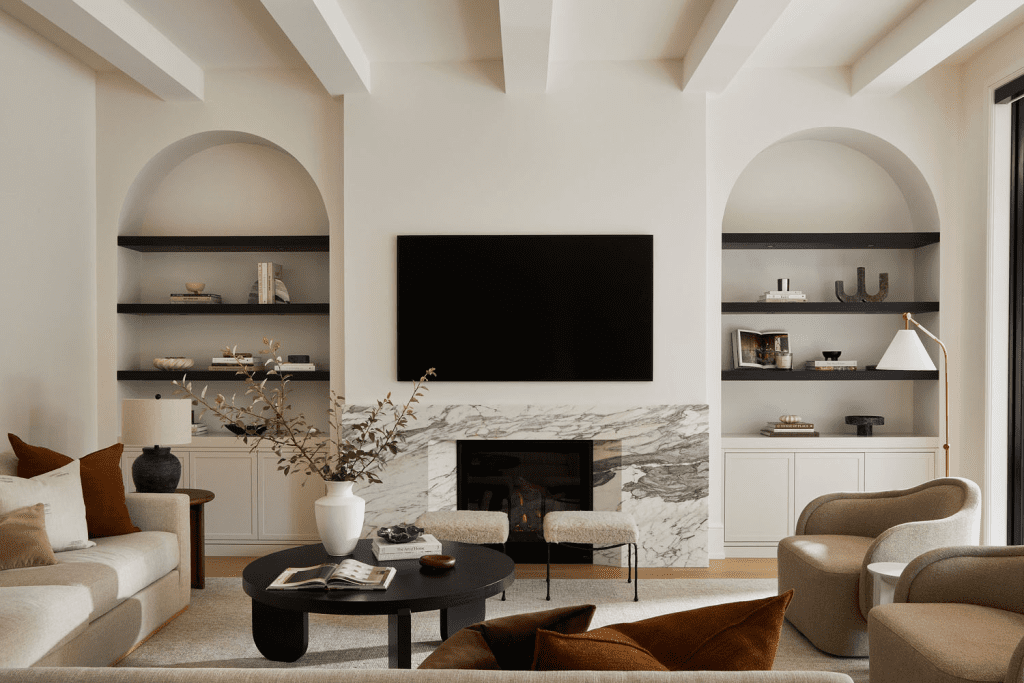
living room coffee table

Coffee tables come in all shapes and moods, you’ve got round, square, rectangle, even the occasional oval. 

And just like people, each one shines when you play to its strengths:

  • For a long rectangular table, think in sections. A stack of books on one end, a tray of candles or a vase in the middle, and a sculptural piece on the other keeps it balanced without feeling stiff.
  • With a round table, aim for soft triangles. Cluster three to five items of varying heights, so that the eye keeps moving, and no side feels heavier than the other.
  • An oval table loves longer, graceful lines. A tray or a row of books down the center sets the stage, while taller accents at either end keep it lively.
  • If you’ve got a square table, try four mini-vignettes, one for each corner. Sure, it’s neat, but when you mix in different textures and shapes, it still feels playful.

The trick is simple, really: 

Let the shape guide the layout, and your coffee table will always look put together. 

Easy, right? Our Dream Team uses the same design principles when pulling a whole room together. Start with the shape, and the rest falls right into place. Let’s do the same for your home.

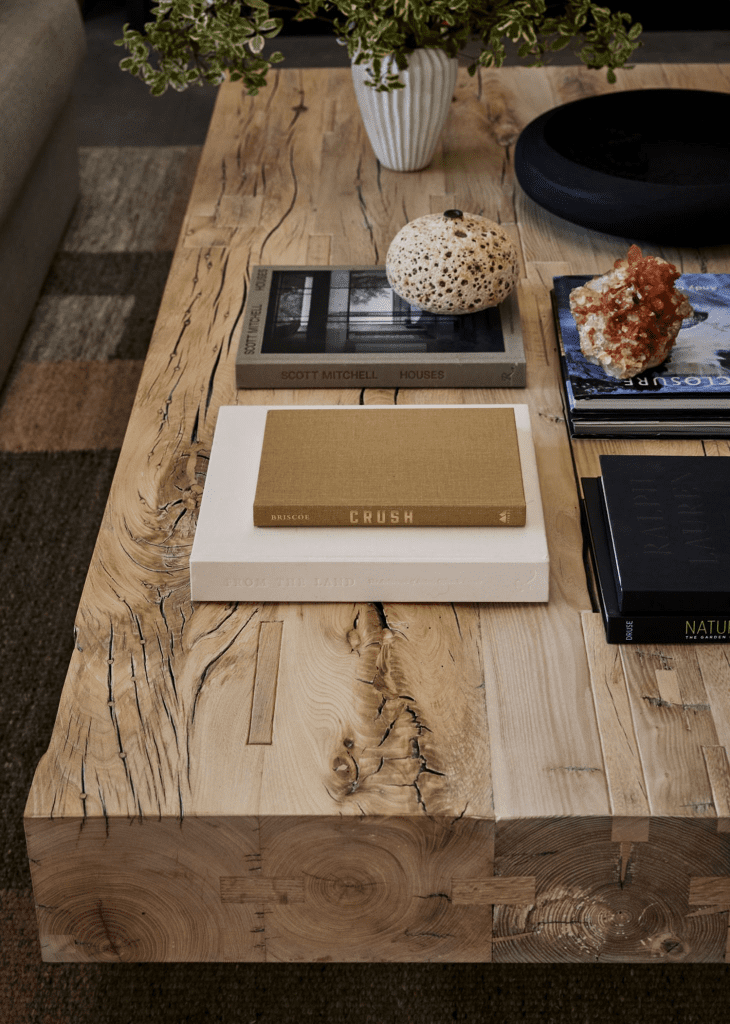
Layer Books and Magazines as Your Style Base

coffee table books for decor
Source: Wade Design Architects

Coffee table books aren’t just there to look smart or collect dust, they’re the backbone of a beautiful table. Think of them as the stage your other décor pieces get to perform on. 

A neat little stack anchors the scene, keeps things grounded, and makes every other accent you add later feel intentional.

Start with the largest hardcover on the bottom, then work your way up with two or three more. This creates a strong base without tipping into clutter. If your table is on the bigger side, you can even style a couple of different stacks in opposite corners to keep that balance.

Now, what about choosing books? 

Well, it’s best to pay attention to color and mood. Pick spines that echo the palette in your room, or go bold with a pop of contrast. A glossy art book, a textured linen cover, or even a vintage magazine can all bring instant personality.

The finishing touches? Top the stack with something small but special, a candle, a ceramic bowl, or a tiny tray. 

Suddenly, your coffee table isn’t just styled; it’s telling a story. 

Storytelling is at the heart of every Design on a Dime project. We love layering in books, art, and personal pieces to make a space feel truly lived in.

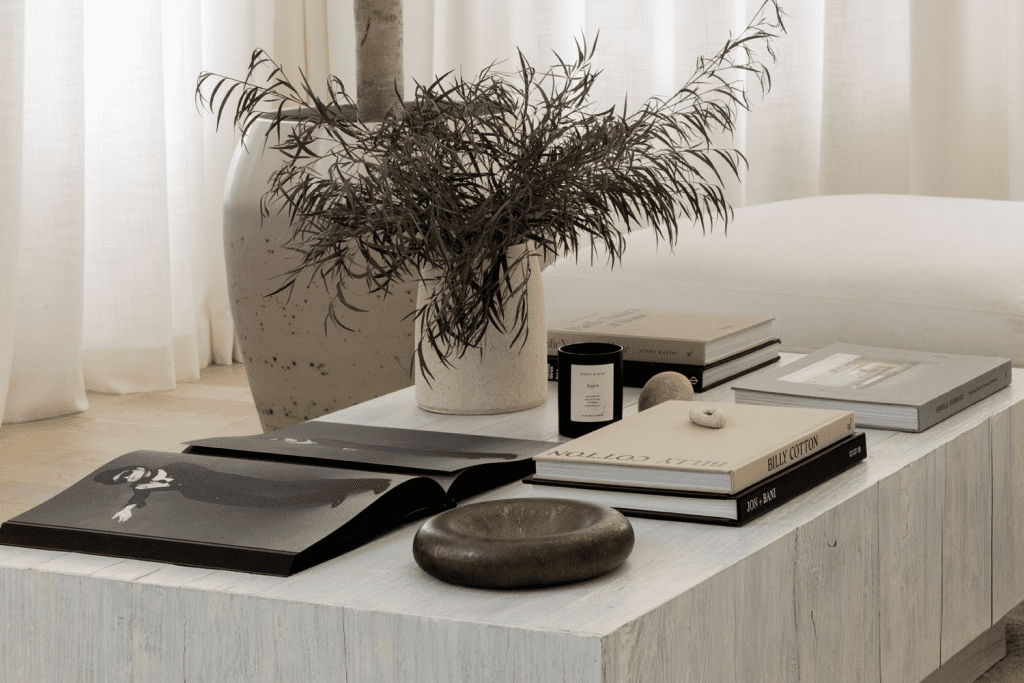
Arrange Vases, Bowls, and Candles with Intention

modern living room decor
Source: Design State

A coffee table really comes alive once you start layering in those extra touches, think vases, bowls, and candles. The trick isn’t to throw everything on there at once, though. 

You want to place each piece with a little thought so it feels collected, not cluttered.

For starters, mix up the heights: a tall vase with fresh blooms or branches, a medium pedestal bowl, and a few lower candles tucked nearby. That shift in scale keeps the eye moving, adding drama without taking over the whole room.

Texture plays a big role here, too. 

A glass vase right next to a carved wooden bowl or a cluster of metallic candleholders can make the setup more interesting. While we’re at it, don’t be afraid to use the books as risers; stacking a vase or candle on top adds dimension and helps smaller accents stand tall.

If you’re ever in doubt, think in threes

A vase, a bowl, and a candle grouped together create warmth, height, and balance in one simple move.

And that, my dear, is how you turn ordinary objects into a little moment of magic.

Bring in Natural Touches and Living Greenery

flower vase coffee table

Nothing wakes up a coffee table like a little life on top. Plants, flowers, even a simple branch clipped from the yard, can do wonders. They bring color, movement, and that fresh energy you just can’t fake with any store-bought décor.

A tall vase with seasonal blooms instantly makes the table feel special, while a low bowl of succulents or a trailing plant softens the edges. And if you don’t have a green thumb, no shame, honey, high-quality faux stems can look just as chic and let you skip the watering can.

Again, the key is balance. 

One larger arrangement can stand alone, or you can sprinkle smaller greens around a stack of books or a tray. Just make sure your plants aren’t so tall they block the view across the sofa; you want conversation, not a jungle.

And don’t forget scent. Fresh eucalyptus, herbs, or even a small citrus arrangement can make the whole room feel inviting. 

Nature has a way of grounding the space and reminding everyone to take a breath, doesn’t it? It’s one of our favorite tricks for making a room feel welcoming, and we can do the same for your space, too.

Make a Statement With Scent and Sculpture

Scent and Sculpture Coffee Table
Source: Carmen Javier Co.

Once your base is set, books, trays, and greenery, it’s time to bring in the showstoppers

A well-placed sculptural piece or scented accent can take that coffee table from “nice” to “oh, now we’re talking.”

Think of items that spark curiosity, like a marble knot, a hand-carved wooden orb, or a piece of art glass that catches the light just right. 

These objects don’t have to be oversized, but they definitely should have presence. So, keep them in that sweet spot: 

Big enough to notice, small enough not to overwhelm.

Scented pieces belong here, too. A candle in a sculptural holder, a ceramic vessel with incense, or even a small bowl of dried citrus can add that extra layer to the experience. Choose scents that match your mood: bright and citrusy to energize, soft florals to relax, or warm woods to cozy things up.

When you combine shape, texture, and fragrance, your coffee table stops being just a surface; it becomes a story, one that guests will want to lean in and enjoy.

Play with Textures, Materials, and Shapes

wooden coffee table
Source: AEF Interiors

Now, if you really want your coffee table to sing, don’t be afraid to mix things up. 

Smooth beside rough, shiny brushing up against matte, and round edges mingling with sharper lines, that contrast is what gives a table personality.

For example, picture a sleek marble bowl resting on a rustic wood surface, or a buttery leather tray placed on top of cool glass. That mix feels rich, layered, and just plain inviting. Even better, your hands get to join the fun, because a good table should be as nice to touch as it is to look at.

And let’s not forget shape. You can play with opposites, but keep the overall palette grounded, so it feels pulled together instead of cluttered. A tall cylinder vase next to a low, wide bowl keeps the eye moving and the whole setup lively, and that’s exactly what we’re going for.

For more inspiration, check out our Sanchez Project. The coffee table in this Kingwood living room shows just how powerful a mix of textures, shapes, and heights can be.

When you bring in different textures, materials, and shapes, you are not just decorating, you’re creating a little sensory experience right there in the heart of your living room.

Balance Symmetry, Asymmetry, and Negative Space

tips for coffee table decor
Source: Ro House Studio

Do you want your coffee table to feel perfectly polished or effortlessly relaxed? 

Well, darlin’, the answer might just be a little bit of both, and how you arrange it sets the tone:

If you’re drawn to order, symmetry is your friend. A grid-like arrangement, books stacked neatly, vases aligned, objects mirrored, creates harmony and structure, highlighting each piece with precision. 

Divide a rectangular table into thirds or a square into quadrants, giving each “zone” its own little story; that way, you’ll get a calm and clutter-free look and a sense of everything being in its place.

But don’t be afraid to loosen the reins. 

Asymmetry brings life, personality, and movement. Offset groupings, layered stacks, or triangular layouts introduce movement and keep your table feeling fresh. A chunky candle paired with a sculptural vase and a small stack of books, this keeps the eye engaged and prevents the display from looking stiff.

And here’s the secret ingredient many folks overlook: negative space. Leaving some areas intentionally empty gives everything else room to shine. Think of it as breathing room for your décort,  balances the busy with the calm, making the whole table feel curated rather than chaotic.

Intentional styling isn’t about filling every inch; it’s about striking the balance between harmony and flow.

Use Trays and Curated Collections to Tell a Story

coffee table trays
Source: Anja Michals Interior Design

Your coffee table is more than a spot for remotes and magazines; it’s a chance to show your personality. 

The trick? 

Thoughtful groupings and curated collections that feel intentional, not tossed together.

Start with a tray as your anchor. It keeps items contained and instantly looks tidy while giving you a mini stage for your favorite objects. Add a few layered pieces inside, a bowl of shells, a quirky keepsake from a trip, or even a tiny sculpture. 

I’ve said this a million times, but the key really is variety: 

Mix textures, heights, and finishes so your display feels lively and dimensional.

Grouping by color, material, or theme helps everything feel cohesive, while layering with books or a small vase adds visual hierarchy. 

Want to see these ideas in action? Be sure to check out our Jodi Project, where sculptural pieces, stacked books, and fresh greenery turned a simple table into a stunning centerpiece.

Oh, and play with odd numbers; three or five items together often looks effortless and balanced.

Every surface tells a story worth noticing. When done right, curated collections turn your coffee table into more than décor; it becomes a conversation starter, a personal statement, and a centerpiece that ties the whole living room together. 

Keep Style Functional for Everyday Living

round coffee table

Look, honey, life happens, especially in family spaces, and your coffee table should keep up without losing its charm. 

And for that, you need a style that works hard and looks good.

That means smart furniture choices, tables with hidden storage, ottomans with compartments, or nesting tables you can pull out when you need that extra surface space. They keep toys, remotes, and stray items tucked away, so your living room stays tidy without feeling sterile.

Safety and flow matter, too. 

Rounded edges and oval tables reduce the risk of bumps, and leaving about 18 inches between your table and seating ensures easy movement for kids, adults, and anyone carrying snacks.

Now, your secret weapon? Durable, easy-to-clean surfaces—spill-proof finishes mean juice, coffee, or that impromptu art project won’t wreck your vibe.

Finally, layering style with function is key. Use trays to corral smaller items, mix in a few sculptural accents, and don’t be afraid to rotate the décor seasonally. With these touches, your coffee table can be a beautiful, functional centerpiece that’s both family-friendly and effortlessly chic.

That balance of style and everyday ease is something Design on a Dime brings to every design, because the best spaces should look good and live well at the same time.

Frequently Asked Questions

How often should I update my coffee table decor?

Updating it every season can be a good rhythm, but you don’t need a full overhaul—just swap out smaller accents to keep the look fresh.

What should I keep on the table year-round versus rotating out?

Your anchor pieces, like a tray, sculptural object, or small plant, can stay on your coffee table year-round. Then, you can rotate books, seasonal décor, and candles for some variety throughout the year.

How can I update the look without buying new things?

You can shop your own home, switch books, swap trays, borrow accents from shelves, or repot a plant. Even moving items between rooms creates a fresh vibe. So, look around your home and get inspired!

What should I do differently when styling for guests or entertaining?

If you’re expecting guests, you should clear space for drinks and plates, skip tall or fragile pieces that may get knocked over, and add one low centerpiece like a floral arrangement or a candle trio. 

How can I style a coffee table with a lower shelf?

If your coffee table has a lower shelf, use baskets or boxes that fit neatly; two-thirds of the shelf height is a good fit, keep categories grouped, and echo one or two materials from the top surface for cohesion.

Coffee Table Styling Made Simple

A coffee table may be small, but it has a mighty role. Styled with intention, it anchors your living room and tells your story in the subtlest ways. 

The right mix of beauty and function makes your space feel warm, lived-in, and polished, without trying too hard. 

If you’d love a designer’s eye to pull it all together, not just the coffee table but the whole room, our team would be happy to help. 

Reach out to Design on a Dime and let’s create a space that feels lived-in, loved, and perfectly styled!

10 Home Decor Ideas to Update Your Space Without Overspending

Great home decor ideas absolutely don’t have to cost an arm and a leg, sugar. In fact, sometimes it’s the smallest change—a shift in color, a little texture, and a splash of personality—that makes the whole space feel brand new. 

If your rooms have been looking a little tired or just not quite like “you,” it might be time to shake things up a little—without shaking out your wallet, of course. Think of this as your friendly nudge to stop settling and start styling, because your home deserves to shine just as much as you do. 

Stick around, and I’ll share how to bring that spark back into your space in ways that are easy, stylish, and full of heart.

1. Repurpose & Rethink Your Furniture

Repurpose & Rethink Your Furniture

Here’s where the fun really starts—taking what you’ve already got and turning it into something fresh, useful, and downright fabulous. 

Repurposing furniture isn’t just thrifty. 

It’s a chance to flex those creative muscles while keeping a little extra money in your pocket.

That old dresser that’s seen better days? Give it a new coat of paint, swap out the hardware, and suddenly you’ve got yourself a chic dining room sideboard. 

A hand-me-down hutch can easily turn into entryway storage with a few hooks for backpacks and a cubby for shoes. Even a tired headboard can live again as a charming bench, perfect for your porch or a reading nook.

And multifunctional pieces? They’re the unsung heroes of any home. Think ottomans with secret storage, coffee tables that rise up into work desks, or beds hiding roomy drawers underneath. They’re lifesavers in smaller spaces, helping your rooms feel bigger and less cluttered. 

Every square foot works harder, but your style never takes a backseat.

And don’t forget the “quirky touches”—an old ladder becomes a towel rack or quilt display, a vintage trunk turns into a coffee table with storage, and a bookshelf gets a modern twist with sliding barn doors. 

Trust me, sugar, with a dash of imagination, nearly any piece can multitask, organize beautifully, and spark conversation every time someone walks through the door. If you’d love some help with turning any existing pieces into statement-makers, Design on a Dime would be happy to provide that guidance.

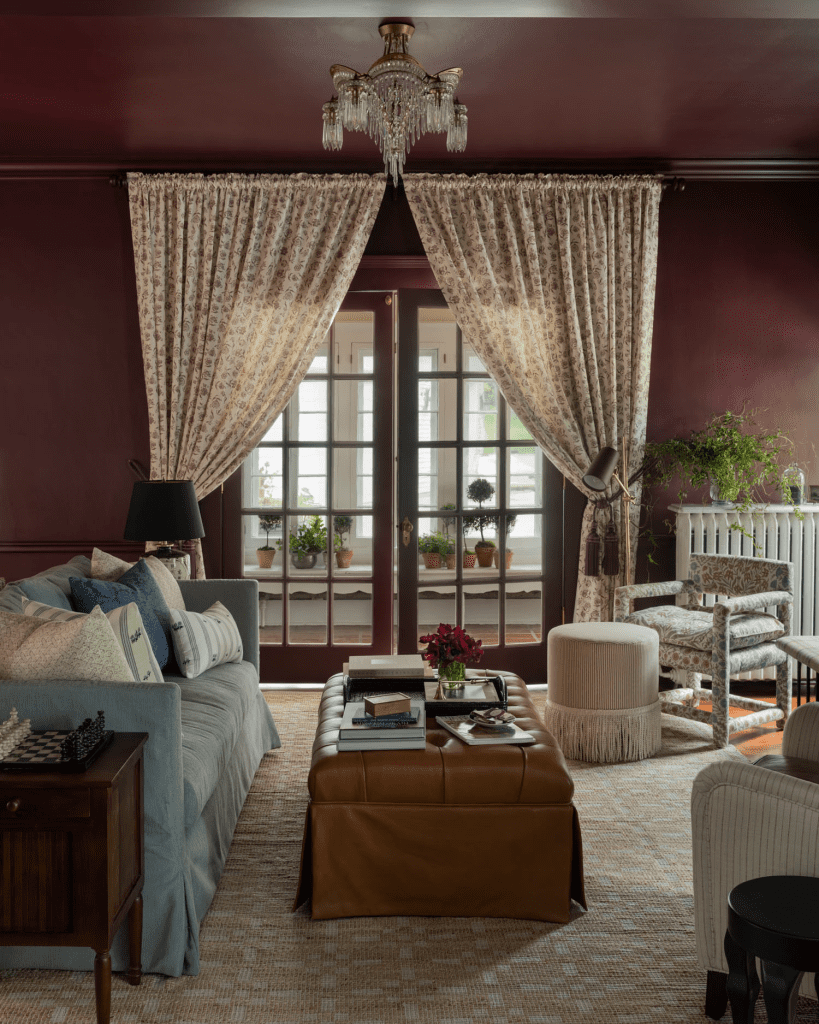
2. Add Depth With Moody Colors & Jewel-Tone Accents

Moody Colors & Jewel-Tone Accents
Source: Design for Living

If your room feels too safe, a splash of saturated color might be the shake-up it needs. Bold hues don’t have to cover every wall to make an impact; sometimes, a single accent can bring the drama. 

I’m talking sapphire blue pillows that instantly brighten a sofa, emerald green velvet curtains that whisper “luxury,” or a deep amethyst throw that warms up a neutral chair.

Here’s a little secret, honey: 

Color sets the mood faster than almost anything else. Jewel tones, such as sapphire, emerald, ruby, and topaz, carry a richness that feels both timeless and current. 

You can use them in smaller doses if you’re nervous; a jewel-toned vase on the dining table or a ruby-red lamp base that glows against a beige wall is more than enough. But if you’re feeling adventurous, why not let a single wall go moody with emerald or midnight blue paint? 

Even removable wallpaper can give you that bold backdrop without the long-term commitment.

The key is balance. 

Combine saturated hues with warm neutrals—creamy whites, soft browns, and sandy taupes—to keep the room from tipping into chaos. Then, layer in accents through textiles, art, and lighting for a pulled-together look that feels intentional, not haphazard. 

Our Painters Ridge Project shows how much of a difference color and texture can really make—be sure to check it out.

3. Make Room for Natural Textures & Organic Materials

Make Room for Natural Textures & Organic Materials
Source: Lisa Sherry Interieurs

Oh, there’s just something about natural materials that makes a home feel alive. Think rich wood grains, sculptural stone, bamboo accents, and woven rattan—each one brings its own kind of soul and warmth to the room. 

They don’t just look pretty, either. They’re style and wellness all rolled into one.

I suggest starting simple here, with a rattan chair in the corner, a bamboo pendant light over the table, or a rustic wood bench by the entryway, for example. These touches will add some texture and comfort without overwhelming the room. 

Rattan, in particular, is a chameleon—it can feel coastal, boho, or mid-century modern, depending on how you style it. And bamboo, with its light golden tones, blends beautifully with neutral shades and layers well with soft linens or jute rugs.
Stone textures are where you can really add depth, darling. Travertine side tables, quartzite counters, or even a humble clay vase give your home that “rooted” feeling—solid, timeless, and calm. The beauty is in the imperfections: a rough edge here, a natural pattern there. 

Pair stone with brass accents for polish, or let it mingle with natural woods for a softer, earthier vibe.

Even a hint of greenery can complement these materials, bringing a touch of life and freshness, but the true magic comes from the textures themselves. Layered thoughtfully, these organic elements make any space feel intentional, grounded, and effortlessly inviting.

4. Layer Textures & Patterns for Cozy Personality

Layer Textures & Patterns
Source: Alter Interiors

If you’ve ever walked into a room that felt flat, chances are it was missing layers. Texture and pattern are like seasoning in a good recipe—they bring out depth, warmth, and a little bit of surprise. 

And sugar, mixing them doesn’t have to mean chaos. Done right, it’s pure personality.

Start with a base you love, like a velvet sofa or a linen armchair, then build from there. Toss in pillows with bold prints, a chunky knit throw, maybe a patterned rug underfoot. The magic comes from contrasts: 

Shiny next to matte, smooth paired with rough, natural fibers against glossy finishes. 

Think a sleek glass coffee table dressed up with a rustic wood tray, or a brass lamp shining on a textured clay nightstand.

Maximalist layering also lets you play with pattern—geometric, floral, even a touch of animal print if you’re feeling bold. You can mix large and small-scale prints to keep the look balanced, then anchor them with earthy tones, like terracotta, sage, or cream. 

That way, all those patterns feel collected instead of clashing.

Don’t underestimate the small accents, either. Woven baskets, ceramic vases, tasseled cushions, or an oversized quilt draped just so will add a curated yet comfortable feel. Plus, you can swap them out season to season, keeping things fresh without draining your wallet.

So go on, layer it up. Nothing says “welcome in” quite like a room full of cozy textures and patterns that tell your story.

Need a hand curating the perfect balance? Design on a Dime loves helping homes feel cozy, curated, and completely you—ready when you are!

5. Light Up Your Space With Style

bamboo lighting

Sure, good lighting lets you see where you’re going, but great lighting? It sets the mood and shows off the home’s best angles. 

The right fixtures can turn an ordinary corner into a cozy retreat and make the whole room feel like it had a glow-up overnight. And the good news? 

You don’t need an electrician on speed dial to get that magic.

Statement lighting is all about personality. Think a sculptural pendant over your dining table, a bold floor lamp in the living room, or a colorful shade that adds a pop without overwhelming the space. These pieces work double duty: 

They brighten the room and act like art you actually use.

For renters or anyone not looking to rewire, plug-in sconces and battery-powered lamps can be lifesavers. They give you that layered lighting look—think soft glow here, focused light there—without the hassle. Pair them with dimmable bulbs and you’ve suddenly got mood lighting for every occasion, from movie night to a late-night chat over tea.

Oh, and don’t forget the details. 

Decorative touches like shelf railings, picture lights, or even a cluster of candles can highlight your favorite corners and make the space feel more intentional. A little shimmer from brass or a warm linen shade adds texture and polish, tying the whole look together.

With only a few quick swaps, lighting becomes more than functional; it becomes the jewelry of your home, sparkling in all the right places.

6. Decorate With Earth-Friendly & Sustainable Options

home decor

Going green at home doesn’t mean giving up style. It simply means layering your spaces with pieces that feel good for you and are kind to the planet. 

More and more, sustainable décor is stepping out of that “niche trend” corner and moving into everyday homes, proving that conscious living can look downright fabulous.

Start with materials that carry a lighter footprint but still pack a big design punch. I’m talking organic cotton, hemp, bamboo, and linen textiles; they all have a soft, breathable touch that ages gracefully. 

When it comes to furniture, reclaimed wood and responsibly harvested pieces bring warmth and character, while cork or coconut flooring adds natural charm without the environmental guilt. 

Even switching to low-VOC paints can make your air cleaner and your walls happier.

And here’s the best part—eco-friendly doesn’t have to mean brand-new. Vintage and upcycled finds bring instant personality while keeping usable treasures out of the landfill. 

A reupholstered chair, a thrifted mirror, or a handmade ceramic vase from a local artisan, for example, can feel just as stylish (if not more) than something straight from the showroom floor.

Making earth-friendly choices is also about supporting the makers. Many sustainable brands prioritize fair wages and ethical production; every purchase helps uplift communities while protecting the planet. That’s a win-win you can be proud to show off in your living room.

Sustainable style doesn’t really have to compromise on beauty or comfort. If you want your space to look chic while staying conscious, Design on a Dime can guide you to eco-friendly fabrics, finishes, and décor that feel intentional and timeless.

7. Bring the Outdoors In With Indoor Greenery

plants in home
Source: Megan Glenn Architecture

Darlin’, a houseplant is more than decoration—it’s a little miracle for your mood, your air, and your home’s overall vibe. Adding greenery is like inviting a daily dose of calm and happiness right into your living room, kitchen, or bedroom corner.

You can always go with easy-care friends, like a snake plant, peace lily, or monstera. They don’t just look beautiful—they clean the indoor air, lift your spirits, and might even help you sleep better. 

Biophilic design—the idea of connecting your space to nature—doesn’t just make your home prettier; it makes it healthier, too. Plants bring textures, colors, and a sense of serenity that can transform any space, large or small.

And honestly, even caring for them can be its own kind of therapy: 

Watering, pruning, and arranging your plants can be the perfect way to unwind after a busy day.

Want to make a real statement? Go for living walls, tiered plant shelves, or trailing vines spilling over from hanging baskets

And the best part? 

You really don’t have to spend a fortune. 

Even a few well-placed greens instantly refresh a space, giving it life, personality, and that effortless “wow” factor. Mother Nature called—she wants to move in with you!

Plants bring so much life, but knowing which greenery works best in your space—or how to style it—might be a bit tricky. That’s where Design on a Dime can step in, helping you create a healthy, vibrant space that blends style and nature effortlessly.

8. Budget-Friendly Statement Pieces & DIY Magic

Budget-Friendly decor

Who says a showstopping home has to come with a showstopping price tag? Sometimes it just takes one bold piece—or a clever DIY touch—to shift your whole space from “nice” to “oh wow.” 

The trick is knowing where to splurge a little and where to roll up your sleeves.

Statement pieces don’t have to mean giant chandeliers or gallery art, by the way. 

A well-placed oversized mirror can bounce light around and make your living room feel twice as grand. A single sculptural lamp or hand-painted vase can add drama without draining your wallet. 

And don’t underestimate the thrift store or flea market—those shelves are goldmines for quirky finds that tell a story.

Now, let’s sprinkle in a little DIY charm. 

Got an old dresser that’s seen better days? A coat of chalk paint and fresh hardware can make it the star of your bedroom. Even basic IKEA furniture could get an upgrade with stick-on wood textures, stenciled patterns, or playful new knobs. 

Seasonal swaps also keep things fresh—rotating bold throw pillow covers, wreaths, or table runners gives you a new look without buying a new room.

The key is focusing your budget on one or two pieces that make a statement, then filling in the rest with affordable accents and personal touches. 

Before you know it, your home feels customized, layered, and uniquely you—without overspending.

9. Ground Your Rooms With Rugs and Textiles

modern living room

Never underestimate what a rug—or any well-chosen textile—can do for a room, sugar. Floors and fabrics are not only functional; they’re your secret tool for adding warmth, defining space, and giving your home a pulled-together look without spending a fortune. 

A patterned rug under your dining table, for example, can anchor the whole area, while a cozy runner in a hallway guides the eye and softens echoes.

Layering textiles takes things up a notch. Try stacking rugs of different textures or colors for a boho-chic vibe, or add curtains that complement your color palette to tie the room together. 

They work wonders when mixed thoughtfully, creating dimension and a cozy, lived-in feel.

Rugs and textiles also let you experiment with personality and style. Bold patterns can become the focal point of a room, while neutral or natural fibers ground a space and highlight other accents. 

And here’s the best part: 

These swaps are easy to switch out seasonally, so you can refresh your space anytime without doing a full renovation.

Trust me, darling—even a few simple layers on the floor, windows, and surfaces can make your home feel complete, intentional, and utterly inviting, all while keeping it practical and stylish. Design on a Dime loves helping clients select the perfect fabrics, patterns, and placement to tie each space together with ease.

10. Weave in Vintage Charm for Timeless Personality

vintage decor
Source: Alex Yeske Interiors

Darlin’, there’s nothing like a touch of vintage to give your home character and soul. Whether you’re drawn to the romance of Châteaucore, the cozy nostalgia of grandmacore, or a playful retro zest, adding curated vintage accents can make your space feel layered, collected, and oh-so-you.

Start small with accessories that tell a story—a gilded mirror from a thrift shop, a ceramic vase that’s seen a few decades, or a handwoven throw that brings warmth and texture. 

Oh, and don’t be afraid to mix eras

It might not seem like it, but a mid-century lamp next to a Victorian-inspired chair can actually add a lively, unexpected energy that feels intentional rather than chaotic.

Once again, layering is key here. Combine vintage textiles with modern furniture, stack quirky collectibles on shelves, and mix in reclaimed or repurposed pieces for a nod to sustainability. 

Even small touches, like a patterned table runner, antique frames, or retro kitchenware, can turn everyday corners into conversation starters.

Vintage accents aren’t about filling your home with stuff—they’re about weaving history, personality, and a dash of nostalgia into the spaces you live in every day. With just a few thoughtful pieces, your rooms will feel curated, cozy, and uniquely yours.

Frequently Asked Questions

How do I decorate small rental spaces without damaging walls or floors?

You can use peel-and-stick wallpaper, removable hooks, and freestanding furniture, like leaning mirrors or bookcases. That way, you’ll get personality without risking your deposit.
What should I look for when buying vintage decor?

You should always check the construction, hardware, and materials when buying vintage decor. Hand-cut joints, solid woods, and natural wear often point to the real deal, while particleboard or uniform distressing usually signals reproduction.

Are there budget-friendly ways to protect furniture with kids or pets at home?

Yes, they are—think slipcovers, washable throws, and patterned fabrics that hide spills and fur well. While you’re at it, remember to anchor heavy furniture to walls for safety.

How do I keep a cohesive look if my rooms have different styles?

Repeat colors, materials, or finishes across rooms to get a more cohesive look. Even one shared element, like brass accents or a unifying rug palette, can create flow without forcing everything to match.

Is it possible to shop sustainably without overspending?

Yes, it absolutely is! Start with secondhand and vintage finds, look for pieces made with reclaimed wood or organic fabrics, and prioritize durability, so you buy less often.

Ready to Refresh Your Home Without Overspending?

At the end of the day, home shouldn’t be about perfection—it should be about how it makes you feel when you walk through that door. A few well-chosen details can shift the whole mood of a space, but sometimes it helps to have a second pair of eyes to pull it all together. 

That’s where Design on a Dime Interiors loves to step in—taking your visions, your budget, and your style, then weaving them into a space that feels like you.

If you are ready to see how your home can shine a little brighter, get in touch with us today. We’ll bring the creativity, you bring the sweet tea—and together, we’ll make your house every bit as welcoming as you’ve dreamed.

Unexpected Red Theory: Use a Pop of Red to Elevate Your Space

The Unexpected Red Theory has been shaking up the design world since 2023—and let me tell you, it’s got some serious charm. 

Just imagine a room that feels perfectly fine, but maybe a bit too polite. Then—bam!—in comes a dash of red, and suddenly that space is alive, confident, and unforgettable. 

It’s not about drowning your home in crimson, darling; it’s about those clever, surprising touches that make people stop and smile. Think of it as your room’s wink, its little bit of sass. 

Curious how to master this subtle yet powerful design move? 

Stick around, because we are about to unpack how this playful idea can bring fresh energy into any space you call home.

What Is the “Unexpected Red” Theory?

What Is the “Unexpected Red” Theory?
Source: Jessica Hansen Tandem Interiors

Red has always had a way of strutting into a room like it owns the place, but the famous “Unexpected Red” Theory is not about painting every wall fire-engine bright—quite the contrary. It’s about letting red play the surprise guest: 

Showing up in just the right spot to make everything else look sharper, fresher, more alive.

Imagine a calm, neutral living room where all the tones are whispering quietly, and then—bam—you see a cherry-red chair taking center stage. Or it may be a ruby vase on a beige shelf, a crimson lamp perched in a soft-gray corner. 

You get the idea, sugar. 

Those little jolts of color wake the eye up and bring the whole space to life.

And the beauty of this idea is the balance. Red works best in doses—small but mighty accents that feel intentional rather than overwhelming. Done right, it’s not chaos, it’s choreography. 

That one red touch guides the gaze, makes the room feel more designed, and gives people something to smile about when they walk in.

Sometimes it takes a trained eye to know where those pops of red will shine the brightest. If you’re curious how to make it sing in your own home, Design on a Dime can help you strike just the right note.
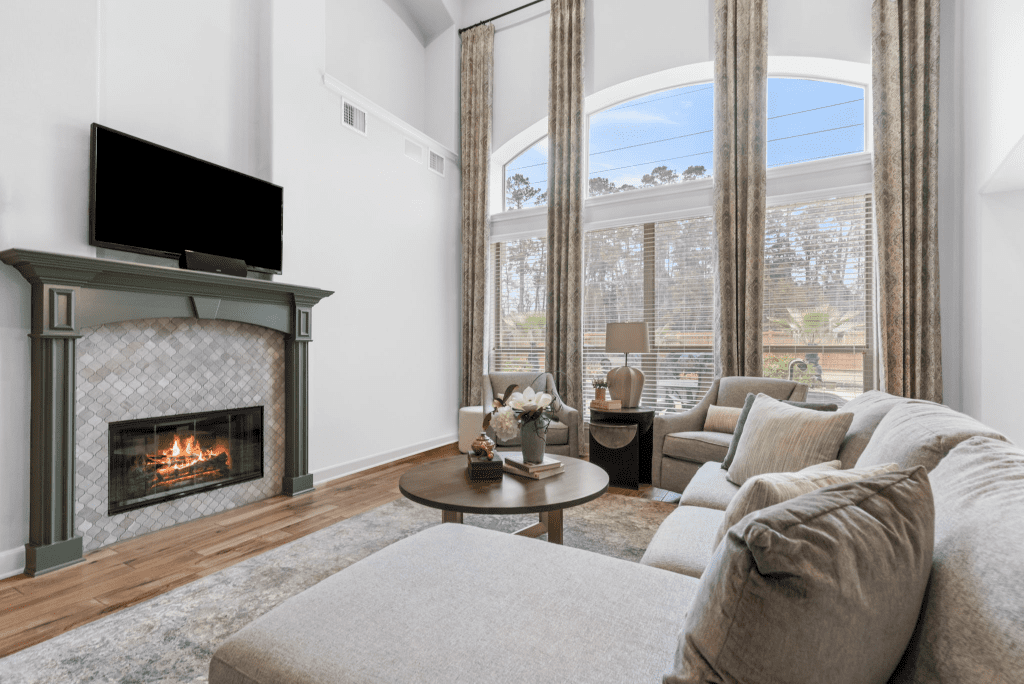
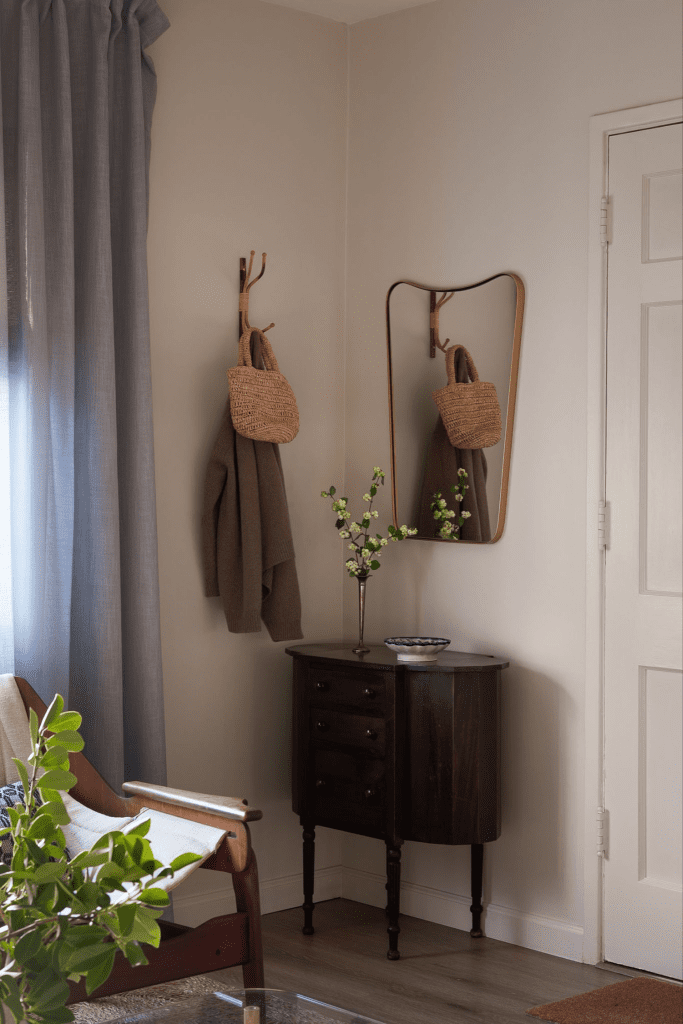
Origins & Rise of the Trend

red chair
Source: Davenport Studio

Like most good design ideas, the Unexpected Red Theory didn’t just pop out of nowhere. It’s got roots and a runway, darlin’.

On one side, you’ve got a long line of artists who proved red could shake the dust off tradition. From the Fauves splashing unapologetic scarlet across their canvases to Cubists slicing color into bold shapes, the modernist movements showed us that red was never meant to sit quietly in the corner. 

You’ll notice their rebellious spirit still echoing in today’s interiors, especially when you splash in that daring red that can turn a once tame space into something magnetic. 

Then came social media—and honey, that’s when the match hit the flame. 

In 2023, designer Taylor Migliazzo Simon dropped a TikTok that casually explained how a single pop of red can transform a space. Nearly a million views later, red was no longer just a designer’s secret—it was a full-blown trend. 

Before you knew it, everyone from Elle Decor to that Pinterest board you swear you barely use was talking about it. The movement’s been fueled by shares, media buzz, and wild experiments in mismatched rooms everywhere.
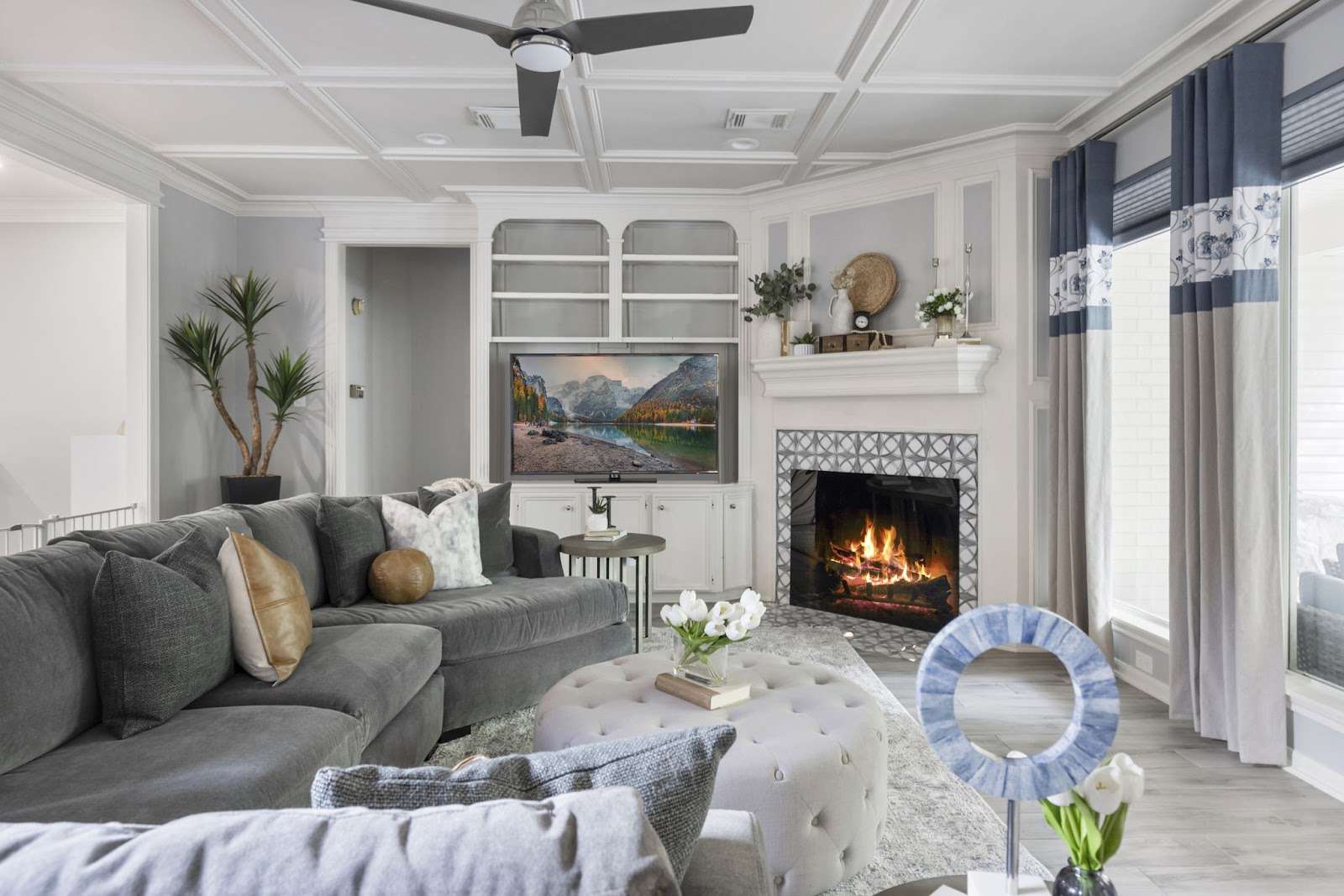
So, really, it’s a marriage of old and new

You’ve basically got this juicy mix of art history’s love affair with daring color and the viral energy of TikTok;  that’s how an age-old design principle became today’s buzziest decorating trick.

Why Red Works: Psychology & Visual Impact

dining room rug
Source: Bee Studios

Red isn’t just a pretty face in your room—it’s got personality, presence, and a little bit of sass. A single red accent can pull the eye, set the mood, and make everything else in the space feel sharper, warmer, and a lot more intentional.

Think about it, darlin’: 

A scarlet pillow on a soft beige sofa doesn’t just sit there; it wakes up the whole room like it’s had a double espresso. 

And that right there is the magic of red’s visibility and emotional pull. It signals energy, confidence, and excitement, even when used sparingly. That pop of red will guide attention toward a favorite piece of art, a unique architectural detail, or a reading nook, making the space feel thoughtfully curated without trying too hard.

Now, honey, red’s influence is not just emotional; it’s visual science. 

In color theory, red creates contrast, naturally draws the focus, and adds dimension to neutral and muted palettes. Pair it with complementary shades—think soft blues, gentle grays, or warm taupes—and you can create a balanced, harmonious look. 

A touch of blush or terracotta could soften the intensity in intimate spaces like bedrooms, while cherry-red accents in kitchens and dining areas can boost energy and appetite.

The trick? 

Less is more. 

One confident pop of red can do what an entire wall might struggle to achieve. Too much, and your space feels jittery, like it’s had one too many cups of coffee. But when you get that balance right, that single red detail transforms your room from calm and quiet to bold, vibrant, and full of life.

Of course, you could go in the opposite direction with strategically placed blue accents—like we did for the Laura Project

If you’d love a hand weaving bold accents into a design that still feels like you, that’s exactly where Design on a Dime’s Dream Team steps in.

How to Use Unexpected Red in Your Space

Nothing perks up a room faster than a clever pop of red, honey. It’s your secret weapon for instant energy and style, and the best part? 

You don’t need to repaint the whole house. 

The trick is knowing where to place it so your space feels intentional—not like Valentine’s Day exploded in it. Whether you start small or go full-on bold, red accents can bring depth, personality, and that little “wow” factor every room deserves.

Soft Furnishings & Accessories

red in interior
Source: Laura U Design Collective

Start where it’s easiest to swap and play—pillows, throws, lamps, and frames. 

A single scarlet pillow on a neutral sofa or a crimson throw folded across the armchair can make the living room sing. Lampshades, picture frames, or even a bold rug can do the same trick. 

Oh, and don’t be afraid to layer textures, honey—velvet, boucle, or lacquered finishes will add dimension and keep the red from feeling flat. 

These small-scale pieces let you experiment without commitment, and swapping them out seasonally (or whenever your mood shifts, honestly) is a breeze.

Architectural & Permanent Features

red kitchen
Source: DeVol Kitchens

For the brave hearts ready to make a bolder statement, red can shine in the doors, trim, accent walls, and cabinetry. 

Can you imagine a deep cherry-red door opening into that sunlit hallway of yours, or a muted gray kitchen with a striking red island? Even trim or stair railings painted red can act as a subtle but confident guide for the eye. 

Permanent features take planning, sure—but when done thoughtfully, they anchor the room and create a sophisticated, intentional look that feels anything but timid.

Wall Art & Statement Pieces

wall art
Source: Undone Home

Red wall art is a designer’s best friend—dramatic, engaging, and swap-friendly. 

A ruby-hued painting or a bold graphic print can spark conversation, anchor your seating area, or highlight architectural details without the permanence of paint. 

You can mix in small accents like a red vase or sculptural object nearby to carry the color throughout the space, creating rhythm without overwhelming the eye.

Specialized Applications

modern kitchen design
Source: Olly & Em

Some rooms deserve a little extra flair, wouldn’t you agree? 

In kitchens, for example, red stools and accents add a playful “hello” that makes the space feel lived-in and lively. Entryways love a red bench or console for instant curb appeal inside the door. Even pantries or hidden nooks can benefit from a cheerful cherry hue to brighten the mundane. 

And in bedrooms? Well, a softer terracotta or blush-red accent can make the space feel intimate and cozy, while still keeping things balanced.

Again, placement and restraint are everything, honey. 

One red accent can transform a space, and thoughtful layering through texture, scale, and complementary neutrals lets it shine without stealing the show. 

So, mix, match—and don’t be afraid to let your room smile. And if you’re itching to try a daring red moment but don’t know where to start, Design on a Dime will help you dream it up. From throw pillows to statement pieces, we’ll tailor every choice to your home’s personality.

Pitfalls & Criticisms: When It Doesn’t Work

red accent walls
Source: Mylands.de

Red can be bold, beautiful, and full of personality—but honey, it’s not magic on its own. What I’m saying is, use it without putting in any thought, and the room can go from chic to chaotic faster than a Texas summer thunderstorm rolls in. 

So, here’s what to watch for:

Overwhelming Visual Clutter

Ever walk into a room and feel like your eyeballs are doing the Macarena? Yeah, well, that’s visual clutter talking. 

A single red accent demands quite a bit of attention—but if your space is already crowded with competing patterns, jam-packed shelves, and overall has zero breathing room, your pop of red will only get lost in the madness. 

To tame it, give your pieces space to shine. We’re not going for “Where’s Waldo?” vibes here.

Area rugs, open shelving, and well-planned window treatments can help define zones and create a calmer flow, letting your red accent truly sparkle.

Clashing Color Schemes

Red loves company—but it doesn’t play nicely with just anyone. 

Throw a fire-engine red onto icy grays without a transitional shade, and you’ll definitely feel your eyes do a double-take. 

The trick, darlin’, is harmony

Combine red with complementary or muted tones, add texture, and use soft accents to smooth transitions. Remember, high-voltage reds mixed with other saturated colors may feel like a neon circus instead of chic drama. Let your statement color sing—but don’t let it brawl.

Disrupted Spatial Balance

Red is a spotlight-stealer, honey. And if you scatter it haphazardly or pile too much into a tiny space, it can dominate everything else in the room. 

That cozy nook? Overpowered. That gallery wall? Ignored. 

Experts suggest keeping your color palette tight—three colors max—and strategically placing red accents, so that they’ll guide the eye rather than hijack it. On that note, multi-functional furniture and “going vertical” can help maintain flow, letting red do its confident strut without overwhelming the room.

Too Much Red, Too Little Restraint

Even the most daring red can overstay its welcome, but matte finishes, smaller-scale accents, and mindful repetition can keep the intensity in check

Remember—less is more. A single throw pillow, a lampshade, or a vase can make a room sing. Overdo it, and your space might feel like it just had five cups of espresso and can’t sit still. 

Red can be a showstopper—but that balance is everything. If you would rather skip the trial-and-error and go straight to a design that works beautifully, our Dream Team can help you get there with ease.

Frequently Asked Questions

Can the Unexpected Red Theory work in small spaces?

Yes, it works in small spaces, too! You can use a single red accent or a smaller-scale accessory to create impact without overwhelming the room.

Are certain shades of red better for different rooms?

Absolutely. Deep reds feel cozy in bedrooms, cherry or tomato reds can energize your kitchen, and bright crimson pops work particularly well in living areas or as accents throughout your home.

How do I mix red with patterned fabrics or wallpaper?

You can pair red with patterns that have subtle, neutral tones; that way, you’ll avoid visual chaos. Also, be sure to use red sparingly—in one or two elements—to tie the look together.

Can red be used outdoors in the same way?

Yes! Red planters, outdoor cushions, or accent chairs can create focal points in patios and garden spaces, the same way they do indoors.

What lighting works best for red accents?

Warm, natural light can add to the red’s richness, while cooler lighting might mute it. Adjustable lamps and dimmers can help you control the intensity, so they’re definitely worth considering.

Unexpected Red, Unforgettable Spaces

Here’s the thing, sugar—your home should make you grin every time you walk through the door. A dash of red can be that spark, that little wink that turns ordinary into unforgettable. 

But color’s just the beginning. 

The real magic happens when every piece—from the furniture and textures to lighting and yes, even those pops of red—comes together in harmony. 

That is where a designer’s eye can save you from second-guessing, and help you land on a look that feels effortless. If you’re itching to give your space a glow-up, reach out—Design on a Dime is ready to help you play bold and create a stylish, inviting atmosphere that reflects your creativity!

Designer Sofas 2026: All About Big Cushions, Curves & Luxe Textures

Designer sofas 2026 are all about mixing heart, style, and comfort in ways that feel personal to you. 

Think of your living room as more than a place to sit; it’s where you recharge, laugh with friends, and make memories. And the right sofa? 

Oh, honey, it sets the tone, not just in its appearance, but also in how it makes you feel when you sink into it after a long day. 

This year, designers will be leaning into curves, textures, and colors that bring life to a space without draining your wallet. The sofa isn’t just furniture anymore—it’s the star of the room. 

Stick with me, and we’ll explore what makes these new designs worth keeping an eye on.

Curvilinear Silhouettes: The Boomerang & Organic Sofa Trend

Chesterfield sofa living room

Straight-edged sofas had their moment, sugar—but in 2026, the spotlight belongs to curves

From the sweeping boomerang silhouettes to softly sculpted organic forms, these designs feel less like furniture and more like art you can sink into. 

They don’t simply anchor a room. They guide the eye, creating natural flow and turning a sitting area into a conversation zone without feeling heavy or boxy. You can see how we created a conversation-first living room in our Jennifer Heights Project—all by simply choosing the right sofas.

What makes them so irresistible is the way shape and texture work together

Rounded frames wrapped in bouclé, linen, or velvet feel like a cozy embrace, while smooth matte fabrics paired with glossy accents add just enough polish. 

And yes, these biomorphic designs even have a practical side: 

Their fluid lines soften the look of an open floor plan and help quiet down acoustics, making big rooms feel warmer and more inviting.

Whether you’re drawn to a low-slung boomerang sofa that opens up space or a generous curved sectional that hugs the room, the message is the same: 

Sofas in 2026 will be friendlier, softer, and far more stylish than their stiff, cornered cousins.

Ready to bring those flowing curves home? Design on a Dime’s team can help you layer a sculptural sofa into your space so it feels fresh, modern, and still cozy as Sunday morning pancakes.

Modular Magic: Sofas That Flex With Your Life

modular sofa

If there’s one word for 2026’s designer sofas, it’s flexibility. 

Modular designs are the chameleons of the furniture world, honey—able to stretch, shrink, or swivel with whatever life might throw your way. Think of them as your “forever sofa,” because instead of replacing the whole thing, you can simply reconfigure or add pieces as your needs change.

A city loft, a family room in the suburbs, or even a stylish office lounge—modular sofas slip right in without fuss. And they’re not just practical, darlin’; they’re trendy, too. 

Upholstery options range from cozy bouclé to sleek leather, while details like low arms or sculptural backs keep them looking every bit the designer piece. Some even feature hidden storage and built-in charging stations—because who says a sofa can’t be smart?

Here’s why modular magic is taking over living rooms everywhere:

  • Mix & Match: Rearrange pieces to fit your space, whether it’s movie night or cocktail hour.
  • Custom Chic: Choose your fabrics, finishes, and layouts—make it yours, not anyone else’s.
  • Room to Grow: Add on new sections as life expands, from dinner parties to new houseguests.
  • Tech-Friendly Perks: USB chargers and clever storage built right in—convenience has never looked so good.

With this much flexibility, modular sofas don’t simply keep up with you—they grow with you. No drama, just options, darling.

Texture Upgrade: Bouclé, Velvets & Luxe Linens

textured sofa design
Source: Fletcher Rhodes

If you want a sofa that makes people say, “Ooh, I have to touch that,” texture is where the magic happens. In 2026, bouclé, velvet, and linen are leading the charge—each one bringing its own flavor, and together creating that layered, touch-me-now look that turns a living room into a sensory retreat.

Bouclé remains a favorite among designers for good reason. That nubby, cloud-like surface delivers cozy, dimensional texture, while the creamy neutrals blend seamlessly into everything from minimalist spaces to boho-inspired havens

It’s approachable luxury, too—you don’t need billionaire pockets to sink into that marshmallow softness. 

And yes, there’s a bit of a trend fatigue, but bouclé’s versatility keeps it firmly in the spotlight.

Velvet, on the other hand, is all about drama and richness. Jewel tones, like emerald and sapphire, make sculptural sofas shine, while stain-resistant finishes mean you can actually enjoy the glam without babying it. 

Combine it with breezy linen throws or crisp linen pillows, and you’ll strike the perfect balance—plush but breathable, glamorous yet relaxed. It’s that rare mix that works well in both small spaces and larger rooms that crave a bit of personality.

The best part? 

Mixing textures lets you layer warmth, sheen, and softness in a way that feels curated, not crowded. Add a metallic accent or a patterned cushion, and suddenly your sofa is not just seating—it’s a statement piece with soul.

Small Space, Big Style: Compact Sofa Innovations

Compact Sofa
Source: Sabrina Albanese

Not everyone’s living room is the size of a ranch house—but darling, that doesn’t mean you need to skimp on comfort or personality. Sofa designers are proving small-scale furniture can be every bit as stylish—and often more functional—than the oversized stuff. 

Nesting sectional components work like puzzle pieces. A corner here, an ottoman there—sugar, you get to mix, match, and snap them together for a layout that fits your life right now, then rearrange it all and add on when things change. 

Many even pull double duty—I’m talking ottomans with storage, armless sections that slide into completely new layouts, and eco-friendly, FSC®-Certified wood frames. It’s flexibility with a conscience, honey—and it means you don’t have to choose between style and sustainability.

For rooms where every inch counts, wall-hugging sofas are another game changer. These sleek designs glide forward instead of back, meaning you can recline just inches from the wall without losing floor space. 

And the extras? They’re hard to beat—built-in chargers, easy-clean fabrics, and discreet compartments for stashing blankets or snacks. 

Pair one of these with warm wood tones or layered lighting, and suddenly a small apartment feels curated, not cramped.

Compact sofas prove that good things really do come in small packages—you can ask anyone who’s ever hosted movie night in a one-bedroom and still had room for popcorn.

A petite room doesn’t mean you need to go small on style. Design on a Dime loves creating spaces where every inch counts, turning compact sofas into big statements without the clutter.

Color, Pattern & Personality: Sofas That Speak Your Style

Patterned Sofas
Source: Styled by Storms

If texture’s the soul of a sofa, then color and pattern are the personality—and honey, these days, sofas are showing up with plenty of both. 

Forget that safe “builder beige” we’ve all seen a thousand times. This year, it’s about choosing shades and prints that reflect you, whether that’s calm and grounded or bold and adventurous.

Warm earthy tones are leading the charge, with clay, caramel, and olive shades creating spaces that feel timeless and grounded at the same time. They work beautifully with natural woods and greenery, making your living room feel like an inviting retreat. 

On the flip side, jewel tones are still holding strong—think sapphire blues, emerald greens, and ruby reds. These rich shades don’t just sit pretty; they instantly elevate your space, bringing a dose of drama that still feels livable.

Patterns are stepping into the spotlight, too—and not just in your throw pillows. Designers are playing with everything from bold geometrics to painterly florals and retro-inspired stripes. 

Picture a classic silhouette wrapped in a wild, personality-driven print; suddenly, that sofa isn’t just another piece of furniture. It’s a conversation starter. And for those of you who might want to dip their toe into prints without going all-in, patterned upholstery on modular pieces or accent cushions is the perfect compromise.

The beauty of today’s color and pattern play is that there’s no one “right” choice—it’s all about what makes your home feel alive. 

Whether you’re leaning toward earth-toned serenity, jewel-toned luxury, or a statement-making print, 2025 is all about letting your sofa be as vibrant and personality-packed as you are.

Bold colors and playful prints can sing when they’re styled right. With Design on a Dime’s touch, your sofa becomes more than seating—it becomes your story, stitched in fabric and color.

Eco-Chic Sofas: Sustainable Style That Lasts

modern living room

Let’s be real for a moment—nobody wants a sofa that looks gorgeous but quietly guilts you every time you sit down. Well, sugar, eco-chic design means you can have it all: 

Style, comfort, and a cleaner conscience. 

I’m sure you’re aware that the furniture industry has a big footprint, so where materials come from matters more than ever. The good news?

Today’s smart upholstery choices are kinder to the planet and built to last.

I’m talkin’ fabrics like organic cotton that skip the harsh chemicals, or vegan leather and recycled polyester that give waste a second life. Plus, many pieces now come backed by certifications, like OEKO-TEX® and GOTS, so you can trust they’re safe for your home, as well as the planet. 

Designers are also leaning into practical construction—modular frames, reinforced seams, and removable covers that extend a sofa’s lifespan without sacrificing looks.

And let’s not forget the fun part—innovation. Digital printing and 3D design are opening the doors for bold, custom patterns without the waste, while new smart finishes keep the fabrics stain-resistant and easier to clean. 

The result? A sofa that’s equal parts stylish and sustainable, proving that chic and responsible can sit side by side—literally.

Nostalgic Flair: Classics Reimagined for Today

vintage sofa design
Source: PRAIRIE Interiors

Trends might come and go, but the classics always find a way back into the spotlight. In 2026, sofa design is leaning into nostalgia—pulling inspiration from decades past and giving it a fresh spin. 

And no, darling, these are not replicas of Grandma’s couch; they are updated versions that honor the past while fitting seamlessly into modern living.

Take the Chesterfield, for example. 

That deep-buttoned silhouette has been around since the 18th century, but today it’s being reimagined in lush jewel-toned velvets and streamlined shapes that feel less stuffy and more sculptural. 

Slipcovers are also staging a comeback—not the baggy, rumpled ones you may remember, but crisp linen and cotton versions that are fitted, washable, and stylish enough to anchor a living room. They’re practical and pretty, perfect for families and anyone who likes to change things up with the seasons.

Even denim is having a moment, believe it or not. No longer the domain of casual futons, it was reworked into durable, indigo-dyed upholstery that adds depth and texture while nodding to 90s cool. 

Oh, and speaking of the 90s, those chunky, low-slung sofas from the decade of dial-up internet are making their way back, too, but with smarter construction and stain-resistant fabrics. They’re built for lounging, but without the saggy look that made us toss them out the first time.

These nostalgic touches remind us that design doesn’t always mean starting from scratch. Sometimes the best move is dusting off one of the classics and then giving it new life with modern-day materials, palettes, and craftsmanship. 

After all, home should feel both familiar and fresh—and a sofa with a story delivers exactly that.

Frequently Asked Questions

How do I know if a sofa will stay in style for years?

You should prioritize timeless silhouettes and high-quality fabrics; all those other trendy details can always be swapped with cushions and throws.

Are custom sofas worth the investment?

Yes, they’re worth the investment—if you want long-lasting comfort and a perfect fit for your space, that is. Custom pieces also let you choose fabrics, colors, and details you won’t find off the shelf.

How do I care for specialty fabrics like velvet and linen?

Velvet should be vacuumed with a soft brush, while linen benefits from spot cleaning and slipcovers. That said, these are just general recommendations; always follow the manufacturer’s cleaning instructions.

Is it possible to reupholster a designer sofa?

Yes, it’s possible—and it’s actually a great way to refresh your sofa without buying new. A sturdy designer frame can last 15 years or more, and it can easily be reupholstered as your taste and trends change.

What’s the price range for a designer sofa in 2026?

Most high-end sofas start around $2,500 and can go quite a bit higher, depending on the brand, materials, and level of customization. But again, the investment is worth it. 

A Sofa That Makes the Room

The right sofa doesn’t just fill a room—it transforms your living room into a haven of style and comfort and sets the stage for how you live, gather, and unwind. 

If you’re ready to bring a designer look into your space but want a guiding hand to make sure it feels right, Design on a Dime would love to help. 

From sourcing the perfect piece to styling the entire space around it, we’ll make your vision come alive, all without blowing your budget. 

Your dream sofa is waiting, and so is the home that feels like you—all you need to do is reach out.

Dark Academia Interior Design: A Complete Guide to This Romantic, Scholarly Aesthetic

If Dark Academia interior design has been calling your name lately, honey, you’re not alone. There’s just something about those moody colors, old books, and velvet everything that feels like coming home to your most romantic, introspective self. 

It’s not just a style—it’s a vibe: a little scholarly, a little brooding, and a whole lot of charm. 

Whether you are dreaming of a candlelit corner to read in or just want your home to feel like it’s lived a few interesting lives, you’re in the right place. Light a sandalwood candle, grab a blanket, and let’s explore how to bring that beautiful, bookish magic into your space.

What Is Dark Academia Interior Design?

dark academia living room
Source: CAROLYNLEONA

Nostalgia takes center stage in the world of Dark Academia—and she’s not the shy, quiet type. She struts, draped in tweed, arms full of leather-bound books, and whispers secrets in candlelit corners. 

And honey, if you’re drawn to the idea of living inside a romantic old novel, you’re in the right place.

At its heart, Dark Academia interior design is a mood; moody, intellectual, and steeped in a love for the past. It pulls from the grandeur of Gothic architecture, the solemn beauty of European universities, and the kind of literary obsession that would make Lord Byron proud. 

This is a style where shadowy corners, creaky floorboards, and antique oil paintings don’t just belong; they shine.

But it’s more than a visual style. It’s a whole atmosphere. 

The aesthetic draws heavily from the broader Dark Academia subculture—a blend of classic literature, philosophy, academic rigor, and just a touch of melodrama.

Design-wise, that translates into interiors that feel like personal libraries, old studies, and reading rooms in crumbling manors. I’m talking worn leather, flickering candlelight, iron keys in little bowls, and furniture that looks like it’s seen some things. 

A good Dark Academia space doesn’t just house your life—it tells stories of lives that came before.

The Signature Ingredients of a Dark Academia Space

moody earthy living room
Source: Prospect Refuge Studio

There’s no single formula for Dark Academia interiors, but there are a few unmistakable ingredients that give this style its haunting charm and bookish allure. When these are woven together with care, they make a space that feels timeless, thoughtful, and just the right amount of mysterious.

Let’s walk through the essentials:

  • A Rich, Earthy Color Palette

Dark Academia doesn’t shy away from the shadows. The palette leans deep and dramatic, such as oxblood red, forest green, burnt umber, charcoal, and sepia. These colors do more than darken the space; they deepen it. And if you do bring in lighter tones, let them whisper—parchment, bone, and antique gold work beautifully as accents without breaking the mood.

  • Time-Worn, Storied Materials

This aesthetic loves a material that’s clearly “been around the block.” Aged wood is the backbone, be it weathered, stained, or carved with detail. Add natural stone, unlacquered brass, and classic leather to round out the story. 

  • Layered and Lived-In Textures

The best Dark Academia spaces feel collected—not curated. That means embracing textures with open arms. Mix smooth and rough, or soft and crisp. Patinas are welcome here—nothing too shiny, too new, or too polished. The goal is to make the room feel like it’s been loved for generations.

  • Lighting That Sets the Scene

Harsh overhead lights? Not in this house. Dark Academia calls for moody and layered lighting: soft pools of warmth that invite late-night reading or quiet conversations. We’re talking banker’s lamps, green-shaded desk lights, vintage chandeliers, wall sconces, and the gentle flicker of candlelight. A little dimness goes a long way in building atmosphere.

  • Objects With Soul

No room is complete without its curiosities. Antique books are a must—stacked, shelved, and even opened mid-quote. Globes, oil paintings, busts, vintage clocks, and old letters all give the space its personality. Botanical prints, pressed flowers, or a collection of feathers in a glass cloche bring in a touch of the natural world, which plays beautifully against the scholarly tone.

How to Design a Dark Academia-Inspired Space

Designing with Dark Academia in mind is less about copying a look and more about capturing a particular feeling—that quiet, candlelit hush of a library after hours, or the cozy tension of a thunderstorm outside as you journal in a velvet chair. 

The magic lives in all the details—the layers, the lighting, the lived-in textures that make your space feel personal and storied.

And don’t worry—this doesn’t mean turning your home into a scene from a Gothic novel (unless you want to!). It’s all about striking the balance between drama and comfort.

1. Set the Mood With Color

forest green wall paint for the living room
Source: Jillian Kliewer

Color does the heavy lifting in any Dark Academia space. It is what draws you in, holds your attention, and sets the tone before a single book or bust hits the shelf. We’re talking drama—but the elegant kind, not the over-the-top soap opera kind.

This aesthetic thrives on deep and enveloping hues. Forest green that feels like an overgrown path in an old novel. Rich navy that wraps around you like a cloak. Burgundy, espresso, and charcoal that ground the space with warmth and a little mystery. 

These aren’t just colors—they’re atmosphere in a can.

You can go bold with painted walls or keep it subtle with dark-toned textiles and furniture. A navy velvet sofa, espresso-stained bookshelves, or a plum-colored accent wall can completely transform the vibe. 

Here’s your moody mix-and-match palette:

  • Walls: forest green, inky navy, dark plum, matte black
  • Accents: espresso, chocolate brown, deep rust, charcoal gray
  • Textiles: wine red velvet, sage linen, dark taupe tweed

Now, unless you’re going full Gothic mansion (and hey, no judgment here), you’ll want to break up all that shadow with some contrast. That’s where light, creamy touches come in—ivory throws, pale oak frames, soft beige curtains.

Even a single creamy ceramic lamp or a parchment-toned lampshade can do wonders to lift the space.

The trick is contrast with intention. You want your space to feel dramatic, yes, but also layered, breathable, and lived-in. A room that says, “Come in, stay awhile, bring your journal.

Not sure which moody hue will set the right tone for your space? We’ll help you find the perfect palette that captures your vision and elevates your style.

2. Choose Furniture That Tells a Story

office room with dark blue walls
Source: Alissa Johnson Interiors

When it comes to Dark Academia interiors, furniture isn’t just functional—it’s foundational. These pieces set the tone, ground the room, and whisper stories of candlelit studies, late-night musings, and lives well lived. 

You’re not just furnishing a space, honey—you’re curating a little world.

You’ll need to look for pieces with history or the illusion of it. And the more soul, the better. Carved wood, clawfoot legs, curved lines, and aged finishes all help anchor the aesthetic. 

A velvet wingback chair? Practically a requirement here. A tufted Chesterfield in burgundy or deep green? That’s a mood. 

If it looks like it belonged in a professor’s office or an old manor house, you’re on the right track.

Here are a few staples: 

  • Writing Desks: Bonus points for roll-tops and worn wood surfaces. These beauties are perfect for journaling, studying, or sipping your tea while rereading Austen for the fifteenth time.
  • Bookshelves: Go tall, go wide, go dramatic. Add a rolling ladder if you can swing it—because yes, you deserve that swoon-worthy, novel-reach moment.
  • Accent Chairs: Go for tufted upholstery, high backs, and curved arms. Wingback and barrel chairs in velvet or aged leather add instant gravitas.
  • Side Tables: Choose dark wood or brass-accented tables with character—perfect for stacking your current reads or displaying vintage trinkets.

And don’t be afraid of a little DIY. Upcycling old furniture with a dark stain or new hardware can breathe fresh life into forgotten pieces. A thrifted desk, reimagined with love, has more personality than anything brand-new ever could.

The goal? Create a space where every piece looks like it has a past, and maybe a secret or two. Let your furniture tell your story, chapter by chapter.

3. Add Drama and Comfort With Rich, Layered Textiles

living room Persian rug
Source: Courtney Bates Design

If walls and furniture build the bones of your Dark Academia space, textiles are what make it sing. This is where you bring in all the softness, moodiness, and quiet luxuries that make people want to curl up with a good book and lose track of time.

You want the space to feel collected, not staged—like a well-loved study, not a showroom. And that means layers, honey. Think velvet drapes, Persian rugs, cable-knit throws… textures that make the space feel like it’s got something to say.

Velvet and leather are the power couple of the Dark Academia world. One is soft, romantic, and touchable; the other is grounded, a little rugged, and full of gravitas. Together, they’re everything.

Here are a few ways to work in this dynamic duo:

  • Jewel-toned velvet pillows for instant mood
  • A studded leather armchair or ottoman for depth
  • Brass accents to bridge plush and polished
  • Leather’s earthy tone with tweed or wool for that tenured professor flair

Once the foundations are in place, it’s time to build the atmosphere—and nothing does that better than layers of fabric with depth and soul.

Smooth linen here, a chunky knit there, a dash of velvet, a sprinkle of tweed. Every layer adds depth and richness. Imagine a wool throw draped over a leather chair, tweed pillows against a dark linen headboard, or a vintage rug anchoring the space with history underfoot.

Embossed wallpaper, botanical tapestries, and rich curtains that pool at the floor contribute to that sense of quiet opulence, too.

The beauty of this style lies in the mix, honey, not the match—so let your space feel curated over time, like it’s collecting stories with every layer you add.

Pulling together luxe layers calls for more than tossing a throw. If you want that quiet opulence without the guesswork, Design on a Dime can create a space that feels as good as it looks.

4. Layer Your Lighting for That Perfect Ambient Glow

living room lighting
Source: The Residency Bureau

Let’s be honest—nothing will snap you out of your moody, bookish daydream faster than an overhead light beaming down like you’re about to be questioned by the FBI. If you are chasing that soft, scholarly glow of Dark Academia interiors, harsh lighting just won’t cut it.

This aesthetic is all about creating little pockets of warmth and shadow. And the trick? 

Layered lighting, sugar.

Instead of relying on one central light source, spread warm, low-intensity light throughout the room: 

  • Desk Lamps: Go vintage if you can; banker’s lamps with green glass shades, aged brass finishes, or anything with a pull chain just oozes scholarly charm.
  • Wall Sconces: Perfect for flanking bookcases, beds, or reading nooks. Choose candle-style bulbs or frosted glass to keep things soft and flickery.
  • Candles: Cluster them in groups—pillars, tapers, tea lights, whatever speaks to your soul. Bonus points for musky, woodsy scents that turn your space into an olfactory novel.
  • Floor Lamps: Tall, slim, and elegant; these can quietly light up a corner without stealing the show. Try a fabric shade to keep the light diffused and gentle.

It’s not just about the fixtures, hun; it’s about what you do with the light. Try placing a mirror with an ornate frame near your lamp to bounce that golden glow around the room. Hang sheer curtains to soften natural light, so it drifts in like a whisper, not a command.

The end result? A room that glows, not glares. A space that feels like a secret, not a showroom. 

5. Showcase Books and Academic Treasures With Style

home library design
Source: MHouse Inc

In the world of Dark Academia, books aren’t just background—they’re the stars of the show. Dog-eared or dust-jacketed, thrifted or first edition, your literary collection deserves more than a forgotten corner shelf. 

These are your trophies, your quiet little rebellions—and they should be styled like the treasures they are.

Start by treating your shelves like a personal museum of the mind. Paint them the same rich tone as your walls (a design trick called color drenching) to create an immersive, cocoon-like feel. Suddenly, even your paperback copy of Frankenstein looks like it belongs in a rare book room.

Mix your books by era, subject, or even spine color for visual rhythm. Don’t be afraid to let a few titles lie flat in stacks—that variation keeps the eye moving. And for goodness’ sake, celebrate the patina on those old spines—every crack and wrinkle adds character.

Here are a few ways you can give your shelves a story to tell:

  • Highlight rare editions or sentimental reads in glass-fronted or vintage display cases
  • Add artistic intrigue with antique busts, pressed botanical prints, or framed maps
  • Sprinkle in texture—a magnifying glass, a letter opener, a candle or two
  • Contrast is your friend; pair light-toned books with dark wood shelving for that broody drama

And don’t stop at the books—musical instruments, vintage globes, classical sculptures, or old typewriters can take your décor from “book lover” to bona fide aesthetic scholar. 

Let your shelves reflect not just what you read, but what you love, what you wonder about, and what kind of story you want your home to tell.

We love mixing old soul with new style. Whether you’ve got pieces you love or want help sourcing just the right ones, our Dream Team will curate your space with care.

6. Add Botanical Touches for Balance and Life

deep blue fireplace dark academia design

Source: Studio Gild

Even the most brooding intellectual needs a breath of fresh air now and then, otherwise you’re just pacing dramatically in the dark, which, let’s be honest, is fun… until it’s not. 

That’s where nature comes in.

Bringing botanical elements into your space is like letting the outside world peek in. It softens the edges of all that moody drama, adds warmth, and reminds your interiors that, yes, we’re still living things who like a bit of sunlight and fresh air.

Now, honey, you can start simple—a windowsill lined with terra cotta pots, each holding its own little green miracle. English ivy trailing over a bookshelf. A fern peeking out of an old ceramic urn. 

The greenery doesn’t need to be showy. It just needs to feel organic, effortless, and quietly alive.

  • Dried florals in vintage vases add texture and romance without the maintenance
  • Pressed botanicals or scientific-style plant prints bring in that scholarly-naturalist flair
  • Reclaimed wood, terra cotta, and weathered ceramic pots create that tactile, grounded vibe
  • Subtle green tones—moss, olive, sage—work beautifully on walls or textiles to echo the outdoors

Think of these plants and earthy textures as the perfect contrast to the structured, cerebral vibes of Dark Academia. And if it looks a little wild or whimsically overgrown? Even better.

This is the magic of balance: letting your space feel lived-in and alive, romantic and rooted. Because every good scholar needs a greenhouse moment now and then.

7. Architectural Details That Elevate the Mood

crown molding and wainscoting in rich green color
Source: Emma Beryl Interiors

Moody lighting might set the tone, but it’s the bones of your home—the architectural details—that bring real Dark Academia soul into the space. These are the touches that whisper history, structure, and a little old-world grandeur, even if your home was built last decade in the suburbs.

We’re talking ornate crown molding tracing your ceiling like a forgotten manuscript’s flourish. Wainscoting that adds rhythm to the walls. A marble mantelpiece that begs for a stack of poetry books and a flickering taper candle. 

These are more than decorative flourishes—they’re what ground the space in time and give it that storied, academic richness.

  • Crown molding & ceiling medallions: Refined, classic, and surprisingly easy to add with modern trim kits
  • Wainscoting and board-and-batten paneling: Brings depth and formality to walls without feeling fussy
  • Arched doorways or windows: Timeless and elegant; if you’ve got ‘em, flaunt ‘em
  • Herringbone or parquet floors: Bonus points for dark stain and creaky charm
  • Exposed beams and stone accents: A little rustic, a little Gothic, completely atmospheric

And if you’re working with a newer build? Don’t fret, sugar. 

In our Sanchez Project, we used bold, patterned wallpaper and trim details to completely transform a living space, proving just how much character you can add with the right wall treatment.

Faux options like peel-and-stick paneling, stick-on faux beams, or paint tricks (hello, two-tone walls!) can help mimic the effect without a full renovation.

For some easy drama, install a heavy velvet curtain to divide a room or frame a window—it’s architectural and theatrical. Or paint your trim the same moody shade as your walls to create that immersive, scholarly wraparound feel.

The goal is not necessarily to recreate an old-world manor—but to borrow a little of its magic, and make it your own.

8. Scents, Sounds, and Stories That Bring It All Home

organic living room decor
Source: Leave Room

Honey, we’ve talked about colors, furniture, textures, and lights—but creating a Dark Academia space isn’t just about what you see. It’s about what you feel, what you smell, and the stories your space tells.

This is where the real magic happens. 

You can set the scene with scent—candles are an easy way to fill your space with a sense of mystery and nostalgia. Reach for notes that feel deep and comforting:

  • Sandalwood, amber, or tobacco for warmth and depth
  • Leather or vanilla to add a softer, nostalgic edge
  • Fig, clove, or cedar for something a little more curious and complex

Bonus points if your candles come in vintage glass jars or brass holders—because even scent deserves style.

Oh, and don’t forget sound. 

A vintage record player spinning classical music or jazz? Yes, please. There is something so soulful about the crackle of vinyl that pairs perfectly with flickering candlelight and the turning of pages. 

No record player? No problem. Curate an ambient playlist of chamber music, old-school piano, or baroque pieces on your go-to streaming service.

Remember, Dark Academia isn’t just a look—it’s a lifestyle, a mindset, and a feeling. When scent, sound, and story come together, your space transforms from a “styled room” into a sanctuary.

Frequently Asked Questions

How do I keep a Dark Academia room from feeling too heavy or dark?

Balance deep tones with warm lighting, reflective surfaces like mirrors, and natural textures—linen, wood, and plants—to keep the space grounded and breathable.

Can the Dark Academia style work in small spaces or apartments?

Yes! Focus on layering textures, using moody accent colors, and incorporating vintage decor through wall art, textiles, and small furniture pieces that don’t overwhelm the room.

What are some budget-friendly ways to get the Dark Academia look?

Thrifted books, secondhand furniture, peel-and-stick molding, moody paint samples, and printable vintage art are all low-cost ways to build the aesthetic.

Is there a modern twist on the Dark Academia style?

Yes, there is! Combine traditional elements, like antique books and classic silhouettes, with sleek lighting, minimalist artwork, or contemporary color-blocking for a modern take on this style.

Design a Space That Feels Like You

There’s something beyond powerful about a space that feels like it’s lived a few good chapters—and Dark Academia does just that. 

It wraps you in warmth, curiosity, and a little mystery, all while staying deeply personal. 

And you don’t need grand estates or hefty budgets, either.

If you’re dreaming up a room that feels like a page out of your favorite novel, we’d love to help you bring it to life. Reach out to our design team and let’s craft a space that feels as soulful as it looks.

How to Use Wainscoting to Bring Charm to Any Room

How to use wainscoting isn’t just a matter of style—it’s a way to bring heart and character into your home without splurging on a full makeover. 

Whether you’re working with a completely blank slate or just itching to add a little extra personality to your walls, this classic detail can work wonders. Think of it as a nod to tradition, but with a fresh twist—the kind of touch that makes a space feel warm, thoughtful, and pulled together. 

And trust me, honey—you don’t need to invest a fortune to bring a touch of elegance to your home.

Stick with me, and I’ll walk you through how to make it happen—no stress, no steep price tag, just real talk and beautiful results.

Why Wainscoting Simply Works: Benefits to Keep in Mind

interior wall finishes
Source: Blake & Dane

Now, let’s get one thing straight—wainscoting isn’t just about looking pretty. Sure, it adds charm and character to a room, but it’s also got grit. Think of it as your home’s quiet little powerhouse, working behind the scenes to keep things looking sharp and feeling solid.

Not just a pretty face, wainscoting is the unsung hero of wall protection!

You’re right to assume that interior wall finishes like wainscoting create a more cohesive and stylish design aesthetic—but it’s not just for show. 

Here are a few benefits of wainscoting you might not be aware of: 

  • Wall Protection: Life gets messy—especially in busy households. Wainscoting helps shield your walls from scuffs, dings, and little accidents in high-traffic areas such as hallways, entryways, and mudrooms.
  • Moisture Defense: In spots like bathrooms and kitchens, it adds an extra layer of defense against moisture, helping to prevent long-term water damage.
  • Sound Control: Want a quieter, cozier home? Certain wainscoting materials can also help reduce noise transfer—especially handy in shared walls or between floors.
  • Added Insulation: It might not replace your insulation—but every little bit helps! Wainscoting can contribute to keeping rooms a touch warmer in winter and cooler in summer.
  • Clever Concealment: Uneven drywall? Mystery dents? Wainscoting covers up wall imperfections with style and grace.

Plus, let’s not forget—it can boost your home’s value by adding that touch of classic sophistication buyers love, making it a smart investment for homeowners. And in smaller spaces, the texture and vertical lines create a sense of height and dimension without overwhelming the room.

So yes, it’s pretty. But it’s also practical—and that’s what makes it magic.

Picking the Perfect Wainscoting Style for Your Space

Wainscoting isn’t one-size-fits-all, sugar—it’s a chance to tailor your walls to reflect your taste and home’s personality. 

Elegant raised panels to charming beadboard, there’s a wainscoting style for every taste and budget.

Let’s break it down so you can pick the right style and blend it beautifully with the rest of your room.

Choose a Style That Speaks to You

Beadboard
Source: Fletcher Rhodes

Whether you’re dreaming of cozy cottage charm or sleek modern vibes, there’s a wainscoting style ready to strut its stuff in your home.

  • Raised Panels: Ideal for formal dining rooms and traditional spaces. Think elegance with a capital E.
  • Beadboard: Sweet and simple, perfect for bathrooms, kitchens, and farmhouse-inspired spaces.
  • Board and Batten: A go-to for contemporary or transitional homes—great for adding drama to a single feature wall.
  • Flat Panels: All about clean lines and quiet sophistication. A minimalist’s dream.
  • DIY Kits: Easy on the wallet and simple enough to tackle over a weekend. Just measure twice and cut once, hon.

The point is—wainscoting can adapt to your vision. From full-room paneling to subtle half-wall treatments, the right style brings balance, character, and architectural interest to any space. 

Mix and match styles across rooms for a curated, custom-home feel—without the custom-home price tag.

Blend It Seamlessly Into Your Space

Match wainscoting shades to the color of your walls
Source: Adrian Dagli

Once you’ve picked your style, it’s time to make sure your new wainscoting doesn’t feel like it just crashed the party.

Here’s how to make sure your wainscoting plays nice with your room layout:

  • Color Harmony: Match wainscoting shades to the color of your walls for a subtle touch or go bold for contrast and depth.
  • Furniture Pairings: Dark panels? You’ll need lighter furniture. Light panels? Add richness through the upholstery and accent pieces. It’s all about balance.
  • Floor Flow: Wood tones in your flooring and paneling should speak the same language—cool with cool, warm with warm.
  • Mix with Wallpaper or Paint: Try adding patterned wallpaper above the panels for a designer look that’s full of personality.
  • Smart Storage Integration: If you’re going full custom, you can add built-ins or concealed storage that matches your wainscoting for a streamlined finish.
  • Watch the Height: A classic rule of thumb is to set your wainscoting at one-third the height of your wall—it keeps everything balanced and beautiful.

If your ceilings feel a little short, go vertical—those lines will draw the eyes up and make everything feel taller. Got a narrow space that’s feeling a bit tight? Horizontal panels stretch things out and add breathing room. 

You could also try mixing directions! Alternating vertical and horizontal panels can add rhythm and a little visual party to your walls.

Oh, and don’t forget texture, sugar: 

A combination of smooth wall finishes, natural fibers, and decorative molding can really elevate the space and tie your design together like a perfectly knotted bow.

Love the look of layered textures, but need a little help pulling it all together? Our team is just a click away! Get in touch and let’s create something beautiful.

Pick Materials That Match Your Needs

Wainscoting Materials
Source:  Colette Interiors

Now let’s talk materials, honey—because the prettiest panel in the world won’t do much good if it warps in your bathroom or blows your budget.

  • MDF (Medium-Density Fiberboard): Your go-to for budget-friendly beauty. It paints like a dream and gives you that crisp, clean finish without the hefty price tag. Perfect for living rooms, hallways, or any space where moisture isn’t a problem.
  • Plywood: A solid alternative to MDF—slightly more rugged, and still budget-friendly. It’s also great for creative cuts and custom designs.
  • PVC Panels: Working with high-humidity zones like bathrooms and laundry rooms? Then PVC will be your moisture-fighting bestie. It resists warping and is easy to clean.
  • Real Wood: Nothing beats the warmth and texture of natural wood—oak, maple, or walnut if you’re feeling fancy. It’s a bit pricier, sure, but it’s also durable and timeless. If your space leans traditional or you’re investing in resale value, this might be worth the splurge.
  • Shiplap: Want that rustic, lived-in charm without going full farmhouse? Shiplap can bring a casual, cozy texture and works beautifully in entryways or kitchens.

Here’s a tip: 

Feel free to mix and match! Use cost-effective bases like MDF and add luxe accents—think real wood trim or a high-end chair rail—for a look that feels high-budget but stays sensible.

Oh, and don’t forget—material costs are only half the story. Labor or DIY time can vary a lot depending on what you pick, so factor installation into your planning, too, sugar.

Looking for sustainable style? We will help you source beautiful, budget-friendly wainscoting materials that are good for your home and the planet

Design Trends & Fresh Wainscoting Ideas

Darlin’, wainscoting isn’t just a backdrop, it’s a style statement—your chance to add texture, depth, and a whole lotta personality to a room. 

Let’s explore some of the trendiest ways folks are using wainscoting these days—from bold statements to nature-inspired warmth. 

Moody Monochromes

How to Use Wainscoting
Source: Madeline Harper

Want your walls to whisper sophistication? 

Try painting your wainscoting the same rich shade as your upper walls—think deep navy, charcoal gray, or even black. It’ll create a cozy, cocooning effect that’s perfect for bedrooms, dining rooms, or an intimate little reading corner

Balance it with soft lighting and plush textiles to keep the mood luxe, not gloomy.

Bold Blue Statements 

wainscoting a modern twist

Hale Navy, anyone? 

Deep blues are stealing the show in dining rooms and entryways, giving classic wainscoting a modern twist. 

Pair navy or peacock blue panels with brass light fixtures or white crown molding for contrast that pops without overwhelming.

Looking for real-life inspiration? 

At Design on a Dime, we’ve brought bold wainscoting ideas to life in our Sanchez Project, where sleek paneling meets daring wallpaper in the most delightful way. The result? A space that feels layered, luxe, and full of personality. 

Take a peek—you might just find the spark for your own design story.

Earthy Greens with a Fresh Twist

Earthy Greens with a Fresh Twist

Sage, olive, and hunter green wainscoting can soften a space while adding grounded charm

This look works beautifully in bathrooms, bedrooms, and home offices—especially when paired with light neutrals or warm wood tones. It’s timeless, calming, and oh-so inviting.

Geometric Frames and Modern Grids

Geometric Frames and Modern Grids
Source: Bryan Graybill

Why stick with traditional squares when you can get creative? 

Modern wainscoting is all about shapes—diamonds, elongated rectangles, or even asymmetrical layouts. 

These custom-cut designs are perfect for feature walls and add a dynamic touch that turns heads.

Two-Tone Contrast

Two-Tone Contrast wainscoting
Source: Miche Victoria Interior Design

Can’t choose between colors? Don’t! A classic white upper wall paired with darker-toned wainscoting—like taupe, slate, or forest green—keeps things fresh while defining your space

Another reason to go two-tone? 

This contrast can visually elongate your walls, making small rooms feel bigger.

Warm Wood Tones

wood wainscoting

If you’re drawn to organic textures, raw wood wainscoting is a gorgeous choice. 

From white oak to rich walnut, letting the natural grain shine can add warmth and character—especially in farmhouse, rustic, or Japandi-inspired spaces

Consider adding some greenery or linen accents to complete the look.

High-Contrast Minimalism

High-Contrast Minimalism panels
Source: Pallavi Kale Interiors

Love a clean, modern aesthetic? Keep your wainscoting sleek and simple—flat panels, sharp edges, and a crisp color palette (think white on white or black and white or beige). 

The result? 

A gallery-worthy look that’s sharp, stylish, and easy to pair with bold artwork or sculptural furniture.

Incorporating minimalist design principles—think clean lines and simple color schemes—can help ensure your wainscoting complements a minimalist aesthetic.

Full-Height Paneling

Full-Height Paneling

Why stop halfway up the wall? Full-height wainscoting is trending in a big way, giving rooms a polished, architectural feel from floor to ceiling. 

Try it in narrow hallways or powder rooms to make the space feel taller and more finished.

Whatever your style—whether you are craving cozy cottage charm, contemporary elegance, or something in between—wainscoting is your best friend when it comes to layering depth and drama into your space. Don’t be afraid to play with color, texture, or layout. Your walls are ready for their close-up!

Worried about the room’s size and layout? Our Dream Team here at Design on a Dime knows exactly how to use wainscoting to open up your space.

Budget-Friendly & DIY Wainscoting Tips

Wainscoting Tips
Source:  Black Sheep Interior Design

Who says you need a big budget or a team of professionals to bring a little charm to your walls? If you’ve been wondering how to use wainscoting without spending a fortune, let me tell you, it’s easier—and more affordable!—than you think.

Add sophistication to your walls effortlessly and affordably with a touch of DIY wainscoting magic!

Whether you’re working with a tight budget or just love a good weekend project, here’s how to get it done without all the fuss.

Choose Smart, Save Big

When you’re decorating on a budget, picking the right materials makes all the difference. The good news? You don’t have to sacrifice style to stay on budget. With a few savvy choices, you can stretch every dollar and still make those walls shine.

  • MDF panels are your best friend—light on cost, heavy on style.
  • Pre-made chair rails and base moldings? Grab ’em! They save time and money.
  • For tighter spots, check your local hardware store for any discounted plywood scraps or molding remnants—they’re perfect for accent walls or powder rooms.
  • Liquid Nails gives strong adhesion without the mess (or the price tag of fancier tools).

Ready to transform your walls without breaking the bank? Design on a Dime is here to help every step of the way!

Your Step-by-Step DIY Game Plan

Ready to roll up those sleeves? A little patience and prep go a long way with DIY wainscoting. 

These simple steps will guide you through the process without all the overwhelm:

  • Start by removing existing trim so you’ve got a clean canvas.
  • Use a stud finder to locate secure anchor points.
  • Patch and smooth any wall imperfections before you begin—it’ll make a world of difference later.
  • Paint or prime your panels before installing to save yourself the hassle of tricky edges.
  • Measure everything twice (you’ll thank yourself!), and position that chair rail around 32″ from the floor for a classic look.

Tool Belt Tricks & Time-Savers

Want to take your DIY project from “pretty good” to “absolutely fabulous”? These pro-approved tips and tricks will help you get the polished finish you’re after—even if you’re working with basic tools and a tight timeline:

  • Vertical panel strips stretch your materials further while adding height to the room.
  • A nail gun will speed things up like a dream—but if you don’t have one, finishing nails will do just fine.
  • Don’t forget to caulk those seams for that polished, seamless finish.

But hey—if all that measuring and cutting sounds like more headache than hobby, there’s no shame in calling in the pros. At Design on a Dime, we’re all about mixing smart design with real-life budgets, and we’re here to help you bring your vision to life—whether you’re swinging the hammer or just pointing to where the magic should happen.

Frequently Asked Questions

Can wainscoting be used in humid environments like bathrooms?

Yes, you can use wainscoting in bathrooms. However, you need to opt for moisture-resistant materials like MDF or vinyl, and ensure proper sealing with urethane or paint. Also, you should install fans to make sure the room has good ventilation; that’ll help manage humidity and prevent warping.

What tools do I need for a DIY wainscoting project?

For your DIY wainscoting project, you’ll need a few essentials—a miter saw, nail gun, level, tape measure, caulk gun, and wood filler. 

How do I maintain and clean wainscoting over time?

To maintain and clean wainscoting, dust it regularly, vacuum the grooves, and use a damp microfiber cloth with mild detergent. Address stains with vinegar solutions, dry immediately, and reapply finishes whenever needed. Last but not least, inspect for structural wear routinely.

Can wainscoting work in modern minimalist interiors?

Yes, it absolutely can. Clean lines and low-profile panels are perfect for adding depth and texture without clutter. Plus, recessed panels and dark hues create sleek sophistication, seamlessly integrating with your modern aesthetic while keeping things stylishly simple.

Can wainscoting be installed over existing wallpaper?

Yes, you can install wainscoting over existing wallpaper—but make sure it’s smooth and well-adhered. Try using adhesive-based panels or nailing directly through to studs. Don’t forget to smooth uneven areas and remove loose sections first.

Let’s Turn That Blank Wall Into a Showstopper

There’s something so satisfying about turning a plain space into a reflection of your style, and wainscoting makes that transformation feel both effortless and exciting. It’s a stylish and budget-friendly way to elevate any room—no design degree required.

Whether you’re planning a DIY over-the-weekend project or want a full-blown room makeover, one thing is certain—your walls are brimming with potential. 

Not quite sure where to start or how to pull it all together? That’s where we come in.

Get in touch with Design on a Dime and see how easy it is to reinvent your living space—beautifully and on budget.

14 Modern Living Room Design Ideas for Open, Bright Texas Interiors

Modern living room design doesn’t have to feel cold and cookie-cutter—especially not here in sunny Texas. 

Whether you’ve got an open layout or a light-filled living room that just needs a little love, this is your sign to freshen things up. We’re talkin’ clean lines, comfy textures, and just the right mix of charm and function to make your living room the heart of your home. 

So, if you’re itching to give your space a modern edge without losing that welcoming vibe, know you’re in the right spot. Stick around, sugar—we’ve got ideas that will inspire you to roll up your sleeves and make that living room shine!

1. Choosing the Right Flooring for Modern Texas Interiors

Choosing the Right Flooring for Modern Texas Interiors

Have you ever wondered why your flooring choices don’t quite vibe with the Texas heat? Let’s spill the tea, because nothing throws off a good design faster than flooring that can’t handle that sizzling Texan climate.

And let me tell you—not all floors are created equal.

In a modern living room design, your flooring needs to be more than just a pretty face. It’s gotta stand up to the heat, the humidity, and the hustle of everyday life. 

That’s why smart Texans are turning to Luxury Vinyl Plank (LVP)—a scratch-resistant beauty that looks just like real wood but won’t warp when the temperatures rise. It’s practical, polished, and a perfect fit for Southern living. 

Luxury Vinyl Plank: the stylish, heat-resistant superhero flooring that mimics real wood in the Texan heat.

Engineered wood is another option worth looking into—you’ll get the look of hardwood, but with improved moisture resistance.

[image]

If you’re going for something cooler underfoot, porcelain and ceramic tiles bring that chill factor and keep your space sleek. And if you love a more industrial vibe? Polished concrete adds a clean, modern edge that holds its own, even when the sun’s blazing.

If you’re ready to love every inch of your living room, our team is ready to roll up their sleeves and make it happen. Let’s create something beautiful together!

2. Lighting That Lifts the Room—and Your Mood

Living Room Lighting

If you like your living room’s lighting is more “dungeon chic” than bright and airy, it’s time to let the light in—literally and design-wise—and make your space feel as light and breezy as a Texas afternoon.

Start by working with what the good Lord gave us—natural sunlight. Keep those windows wide open with minimal treatments—sheer curtains for a soft, dreamy vibe or even nothing at all—and let that golden glow do its thing.

Now, here’s a little designer secret—mirrors. Hang one across from a window and watch your whole room shine brighter than a Dallas debutante.

And when the sun dips low? Mix recessed lighting with dramatic pendants or chandeliers for evening flair. Layered lighting creates a dynamic atmosphere, making your space both functional and stylish. Speaking of “functional,” don’t forget smart tech—voice-controlled systems and motorized shades make adjusting light a breeze. You’ll see what I mean in a moment. 

Layer your lights, tossing in some accent and task lamps, and you’ve got a space that feels like a breath of fresh Hill Country air.

3. Smart Ways to Manage Artificial Lights

Smart Ways to Manage Artificial Lights

Ever walked into a room and felt like the lighting was just… off? We may have a solution—automated light management. Think about it: 

Nothing says “modern living room design” more than automated lighting that adjusts based on your mood or activity. 

Whether you’re cozying up for a movie night or diving into a thrilling novel, smart lighting lets you tailor the ambiance with ease. Set the mood, save energy, and never search for a light switch again.

With LED technology and advanced controls, you can schedule lights, adjust brightness levels, or even switch between warm and bright lighting—all from your smartphone. And those predefined scenes? Think “movie night” with just a tap.

Just imagine the ease of walking into a living room that’s already set just right—pure magic. It’s like having a personal lighting director, ensuring your Texas home always shines bright!

4. Seating Setups That Welcome a Crowd

living room design ideas

A modern living room should be ready for everything from casual family nights to lively get-togethers—and smart seating arrangements make all the difference.

If you’d like to create conversation zones, go with dual-facing sofas anchored by a sleek coffee table. They encourage conversations without cluttering the space—just be sure to opt for minimalist designs and clean lines to keep the room feeling open and balanced.

For larger spaces, extra-long sofas paired with low-profile leather club chairs bring a touch of Texas charm without overwhelming the room.

Alternatively, you could go with modular sectionals. They allow you to rearrange your seating on the fly—a perfect solution for transitioning from cocktail parties to movie marathons. Opt for neutral-toned upholstery for a cohesive modern look and layer in large area rugs to define each seating zone.

Ottomans do double duty as extra seats or footrests, keeping things flexible.

Mix larger pieces like sectionals with smaller-scale coffee tables and side tables to maintain an airy feel. This layered approach ensures ample seating without sacrificing the clean, uncluttered vibe essential to modern living room design.

5. Play With Texture for a Modern, Lived-In Look

texture in living room design

Darlin’ if your living room feels a little flat, it might just be craving some texture. Think of it like seasoning: just the right amount, and everything comes alive.

Here’s the thing: 

Textures interact with light, enhancing the dynamic environment of a room.

Start by mixing the soft with the sleek. A velvet sofa next to a marble or glass coffee table? Now, that’s a combo that says “luxe and livable.” Add in bouclé chairs with metal accents, and you’ve got contrast that keeps things interesting without feeling overdone.

Want to warm things up? Bring in woven touches—think rattan baskets, linen throws, or even a sisal rug layered over light hardwood floors. It’s an easy way to add that touch of nature’s charm in a modern living room. 

Woven wonders like rattan baskets and linen throws bring nature’s cozy embrace indoors.

And don’t you forget those walls! Textured wallpapers or a bit of exposed brick can add that extra dash of character. Lacquered paint can also be used to make the room larger by reflecting light, adding a dramatic impact—similar to what a mirror would do.

Texture isn’t just about the look—it’s about the feel, the depth, the cozy. It’s the magic ingredient that turns a good space into one that hugs you back.

Need a little visual inspiration? Check out our Laura Project! This bright and airy living room shows how layering natural textures, cozy seating, and modern touches can create a space that feels both fresh and timeless. 

6. Update Your Window Treatments 

linen drapes in living room

Let’s talk about making your windows work for you. We’re talking elegance with a side of smart—because why settle for one when you can have both?

Linen drapes? Oh, honey, they’re like the perfect pair of jeans—easy, breezy, and always in style. Linen’s neutral hues—think beige or cream—effortlessly blend with Texas-style elements like reclaimed wood and terracotta.

They bring that soft sophistication to your space while keeping things cool under the Texas sun. Plus, they regulate temperature, keeping you cozy in winter and breezy in summer. Semi-sheer options can filter light beautifully, creating a soft, welcoming glow without the harsh glare. 

The best part? They’re so low-maintenance, making them ideal for a busy lifestyle.

But hold up—let’s kick things up a notch with motorized shades

With just a tap, you’re in control of the light and privacy, keeping your space cool and chic. Integrated UV protection is a game-changer, too. With 3M™ window films or Sunbrella Solar Shades, you can block up to 99% of those harmful UV rays. 

Protect your furniture, artwork, and floors from fading while still letting the sunlight in. It’s like your windows are working overtime, keeping your home stylish, comfortable, and energy-efficient.

And here’s a hot tip: 

Choose floor-length linen drapes for that ultimate elegant vibe, and make them 1.5 to 2 times the width of the window for that perfectly draped look. 

Trust me, your windows will thank you!

Need help pulling it all together? Design on a Dime is just a call away—ready to help you turn your dream living room into a reality.

7. Hide the Clutter With Clever Media Storage

Clever Media Storage

A seamless living space is one that keeps technology hidden while still offering easy access. That’s where concealed media storage comes in. It not only helps you maintain a sleek look but hides electronics and wires, too, ensuring a clutter-free environment.

Think custom cabinets that seamlessly blend into your walls, hiding those pesky wires and gadgets. Take it up a notch with sliding doors or panel systems to tuck away your TV when it’s not in use. Multi-functional credenzas can double as stylish furniture while hiding your media essentials.

With built-in shelving units and clever nooks for your DVDs and gaming consoles, you can keep the space looking clean and clutter-free. You can position your bookshelves behind the sofa or around the entryways to maximize room functionality, adding both visual appeal and practical storage solutions.

And when your TV is disguised as abstract art? Well, darling, that’s pure Texas elegance.

Got big dreams for your living room but a down-to-earth budget? That’s our sweet spot. Contact Design on a Dime, and let’s bring your vision to life.

8. Combine Your Fireplace and TV (The Right Way)

Combine Your Fireplace and TV (The Right Way)

And if you’re dreaming of snuggling up in front of a cozy fire, how about a fireplace-TV combo that blends warmth and entertainment into one stylish package? 

You see, your fireplace and TV don’t have to battle for attention. Instead, they can become best of friends, working together to create a seamless, stylish haven. 

Picture your TV perched above the fireplace—a stacked design fit for compact spaces, making every inch count. Or perhaps you fancy a side-by-side setup in a sprawling open-plan area, offering dedicated zones for entertainment and warmth. 

Recessed niches frame your TV like a work of art, adding a touch of elegance, while coordinating finishes, like stone and wood, unify the space. 

Visual hierarchy is key here—let your TV and fireplace complement each other, making your living room both practical and stylish.

It’s all about harmony, darling!

9. Mix Farmhouse Charm Into a Modern Living Room

Mix Farmhouse Charm Into a Modern Living Room

Alright, sweetheart, let’s talk about blending farmhouse charm with modern flair—because who says you can’t have the best of both worlds? 

Start with a reclaimed wood coffee table—it’s like bringing a little piece of history into your space. Pair it with a sleek, rustic-modern sofa to balance the warmth of the wood with contemporary lines. 

Those soft gray accents? They’re your secret weapon for creating depth without overcomplicating things.

Now, let’s talk about exposed brick fireplaces—they’re the perfect backdrop for cozy nights, adding a dose of rustic charm. To really make it sing, mix in natural materials like wooden beams and linen upholstery for that timeless appeal. 

It’s simple, functional, and oh-so-stylish—everything the modern farmhouse aesthetic should be.

For that final touch, throw down a jute rug underfoot and bring in potted leafy greens. Suddenly, you’ve got yourself a farmhouse chic living room with just the right touch of modern elegance.

Feeling inspired? Our Dream Team can help you make any idea fit your space, style, and budget. Let’s get started today!

10. Oversized Chandeliers and Wall Sconces as Focal Points

Oversized chandeliers living room
Source: McGee & Co

Farmhouse flair is great and all, but sometimes, you just need a little pizzazz to turn up the volume in your living room—and all it takes is a statement piece. That’s where oversized chandeliers and wall sconces come in.

These beauties turn any plain Jane living room into a show-stopping spectacle. 

Imagine a grand, multi-tiered chandelier descending from the ceiling, effortlessly commanding attention. It’s more than just a light fixture, sugar—it’s a bold statement that sets the tone for your entire room. With chandeliers boasting up to four tiers, you’re adding height, drama, and elegance that make a striking first impression.

Transform your space with a stunning chandelier—more than lighting, it’s a bold statement piece.

But we’re not stopping there. Pair your chandelier with wall sconces to introduce layered lighting that adds style and function. Wall sconces are the perfect way to bring softer, ambient lighting that complements the grandeur of a chandelier, without overshadowing it.

Here are a few tips to help you pull it off: 

  • When selecting a chandelier, aim for one that’s at least 48 inches in diameter for larger rooms and high ceilings.
  • For a truly chic vibe, blend mid-century sconces with a retro chandelier for a fun, modern twist.
  • Mount your wall sconces between 60 and 72 inches above the floor for optimal visual balance and height.

Now, that’s how you light up a room!

11. Built-In Storage Ideas for Open-Concept Living Rooms

Built-In Storage Ideas for Open-Concept Living Rooms

An open-concept layout is like a blank canvas—just waiting for you to bring it to life. And when it comes to keeping things stylish yet organized, built-in storage solutions are the secret ingredient that turns clutter into a work of art.

Custom cabinetry around key areas—your fireplace, for example—provides storage while complementing the room’s design. Under-window storage units? They’re not just for looks; they help you make the most of vertical space, making your room feel airy yet grounded.

Got a bay window? Pop in a flip-top bench seat, and you’ve got a charming nook that doubles as storage, transforming an unused space into something both beautiful and practical.

[image]

Oh, and let’s not forget about modular storage solutions. They adjust as your needs change, ensuring your space remains organized, functional, and chic.

With these built-in storage ideas, your open-concept living room will stay organized, functional, and chic.

12. Blend Natural Materials With Contemporary Style

Blend Natural Materials With Contemporary Style
Source: boutiquerugs

Balancing organic aesthetics with contemporary style can be a bit like mixing a smooth jazz track with a pop hit—unexpected yet perfectly harmonious.

Can you imagine a living room where the rich warmth of oak or walnut wood meets that sleek coolness of metal accents? That’s what we’re going for—the perfect balance of fresh air and a cool breeze, all coming together in harmony.

Here’s how you can bring this vibe to life:

  • Wood and metallic finishes: Think polished brass with a walnut coffee table, for example—you want to create a chic contrast.
  • Linen with leather accents: Soft linen couches paired with leather pillows make your space feel inviting yet sophisticated.
  • Woven jute rugs over polished floors: These add texture and warmth, giving your living room a cozy, lived-in feel.

And hey, exposed brick? It’s a game-changer, adding historical texture that plays perfectly against your modern elements.

It’s all about mixing and matching, hun, creating a space that feels just right—uniquely yours and stylish.

Sometimes all you need is a fresh set of eyes—and a little Design on a Dime magic. Let’s work together to craft a modern living room you’ll never want to leave.

13. Add Family Heirlooms and Personal Touches 

Add Family Heirlooms and Personal Touches 

Modern design doesn’t mean your space has to feel cold or cookie-cutter. In fact, the most inviting modern living rooms blend sleek lines with meaningful personal touches that tell your story.

Think about weaving in a few family heirlooms—like a vintage side table, an antique mirror, or a well-loved armchair—into your design. Pairing these pieces with modern furniture can create a beautiful contrast and make your living room feel curated, not staged.

Artwork is another way to add soul to your space. 

Hang a collection of your favorite prints, family photos, maybe even your grandmother’s hand-stitched quilt framed like a gallery piece. 

Remember: 

Modern living room design shouldn’t just be about what’s new and trendy; it should be about what matters to you.

Love the idea, but not sure where to start? Reach out to Design on a Dime today and let’s design a space that feels like you!

14. Design a Modern Living Room That’s Easy on the Planet 

Design a Modern Living Room That’s Easy on the Planet 

Honey, a modern living room can look gorgeous and do some good for the planet, too. 

With a few thoughtful choices, you can create a space that feels inviting and modern—and keeps Mother Nature smiling.

Start with eco-friendly materials like reclaimed wood, bamboo, or recycled metal—beautiful choices that bring a little extra soul to your living room. And when it comes to fabrics, go for organic cotton, hemp, and recycled fibers. 

They’re not just good-looking, they’re good for the earth, too.

When you’re picking furniture, go for quality pieces that’ll stand the test of time. Think about it—it’s better to have a few well-made beauties than a room full of things you’ll toss in a couple of years, right? 

Oh, and one more thing: 

Keep an eye out for certifications like FSC and Greenguard—that’s how you know you’re getting the real deal.

Frequently Asked Questions

How can I add pops of color without overwhelming the space?

Consider colorful throw pillows, bold rugs, or vibrant artwork to introduce pops of color. Accent walls and statement furniture in rich hues and metallic planters and lamps can also brighten a room without feeling too busy.

What are some budget-friendly decor ideas for modern living rooms?

Try removable wallpaper, thrifted furniture, spruced up with matte paint, and woven wall baskets. These small upgrades add warmth and character without stretching your wallet.

What are popular color schemes for modern living rooms?

Neutral bases like soft gray, warm beige, or crisp white are timeless. Add accents of navy, emerald green, terracotta, or gold for a modern, welcoming feel.

What plants work best for a modern living room in Texas?

You should go with the snake plant, ZZ plant, and succulents. They thrive in Texas’s climate, need minimal care, and add a fresh, sculptural feel that perfectly complements your modern aesthetic. Their air-purifying qualities are a bonus for your living space.

How do I decorate a small living room without making it feel cramped?

When decorating a smaller living room, you should stick to light, airy colors and slimline furniture. Mirrors, open shelving, and multi-functional pieces help maximize space without sacrificing style.

Ready to Bring Your Modern Living Room to Life?

Turning your living room into a bright, modern Texas sanctuary is not just about style—it’s about building a space that feels like home. And the best way to do that? Blending those sleek and contemporary elements with a touch of Southern charm.

Whether you’re dreaming of a cozy corner for family gatherings or an open and airy space that wows your guests, the right design can make all the difference. 

If you’re ready to turn your vision into reality, Design on a Dime would love to help. Reach out today—let’s create a living room that’s every bit as warm, welcoming, and vibrant as you are.

Contact us to schedule your consultation!